Isn’t that a strawberry bush?

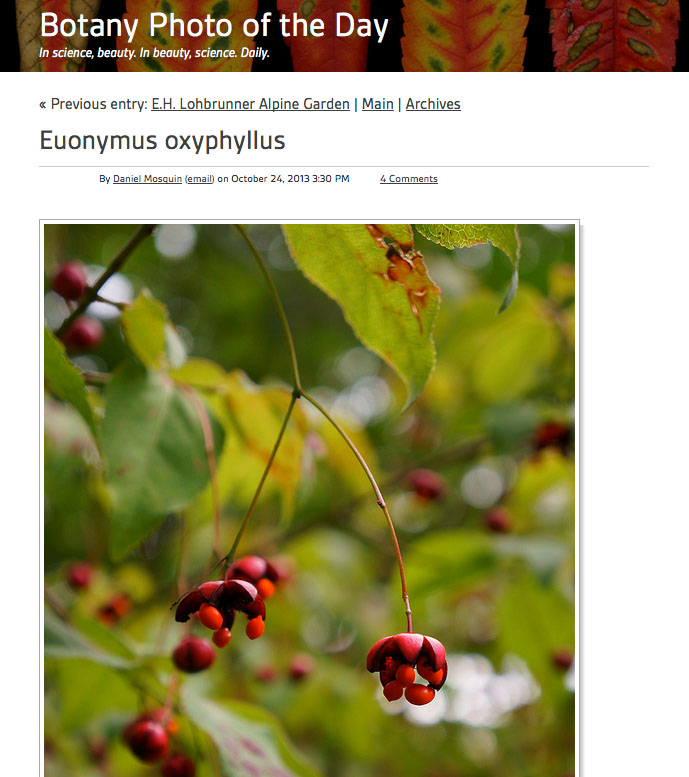
BOPD-spindle-treeWhen I saw this post by UBC Botanical Garden as the Botany Photo of the Day, I immediately thought of the Hearts-a-bustin plant which grows in the eastern states of the U.S.  However, the BOPD post was of the Korean spindle tree (Euonymus oxyphyllus).  Here’s a photo of Hearts-a-bustin (Euonymus americanus):
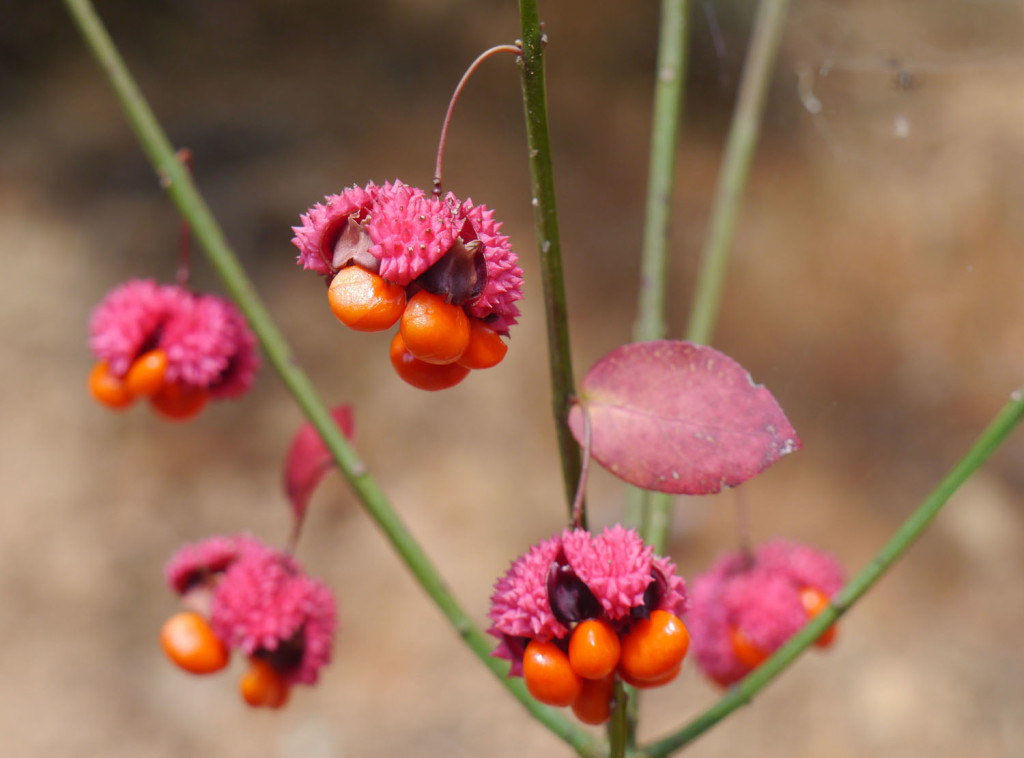
Hearts-a-bustin

Hearts-a-bustin

Hearts-a-bustin is frequently called Strawberry bush.  The Korean spindle tree is also commonly known (in English) as the Japanese spindle tree since it is native to Korea, China and Japan.  The two images above are of the plants’ seeds — not the flower as some people have assumed.  An observable difference between the two plants is the covering above the seeds — which is smooth for E. oxyphyllus and knobby for E. americanus.

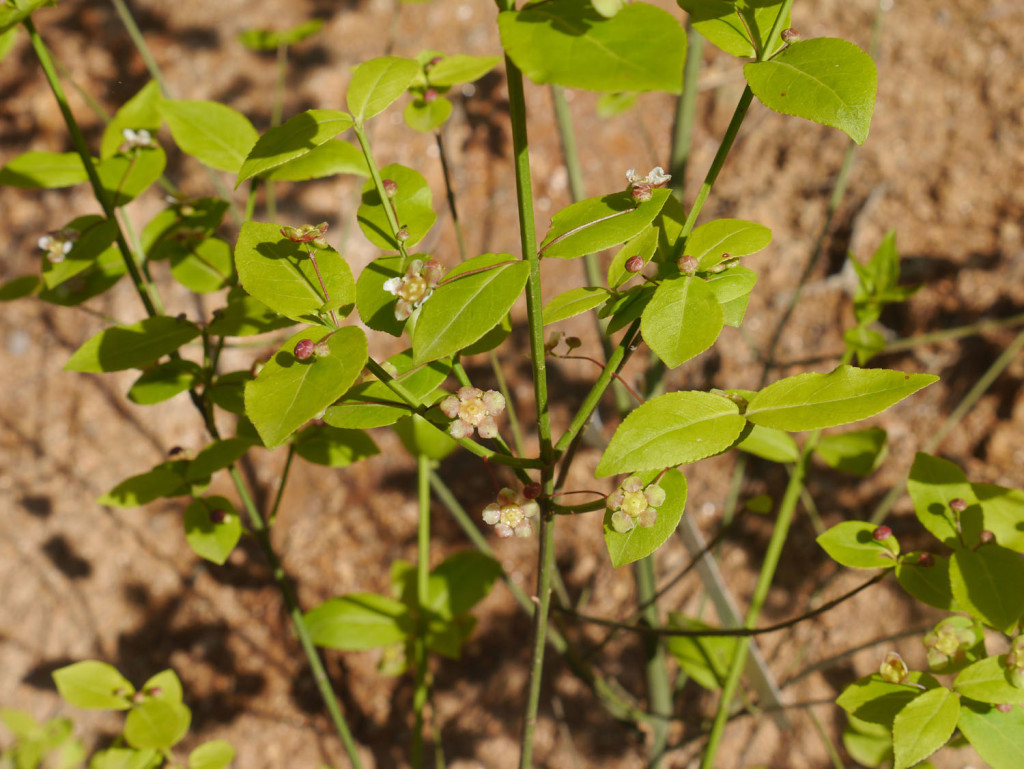
The next two photos show the plants as they are blooming.
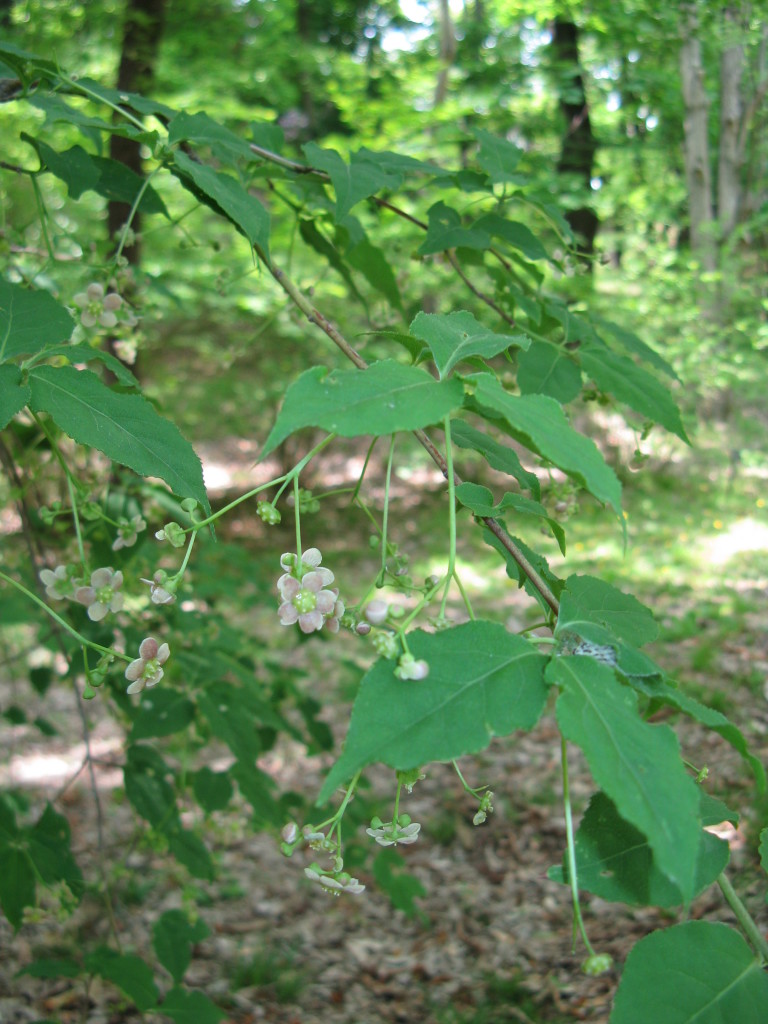
Euonymus oxyphyllus

Euonymus oxyphyllus

[Above photo taken by KENPEI and obtained through Wikimedia Commons.]
Hearts-a-bustin

Hearts-a-bustin

This next comparison image shows a close view of each plant’s flower.  You can see how similar they look.
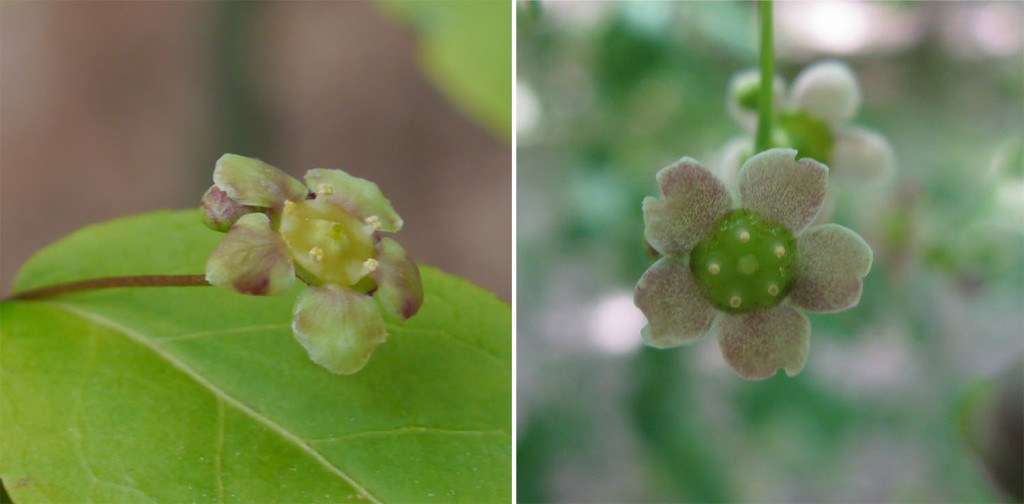
Euonymus americanus and Euonymus oxyphyllus

Euonymus americanus and Euonymus oxyphyllus

[Above photo on the right taken by KENPEI and obtained through Wikimedia Commons.]

Conduct some Internet searches of your own to compare the leaves, plant shape and size, and the inflorescence arrangement of these two different Euonymus.  I’ll leave you with an illustration of Euonymus oxyphyllus.

Euonymus oxyphyllus illustration[By M.S. del., J.N.Fitch lith. [Public domain], via Wikimedia Commons.]
Posted in Plant comparisons | Leave a comment

Mystery plant 047

This woodland plant can be found in mostly southern and eastern states within the U.S.  When you can identify it, leave a comment with the common name, scientific name and any personal story or connection you have with the plant.

047-a

Leaves in late winter / early spring

047-b

Mature plant

047-c

Buds and flowers in inflorescence

047-d

Flowers with protruding stamens

047-e

Flower sepals and hairy stem

047-f

Flower ovaries (left) and open flowers (right)


ANSWER (subsequently added to this post to facilitate the “search” function for these images): Fernleaf phacelia (Phalecia bipinnatifida)

Posted in Mystery plant | 3 Comments

Pokeweed (Phytolacca americana)

Pokeweed

The very tall weedy plant called Pokeweed (Phytolacca americana) grows in waste places across  most of North America.   Pokeweed begins to bloom in early summer and continues putting out inflorescences all summer and into the fall season.

PokeweedThe flowers on the raceme bloom from the point closest to the plant’s stem to the tip of the inflorescence.

PokeweedThe green ovary — after fertilization — looks like a green berry, which then develops into the dark purple berry.

PokeweedGradually, the Pokeweed berries begin drying and shrinking.

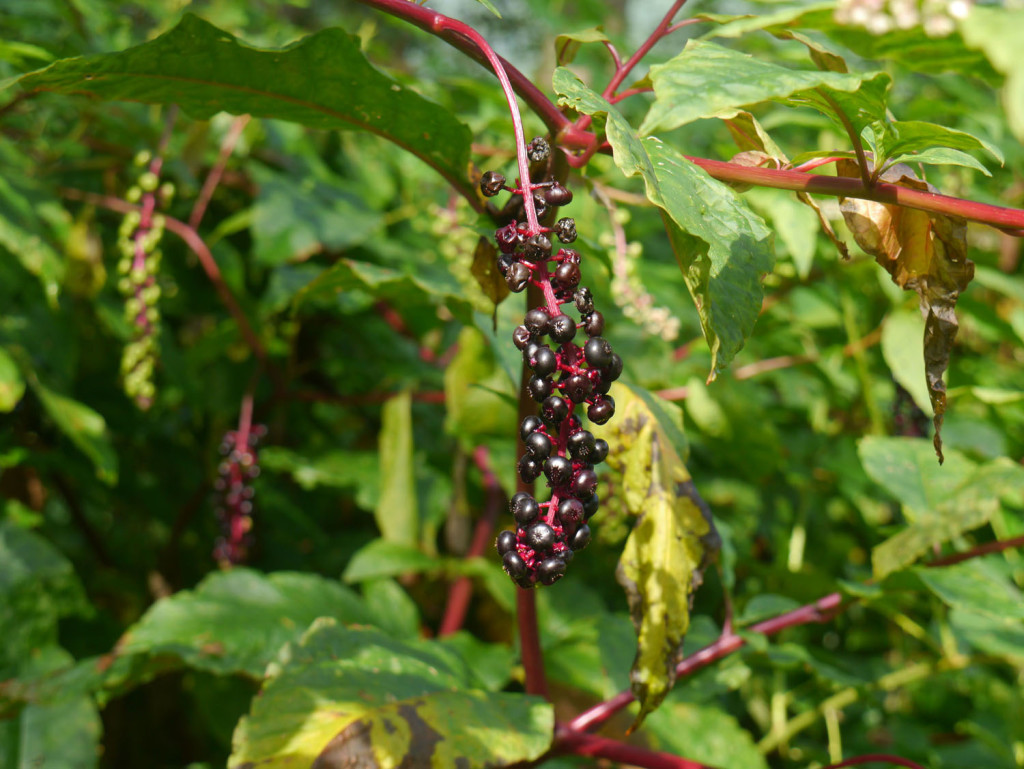
PokeweedPokeweed is especially colorful in the fall when it exhibits its multi-colored berries (green, red, purple and almost black), along with red stems, and yellow leaves.

PokeweedTo learn more identification characteristics for Pokeweed (Phytolacca americana) during various seasons of the year, and to see close-up views of its intriguing berries, watch this video:

Posted in Plant Identification videos, Plant portraits | 3 Comments