This lush evergreen plant is Japanese spurge which some people simply refer to as “pachysandra.” More specifically, it is Pachysandra terminalis — an import to North America. It spreads via rhizomes.
The mature leaves have interesting margins — deeply serrated or toothed at the outer edges. The venation is pinnate.
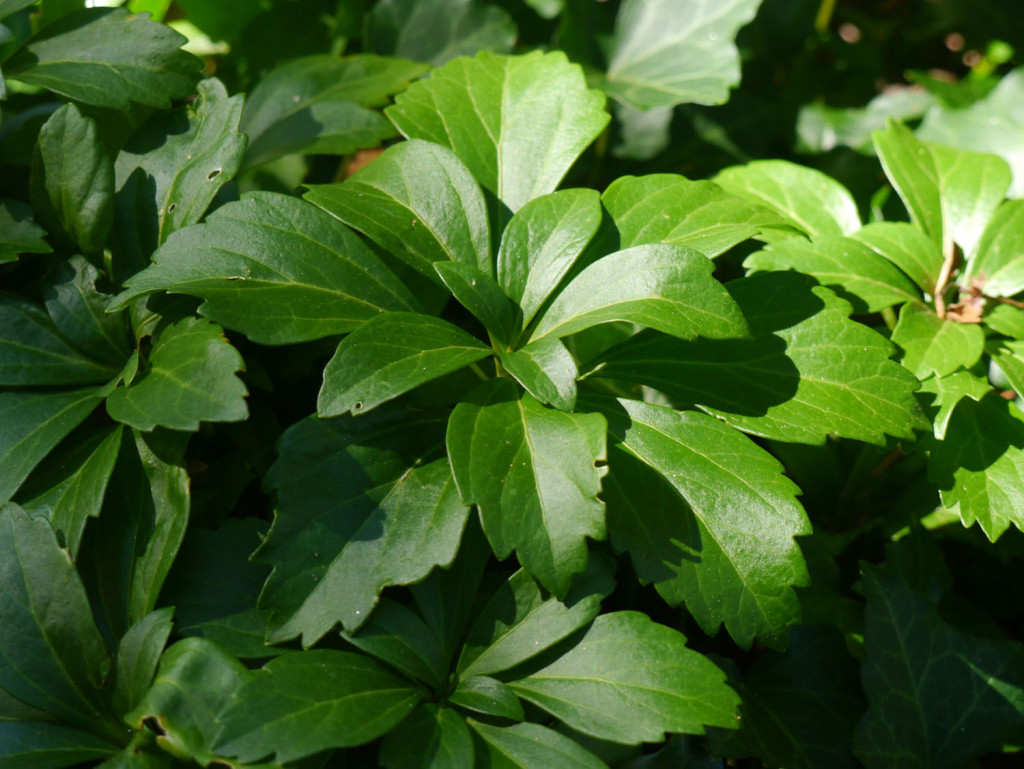
Japanese spurge
Japanese spurge blooms in the spring. The flowers are attached to a fleshy stalk rising above the leaves. The plant’s scientific species name indicates the location of the inflorescence — terminalis — at the termination of the upper leaves.

Japanese spurge
This next photo shows the Japanese spurge flower (on the left) up close. The Robert W. Freckmann Herbarium website informs us that “pachysandra” comes from pachys for “thick” and aner which is used for “stamen” — referring to the thickened white filaments of the flowers.
 The flowers on the right in the above image are from another pachysandra: Allegheny spurge which has the scientific name of Pachysandra procumbens. Overall, these two plants’ flowers do look similar.
The Allegheny spurge flowers grow on a fleshy stalk, too. The difference is that the flower stalk arises from low on the leaf stalk — from ground level.

Allegheny spurge
These flowers appear in early spring. The species name of procumbens refers to the more reclining habit of Allegheny spurge as its leaf stems droop and extend along the ground while the stems of Japanese spurge are stiffer and upright.

Allegheny spurge
When we study the leaves of Allegheny spurge, we notice the same type of leaf margin and venation. There are two other difference though from Japanese spurge. The leaf coloration of Allegheny spurge has hints of purple as well as white spots during the winter and early spring. (Japanese spurge remains a solid green color.) The Allegheny spurge leaf looks “softer” while the Japanese spurge leaf looks stiff and glossy.

Allegheny spurge
After Allegheny spurge blooms, it grows new leaves. Surprisingly, the leaves are solid green in color and look more like the Japanese spurge leaves for a few months. Eventually these leaves become mottled with white.
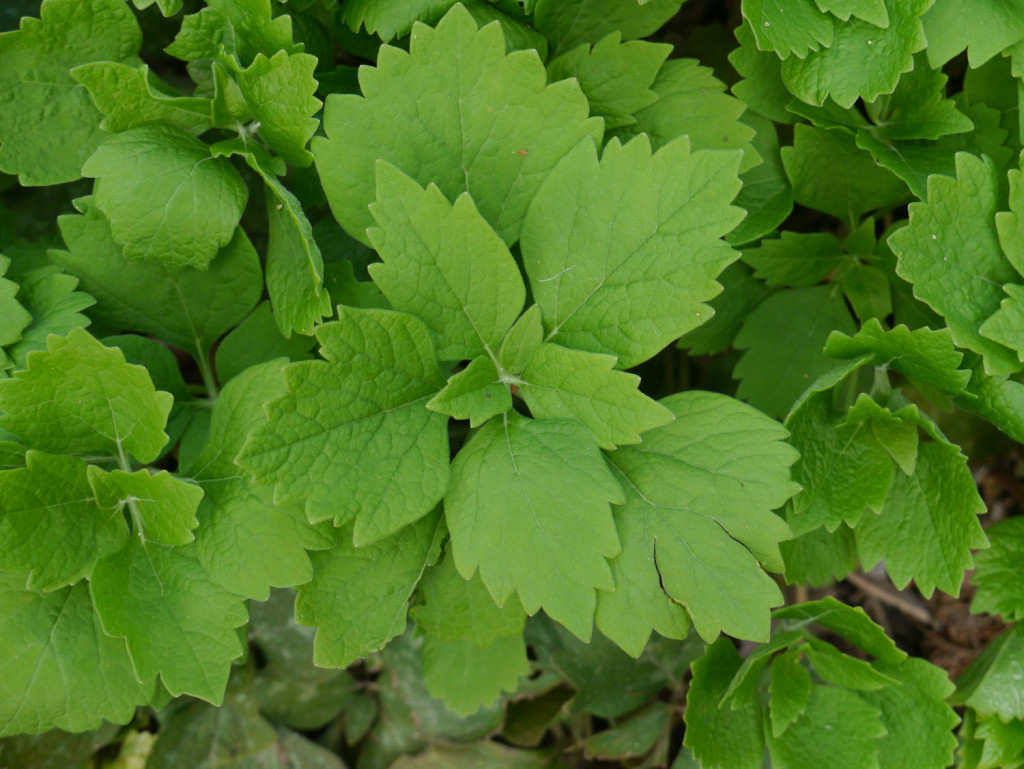
Allegheny spurge
You can find both Pachysandra terminalis and P. procumbens growing in the same general region — eastern North America. The easiest way to distinguish the two are the location of the inflorescence, the texture of the leaves, and the leaf coloration (especially during winter and spring).