This native flowering shrub grows in the eastern region of the United States. When you can identify it, leave a comment with the plant’s common and scientific names. Also, share any personal story you may have about the plant.
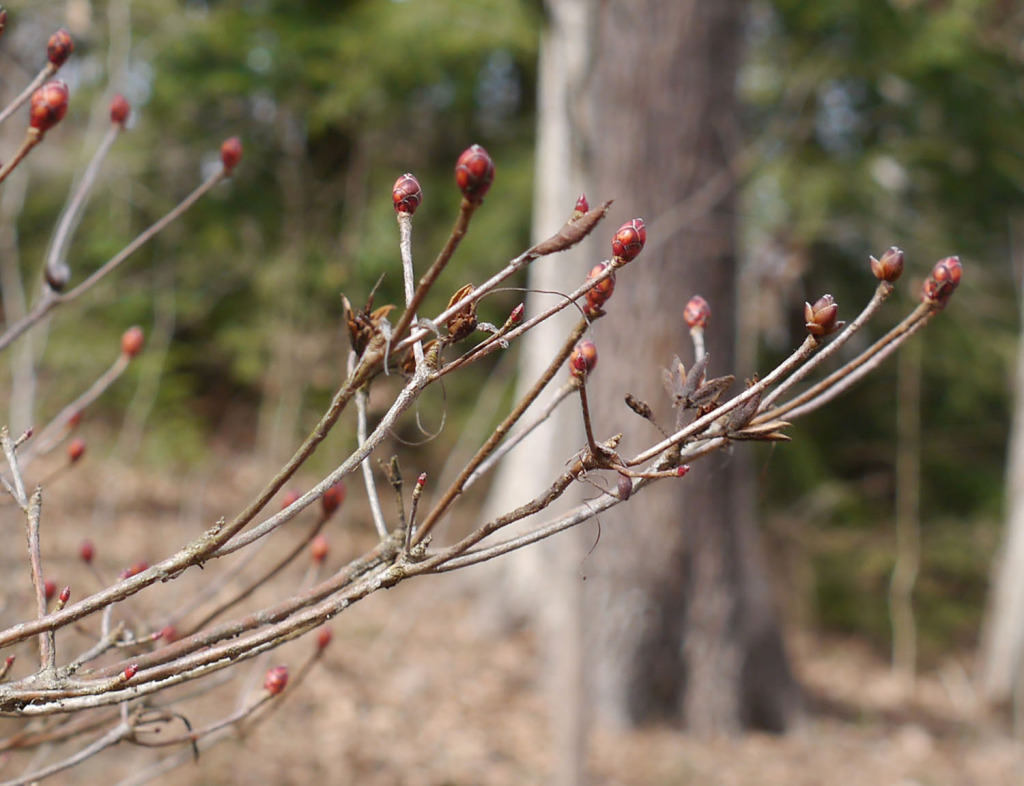
Buds on plant in late winter
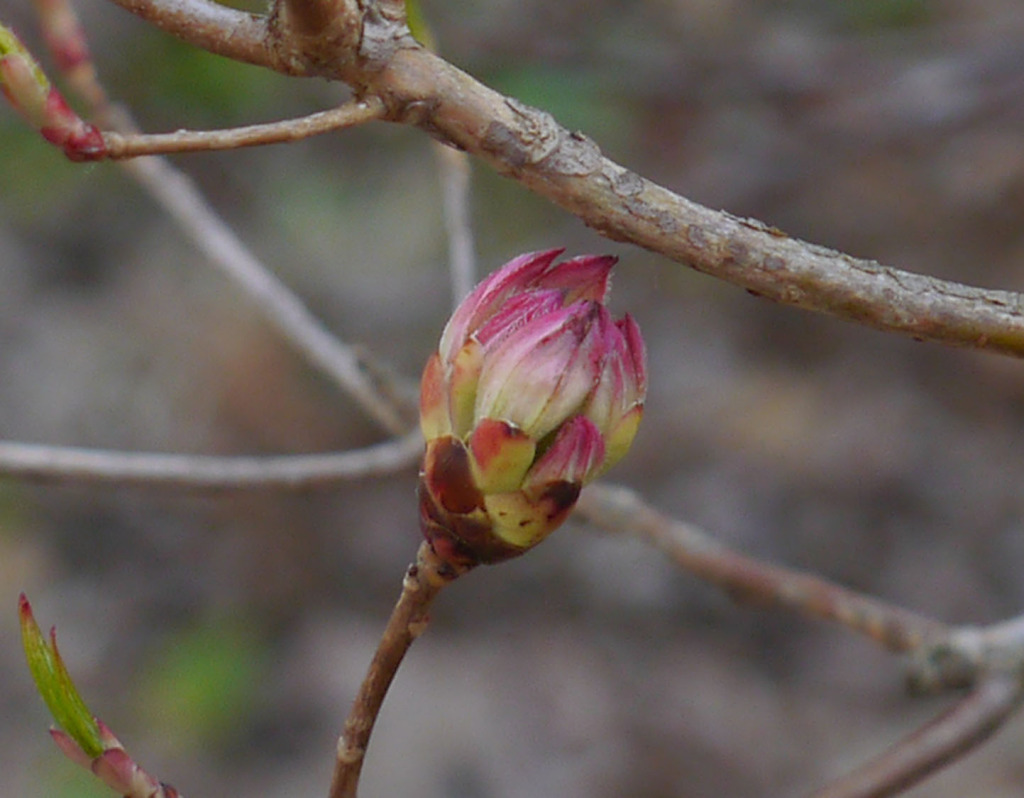
Flower bud expanding
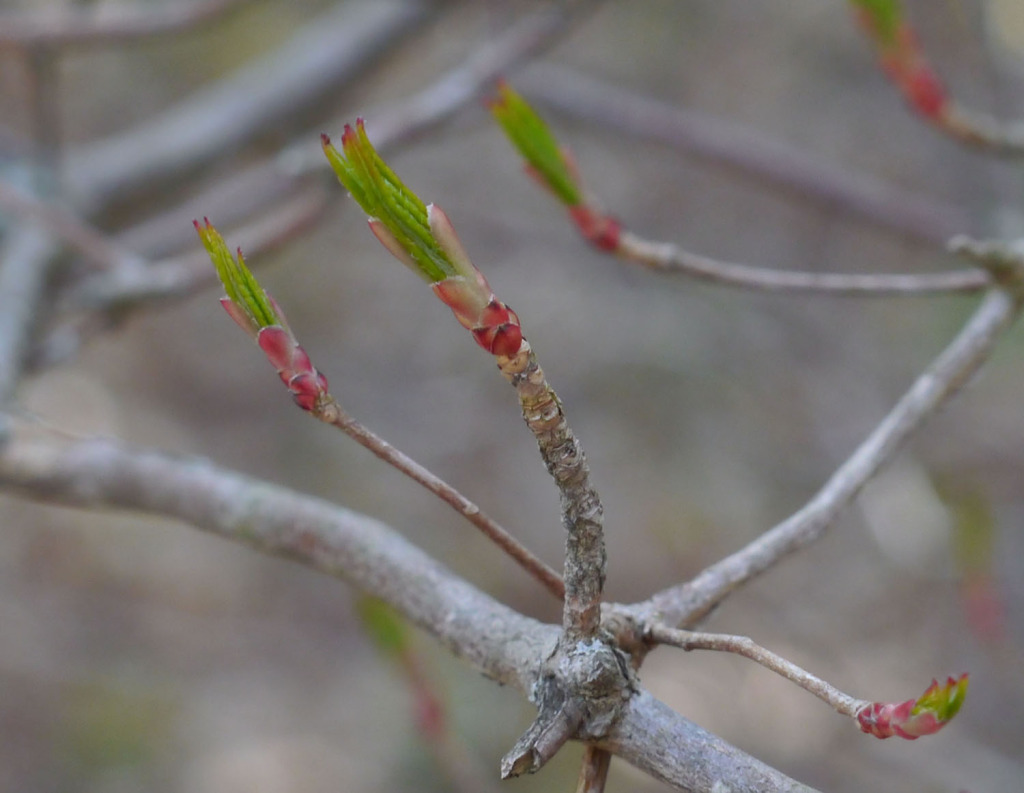
Leaves breading bud
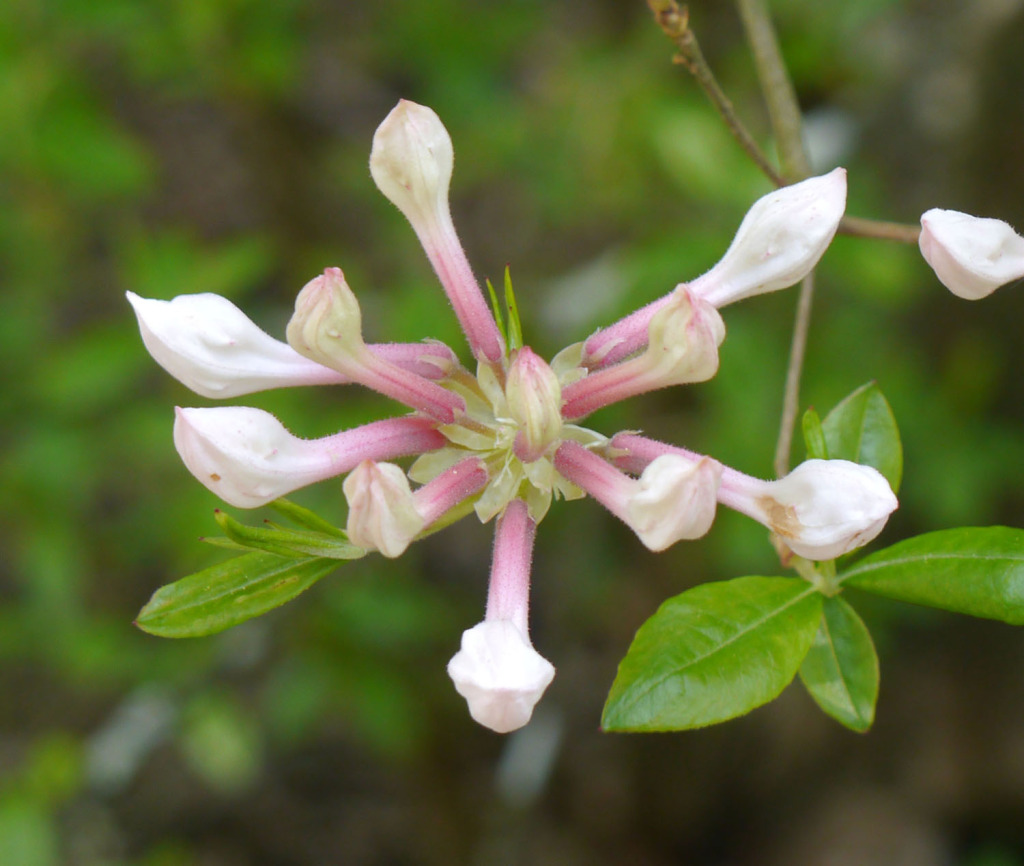
Inflorescence opening
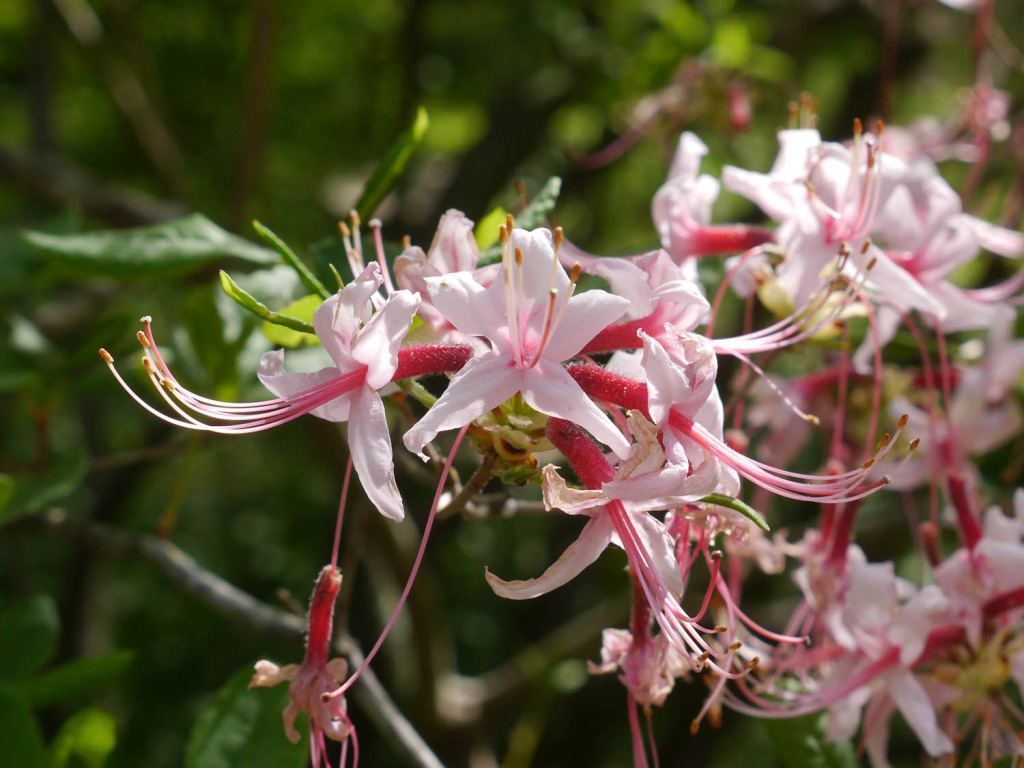
Flowers
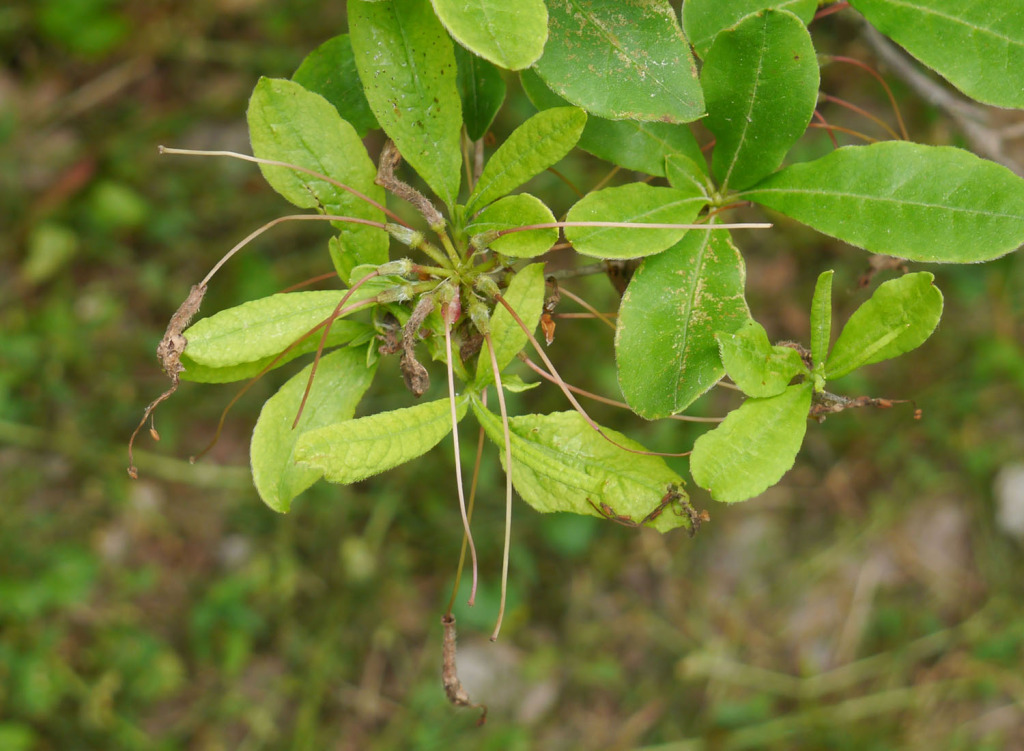
Inflorescence after blooming
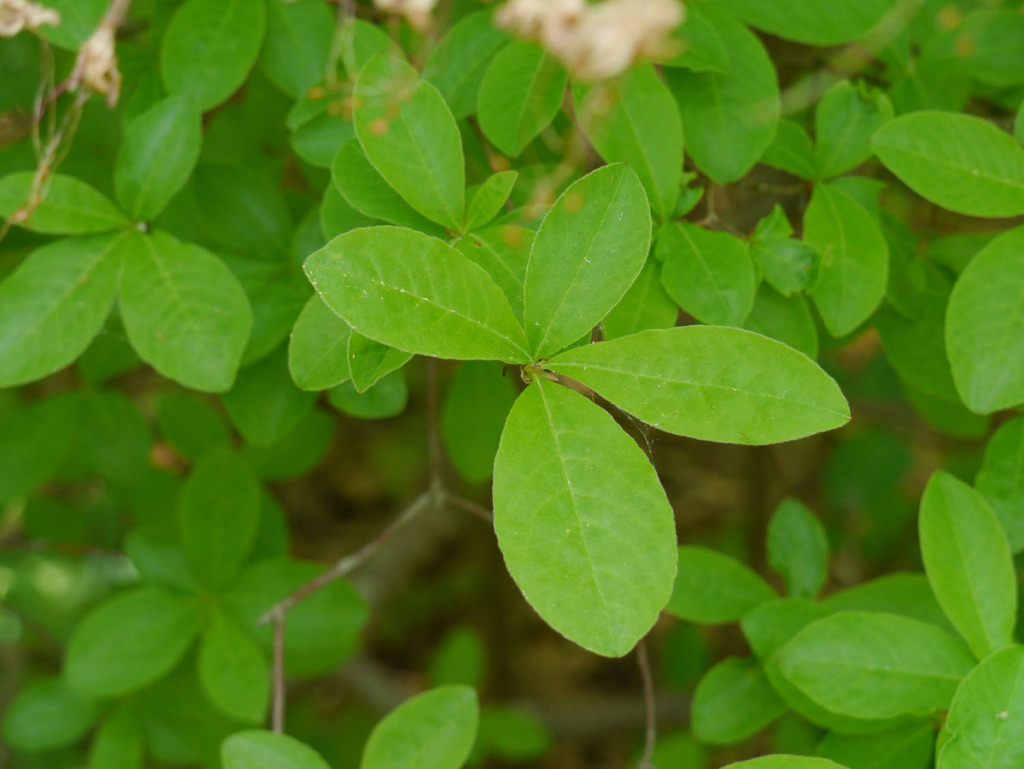
Leaves
ANSWER (subsequently added to this post to facilitate the “search” function for these images): Pinxterbloom azalea (Rhododendron periclymenoides)
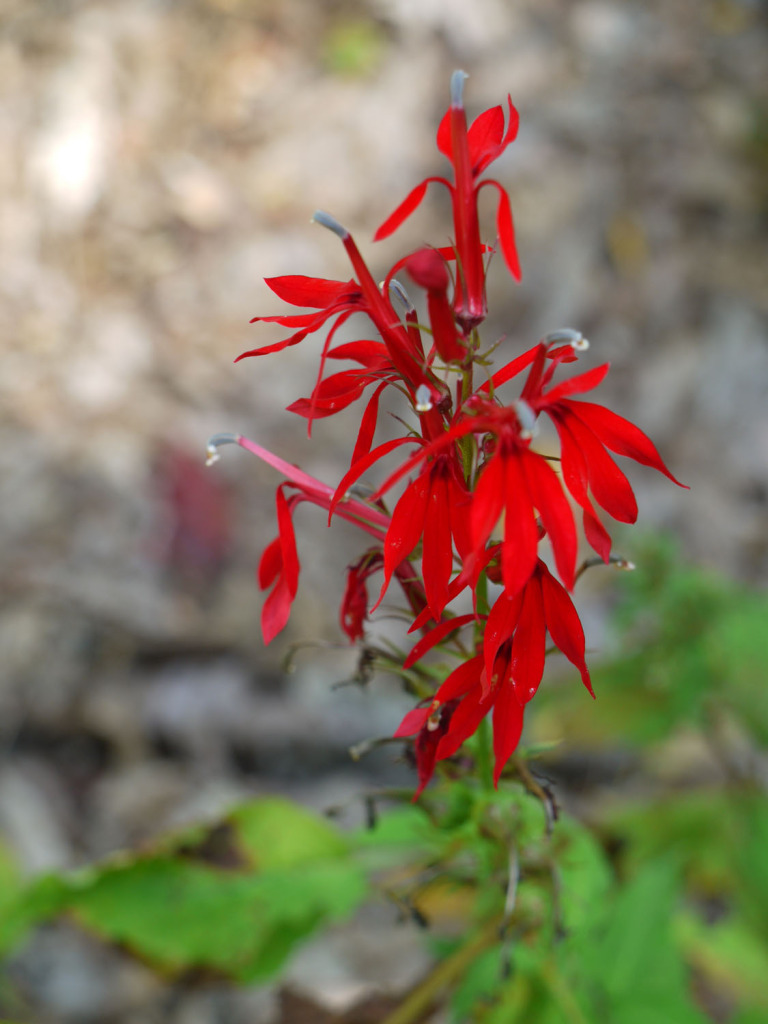
The intensely red flowers of Cardinal flower (Lobelia cardinalis) catch the eye — even from a distance — in late summer. This next photo shows flower buds, an opening flower, and several fully open two-lipped Cardinal flower blossoms on the raceme.
As you might guess, the long flower tube can be penetrated by hummingbirds and butterflies for the nectar at the bottom. While reaching for the nectar, the pollinator brushes against the anthers of newly opening flowers and gathers pollen which is then supplied to an open stigma of another flower when the pollinator seeks more nectar elsewhere in the inflorescence.
With successful fertilization, the seeds develop within a seed capsule partially enclosed by the flower’s calyx. This image shows the dried flower hanging from the seed capsule. The calyx is beginning to turn from light green to brown.
Watch this video to learn how Cardinal flower (Lobelia cardinalis) moves through its annual life cycle as a perennial, to see how it grows a new basal rosette in the fall, and to view its tiny seeds.
This plant can be found in dry or moist open woods within the eastern and some central portions of North America. When you can identify it, please leave a comment with both the common name and scientific name. And share any story you may have about this plant.
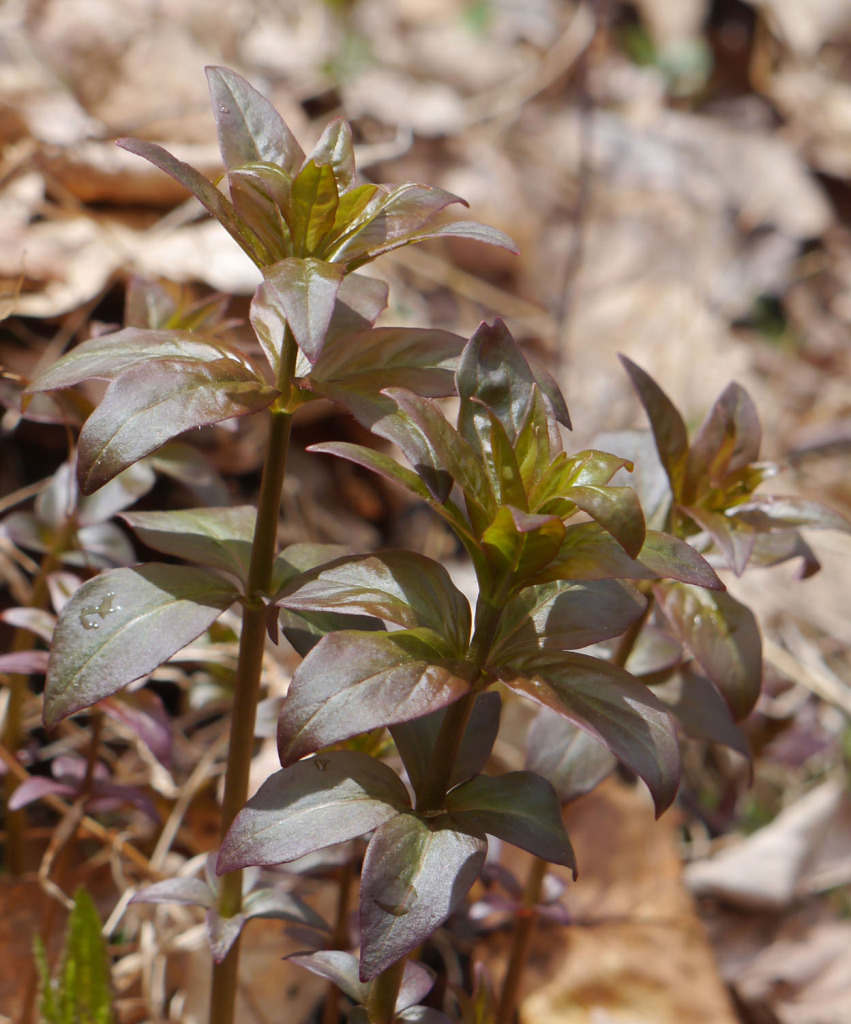
Plants in spring
Flower buds and leaves
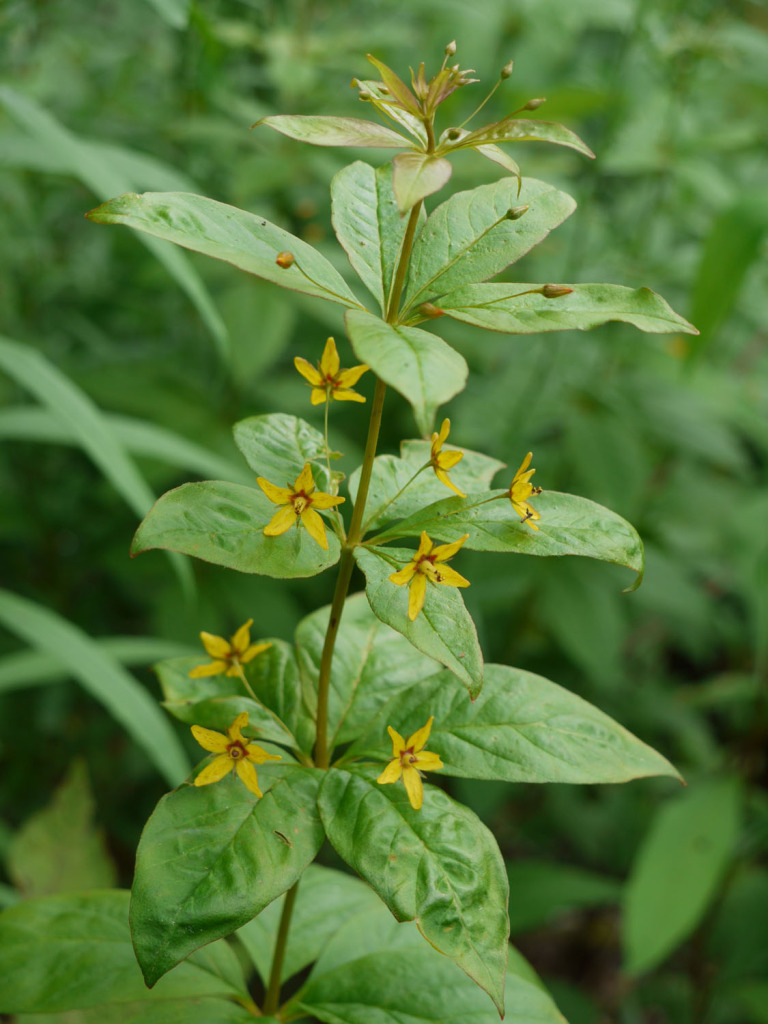
Flowers
Close view of flower
Plant during peak blooming phase
Plant during fall season
ANSWER (subsequently added to this post to facilitate the “search” function for these images): Whorled loosestrife (Lysimachia quadrifolia)