Flower characteristics are one basis for deciding how to group, classify and name plants. The milkweeds provide a clear example of this. Let’s look at four plants with a similar flower structure — which led to their being grouped in the genus Asclepias. Starting with Common milkweed — Asclepias syriaca — we can see the ball of flowers growing at and near the top of the plant (above photo).
When we look closely at a single flower within the inflorescence, we notice its unique shape. There’s a top portion of the flower with five corona limbs, and a bottom portion with five corolla lobes. The reproductive parts are in the center. To get a better understanding of this type of flower, study this description from backyardnature.net.
Common milkweed (Asclepias syriaca)
Let’s look at another Asclepias example — Asclepias tuberosa — commonly known as Butterfly weed. Here’s the plant in flower:
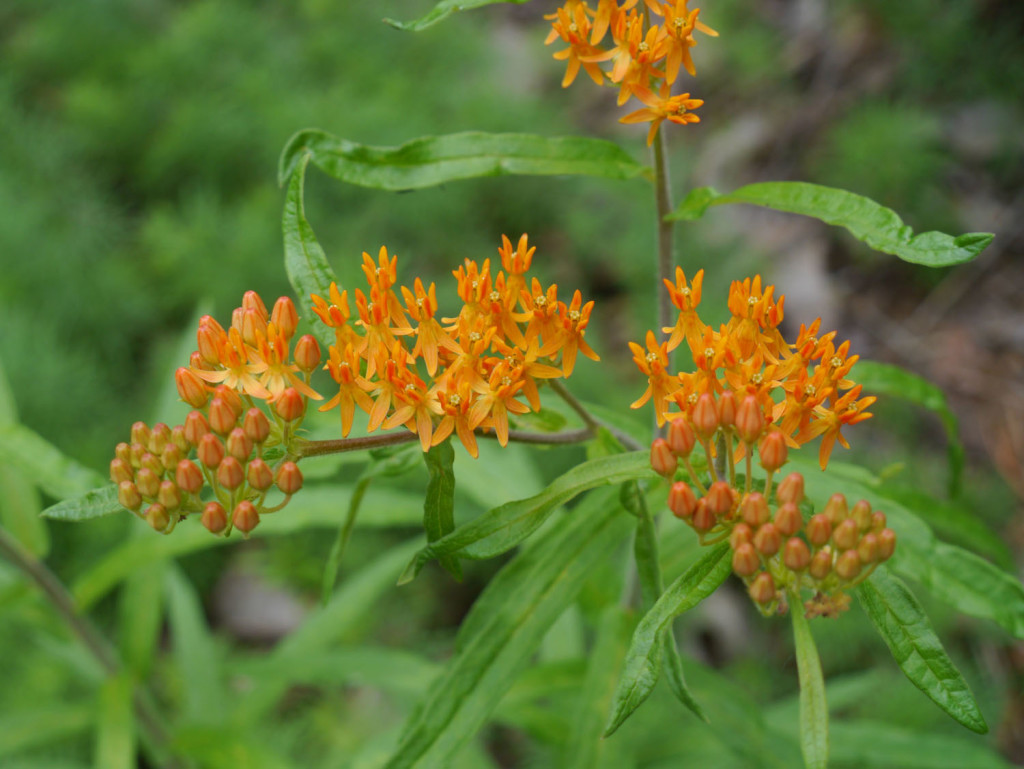
Butterfly weed (Asclepias tuberosa)
And a closer view of the flowers:
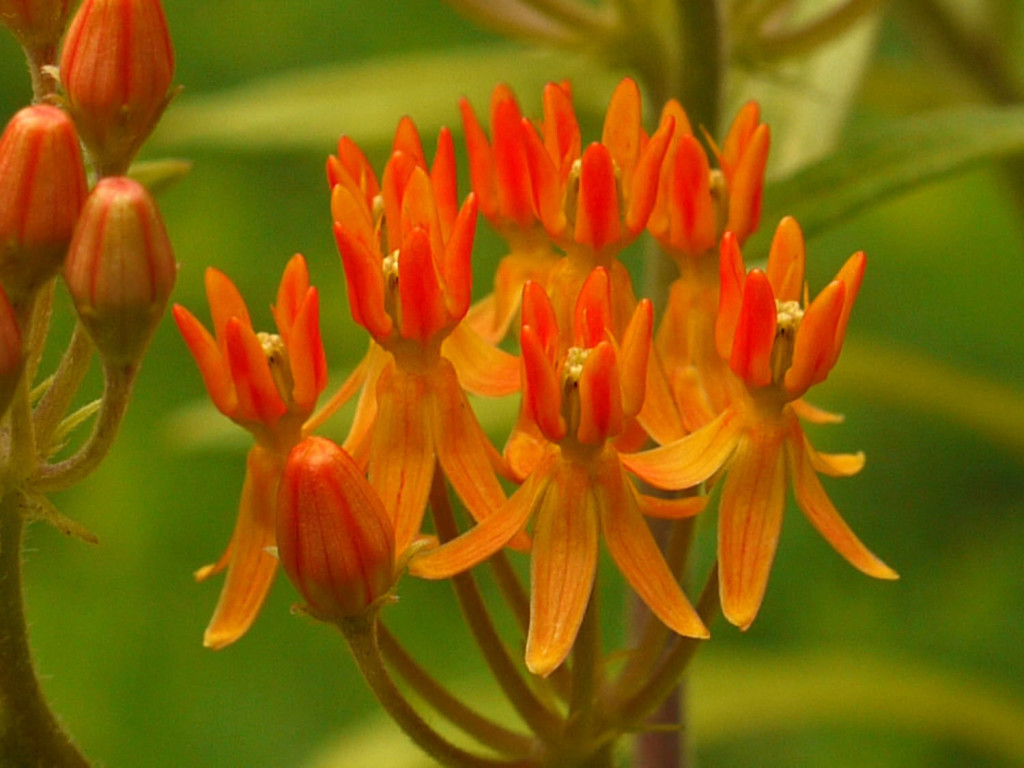
Butterfly weed
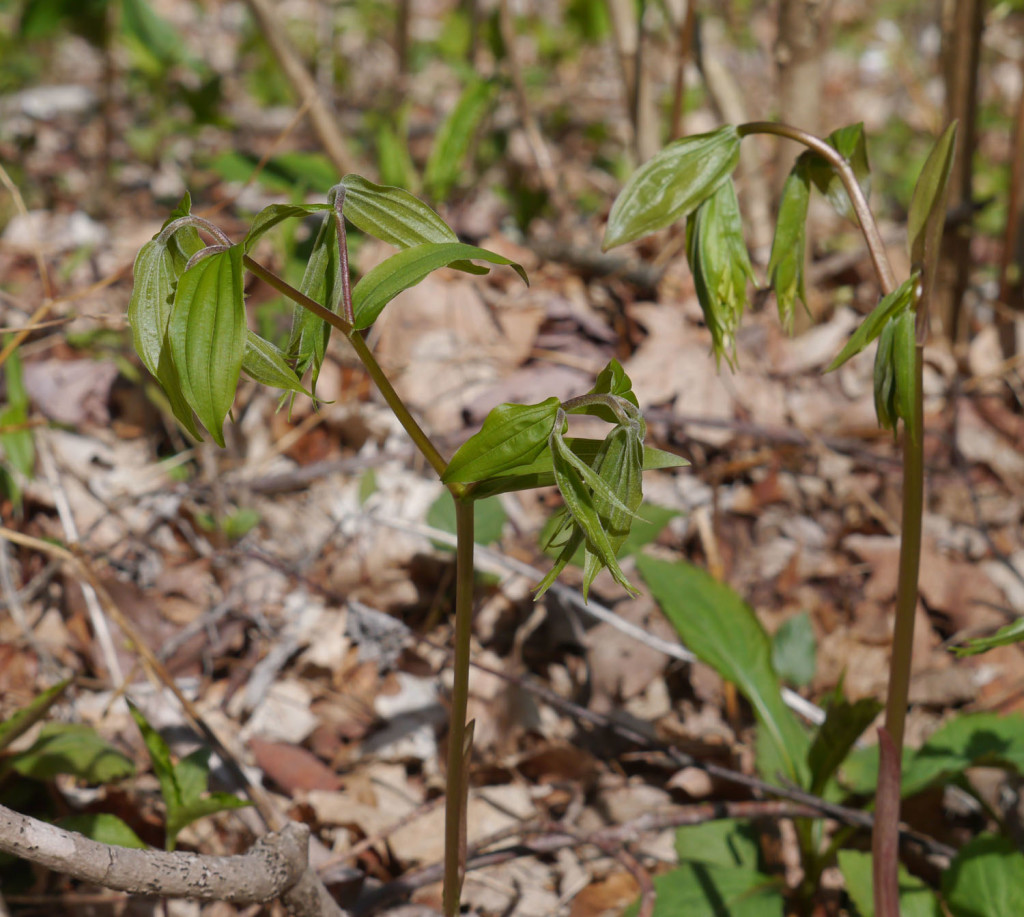
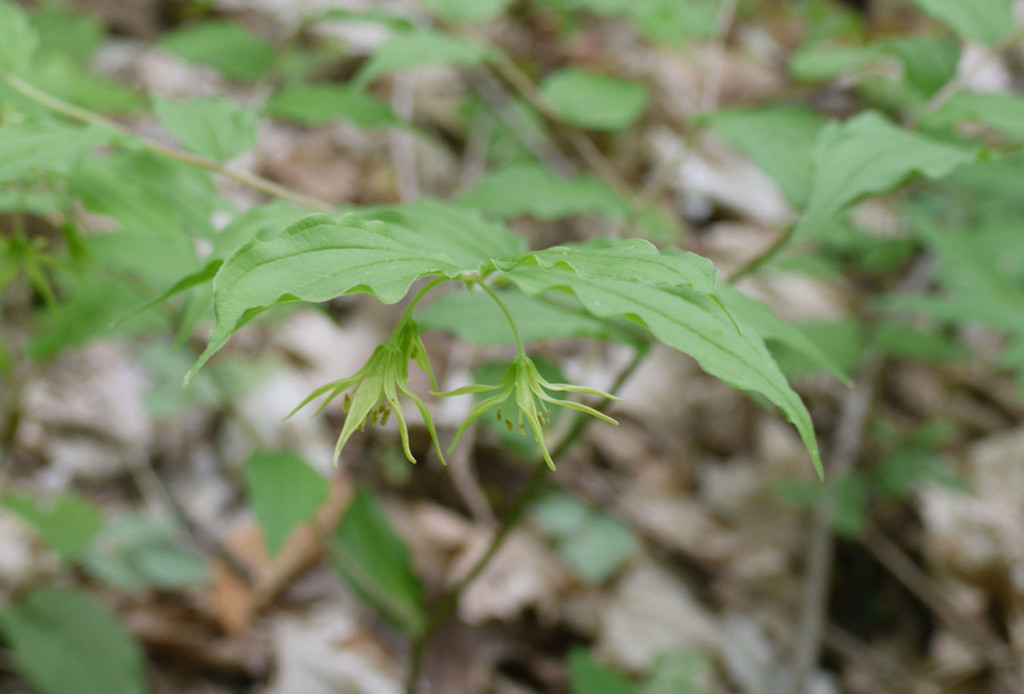
Now for two more Asclepias species which can be found growing in the same region: Asclepias quadrifolia, commonly known as Four-leaved milkweed — and Asclepias incarnata, commonly known as Swamp milkweed.
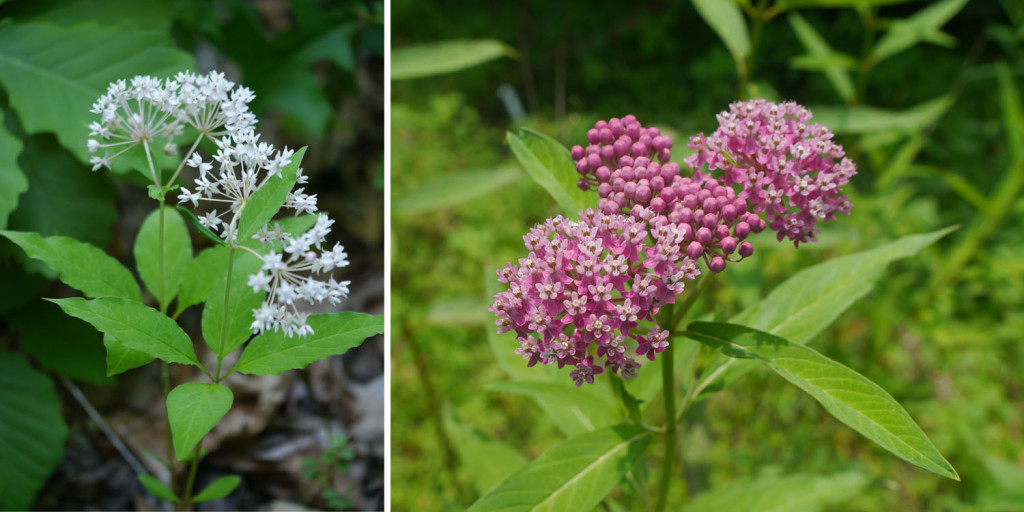
Four-leaved and Swamp milkweed
(Asclepias quadrifolia and A. incarnata)
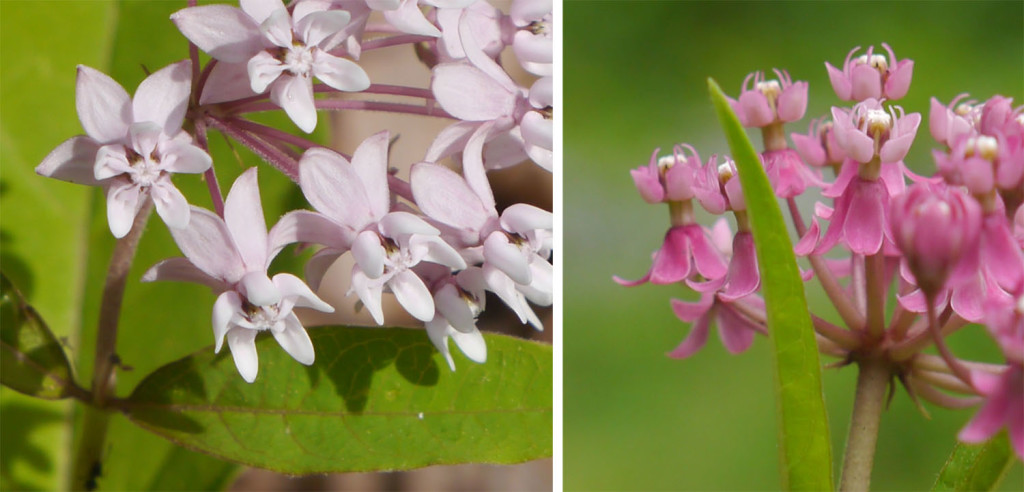
Four-leaved and Swamp milkweed
(Asclepias quadrifolia and A. incarnata)
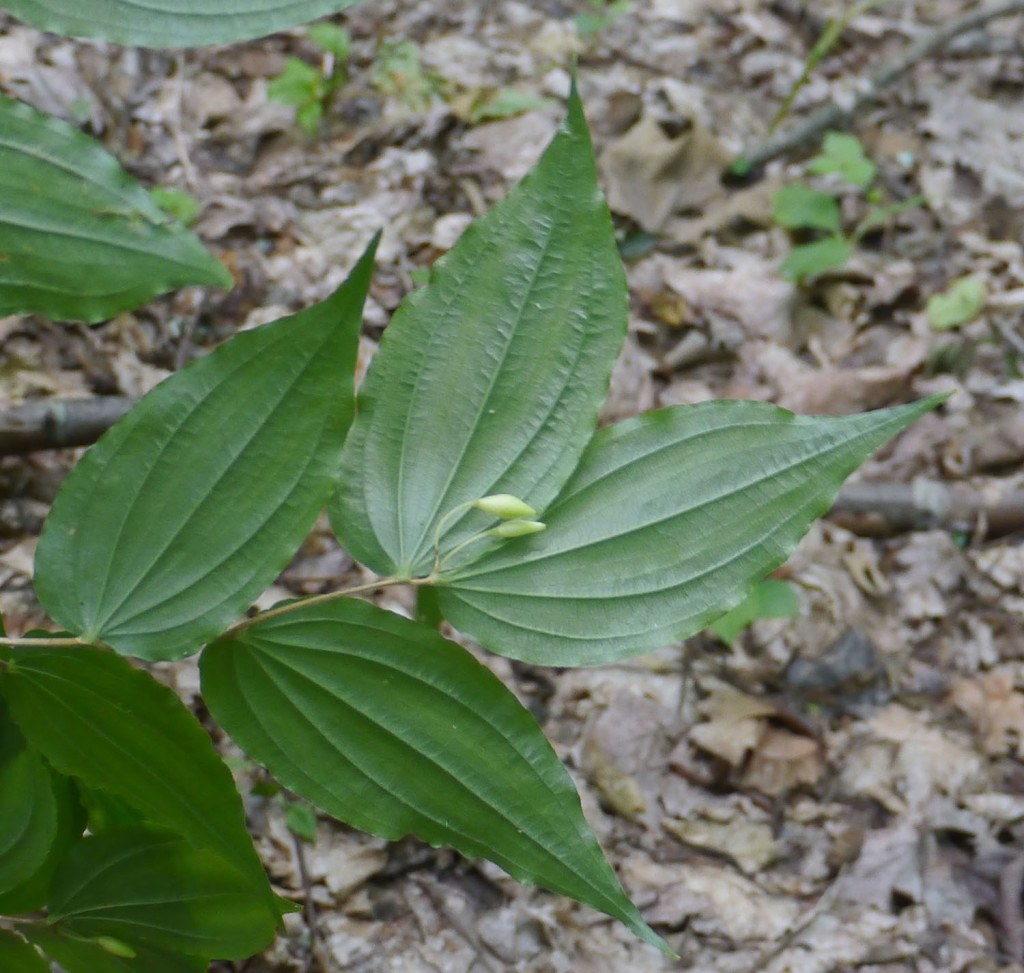
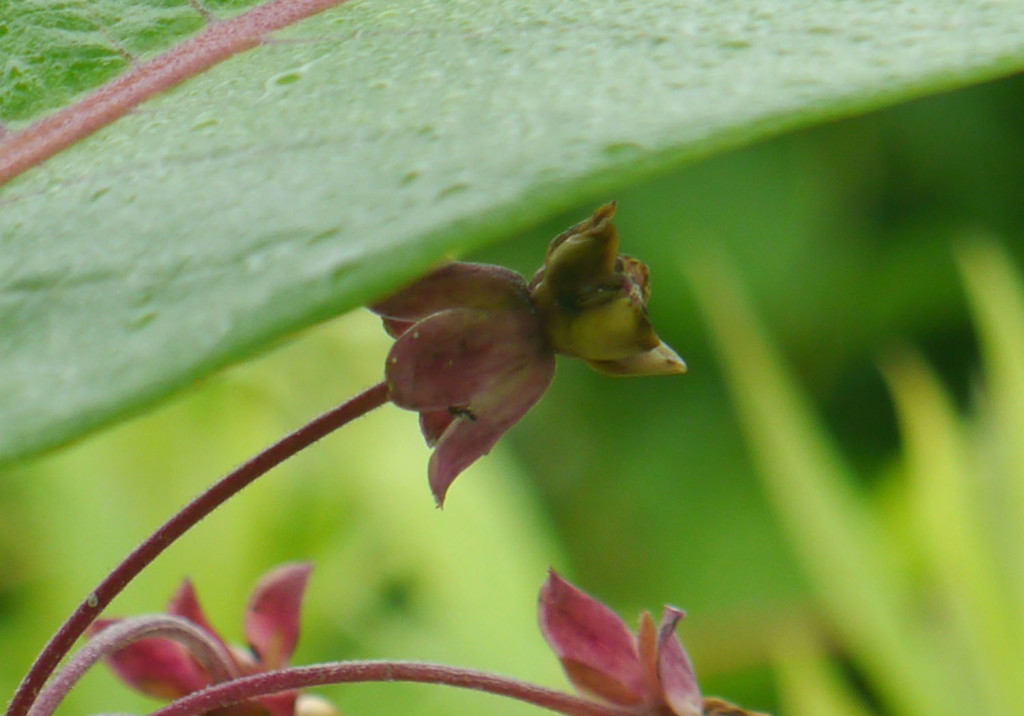
Each of these four plants has different preferred habitats along with different leaf shapes, flower colors and plant heights. Yet they are clearly related plants — given their similar flower shape and arrangement. This final set of photos shows the similarity in their flower buds.
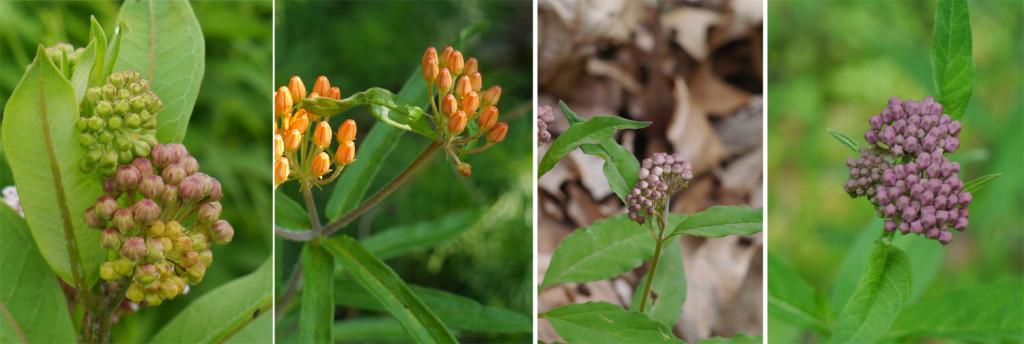
Common milkweed, Butterfly weed, Four-leaved milkweed, Swamp milkweed
(Asclepias syriaca, A. tuberosa, A. quadrifolia, A. incarnata)