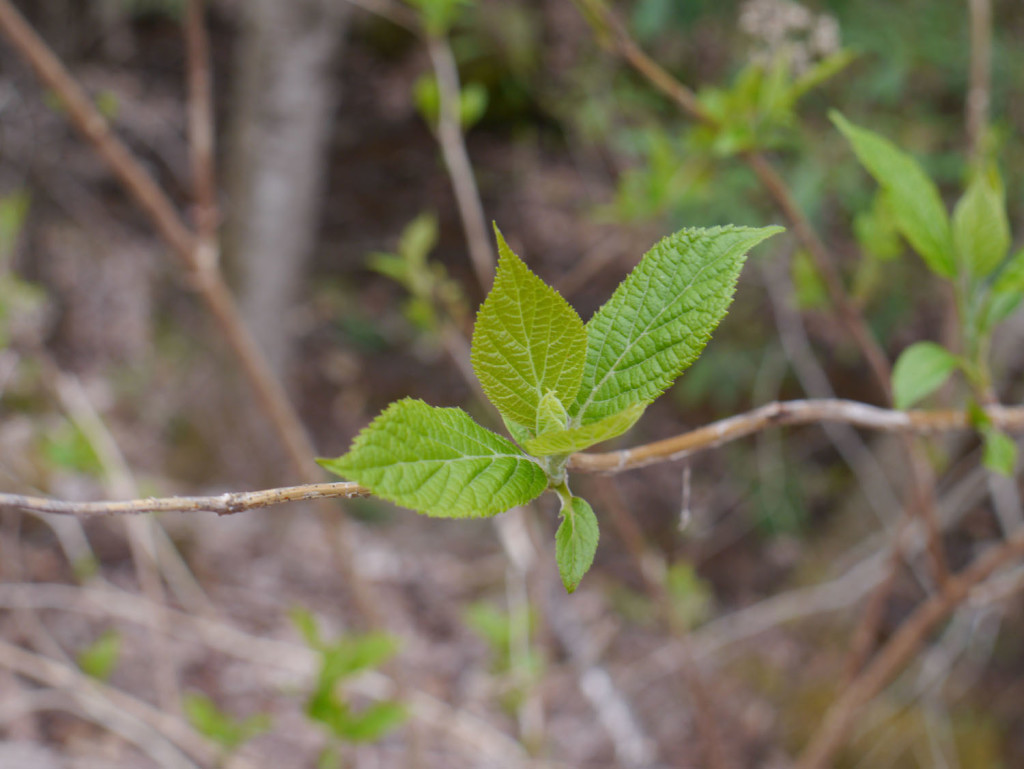
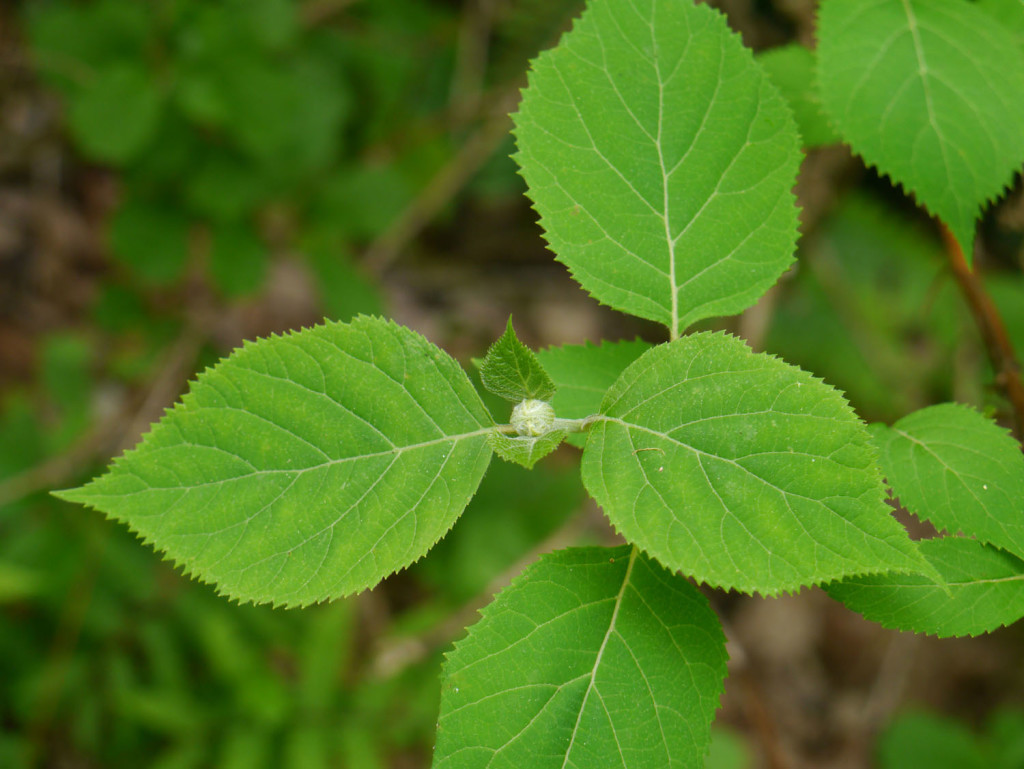
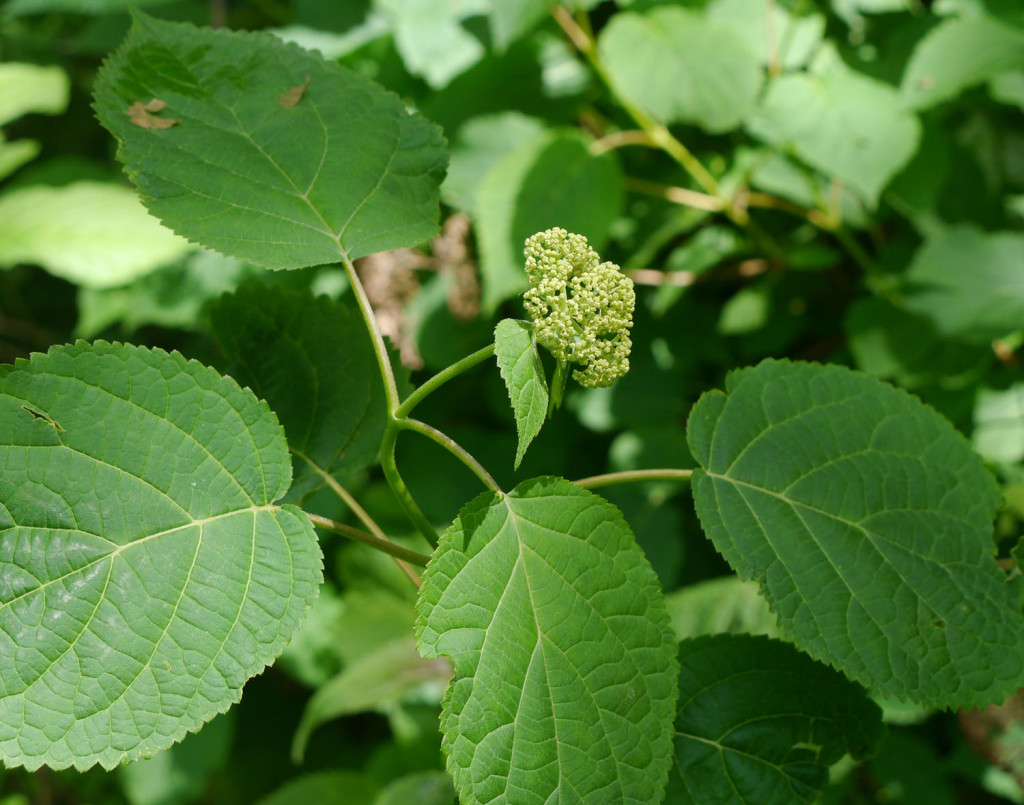
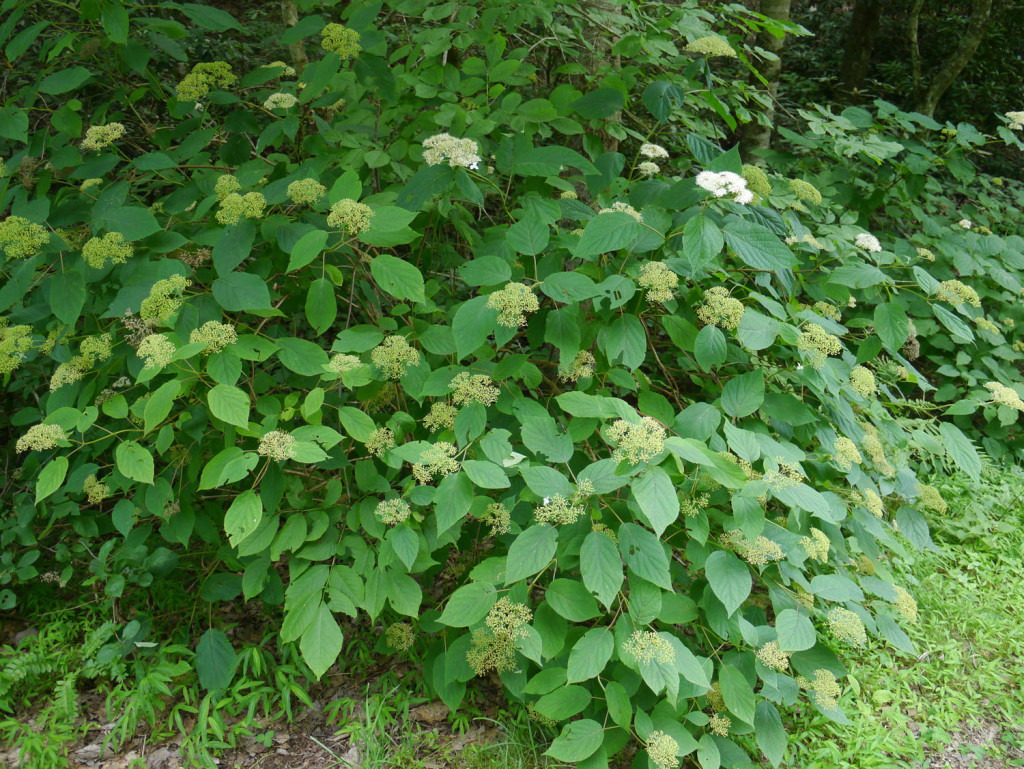
Your initial encounter with either of these two plants can lead to identification confusion. The above side-by-side comparison photo shows the lower leaves on each plant. White avens (Geum canadense) is on the left while Thimbleweed (Anemone virginiana) is on the right. Superficially, the leaves look the same since they have toothed margins and several leaflets per leaf.
White avens’ lower leaves (with a petiole) consist of three leaflets. As the plant grows taller, the leaves become sessile with the two smaller leaflets hugging the stem. The upper-most leaves look like a smaller single leaf with two little wings.

White avens
Here’s another example of the mid-level leaves. Notice the pinnate venation.

White avens
Next, let’s study Thimbleweed’s leaves. Its lower leaves have petioles and (typically) three leaflets. Sometimes the leaflets are so deeply lobed or divided they look like five or more leaflets.

Thimbleweed
Notice the venation on the Thimbleweed leaves. Although it’s pinnate — just like White avens — the veins look incised into the leaf. In the next photo of Thimbleweed’s leaves, growing higher along the stem, we can see the leaves still have petioles and at least three leaflets.
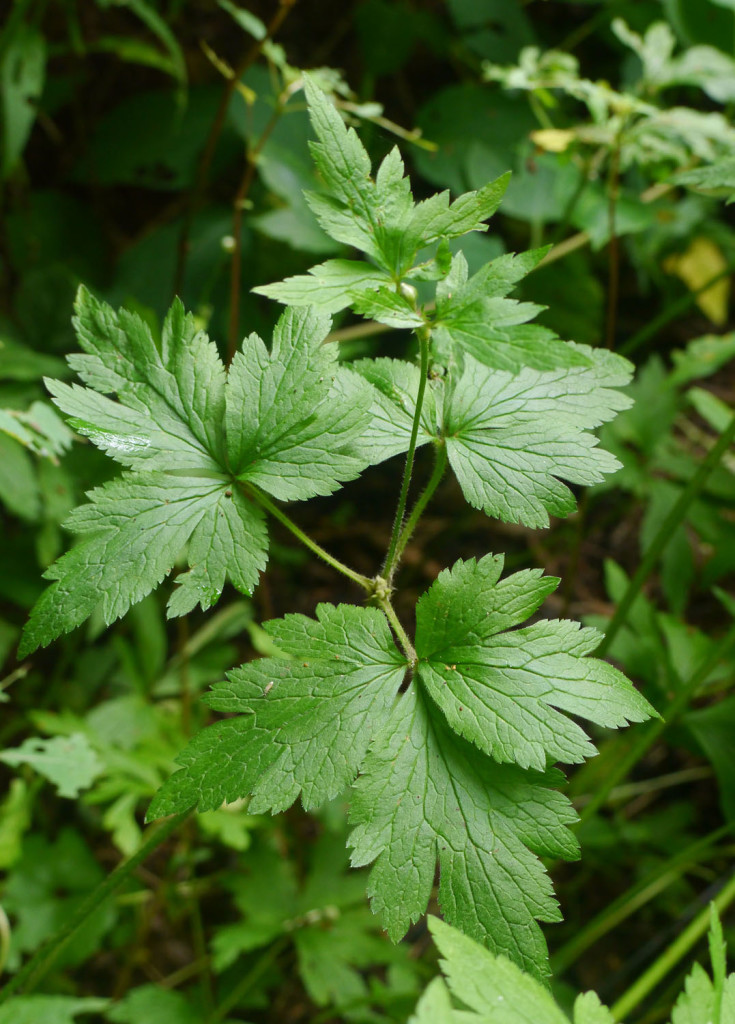
Thimbleweed
If you come across each of these plants separately in the woods, you may find it easiest to correctly identify them after they begin putting out flower buds rather than attempting to make a final identification from the leaves. (There are more woods plants with leaves similar to these two plants.) It’s especially easy to distinguish between them once the flowers bloom — and even easier after the plants make their seeds. Let’s look at each of these life stages.
White avens (Geum canadense) has a many-branched inflorescence. Thimbleweed (Anemone virginiana) has a single flower at the top of a long stalk. Each Thimbleweed plant will have between one and three flower stalks.

White avens and Thimbleweed
The White avens flower has five green sepals and five white petals. Thimbleweed’s flower only has five sepals — the inside of which are white and therefore look like petals.

White avens and Thimbleweed
Here’s another view of more mature flowers from each plant. Notice the center of each flower in these two sets of photos.

White avens and Thimbleweed
The final stage of plant reproduction is the creation of seeds from the fertilized flowers. These two plants have distinctive seed heads. And now it becomes obvious, to anyone who has seen or used a thimble, how Thimbleweed got its common name.

White avens and Thimbleweed
In general, Thimbleweed is twice as tall as White avens. Naturally, if the habitat and weather conditions are less than optimum, either plant may be shorter.