It’s easy to become confused when walking in the woods and discovering two plants which have three leaves, or leaflets, and the plants look very much alike. But there’s just something a bit different about them, too. The above photo is a typical example of this situation. Both plants have leaves or leaflets with smooth (entire) margins and pointed tips.
Jack-in-the-pulpit (Arisaema triphyllum) has either one or two leaves per plant. Each leaf is compound and has three leaflets.

Jack-in-the-pulpit (Arisaema triphyllum)
The Jack-in-the-pulpit leaf looks very much like Trilliums such as the White trillium (Trillium grandiflorum) which has three distinct leaves (not leaflets) at the top of the plant. The three Trillium leaves are whorled in arrangement and therefore look like the three Jack-in-the pulpit leaflets at the top of their leaf stalk.

White trillium (Trillium grandiflorum)
But if neither the Jack-in-the-pulpit nor the Trillium are blooming or fruiting, then how can we tell them apart? Or what if the plant is very young and is not mature enough to flower yet?

Jack-in-the-pulpit

Trillium (Trillium sp.)
Leaves on Trilliums have palmate veins. All the primary veins extend from the base of the leaf. It’s just like the multiple fingers extending from the palm (or base) of your hand.

Little Sweet Betsy (Trillium cuneatum)

White trillium (Trillium grandiflorum)
The Jack-in-the-pulpit leaflets have a different venation pattern. These leaflets have a single central vein running from the base of the leaflet to the tip. The remaining primary veins extend from either side of this central vein. This is referred to as pinnate venation.

Jack-in-the-pulpit
Now that you know the key to distinguishing these plants, which plant is which in the first photo of this post?
Here’s the answer:
Trillium is on the left. Jack-in-the-pulpit is on the right.

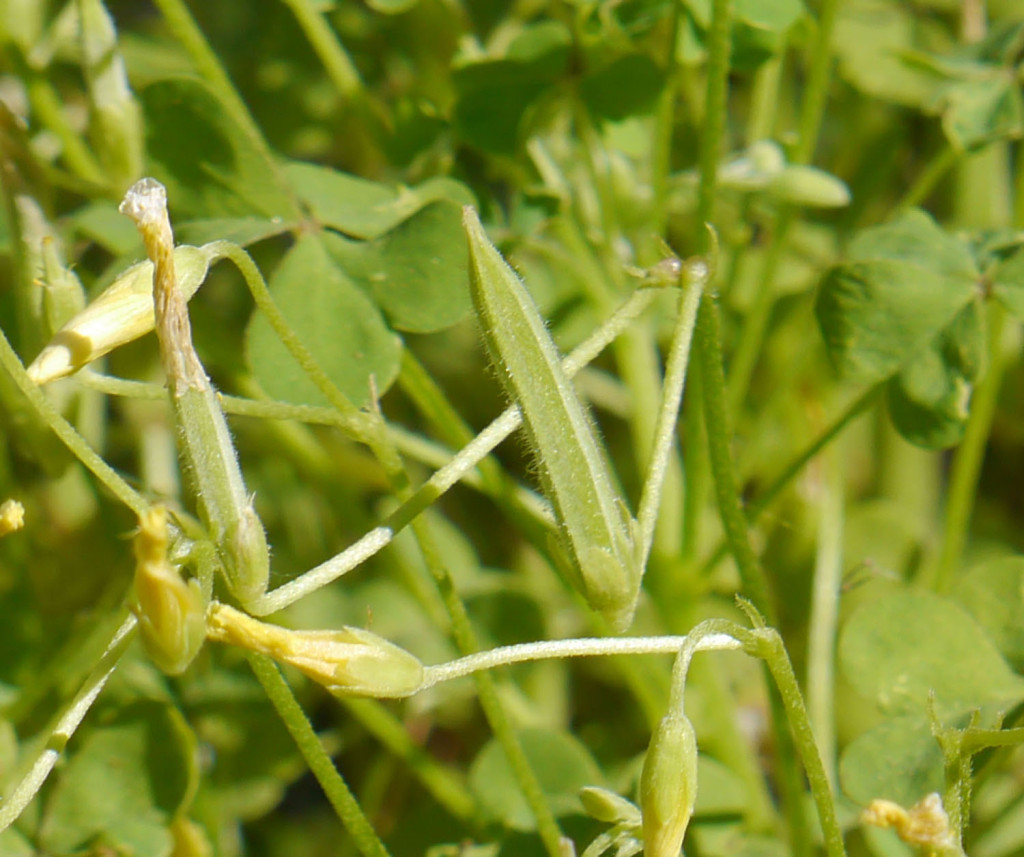
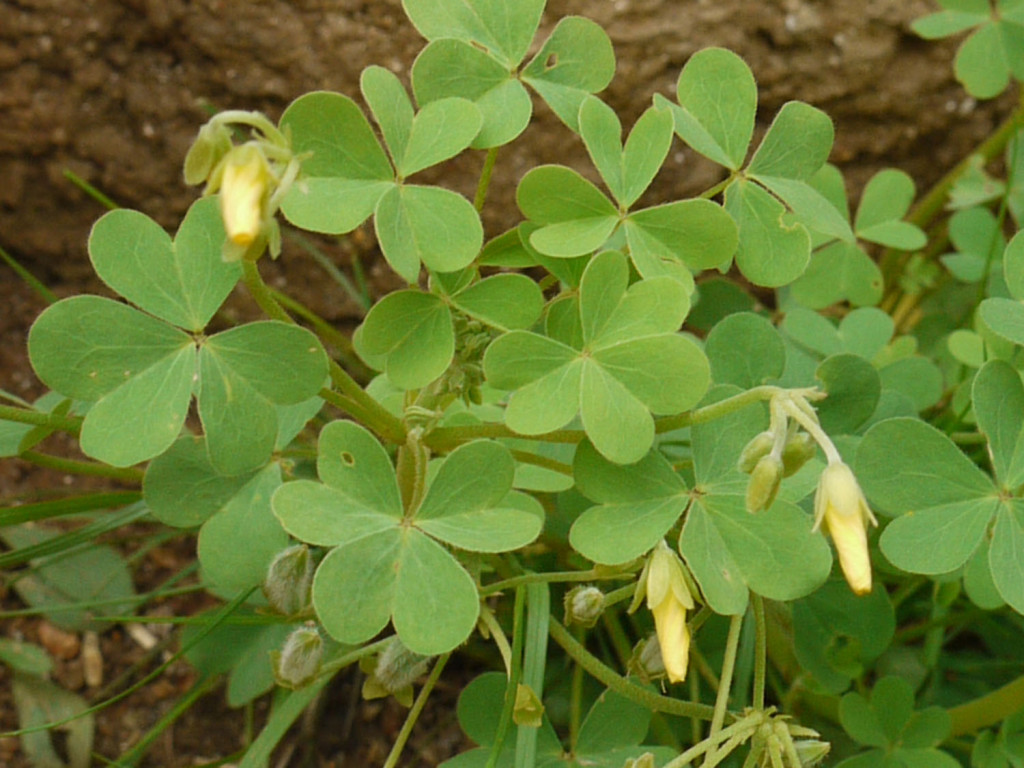 Yellow wood sorrel (Oxalis stricta) is a common plant in North America — growing along roadsides, waste places and in cultivated gardens (where it’s usually not wanted). The above photo shows its compound leaves with three heart-shaped leaflets, along with some flower buds.
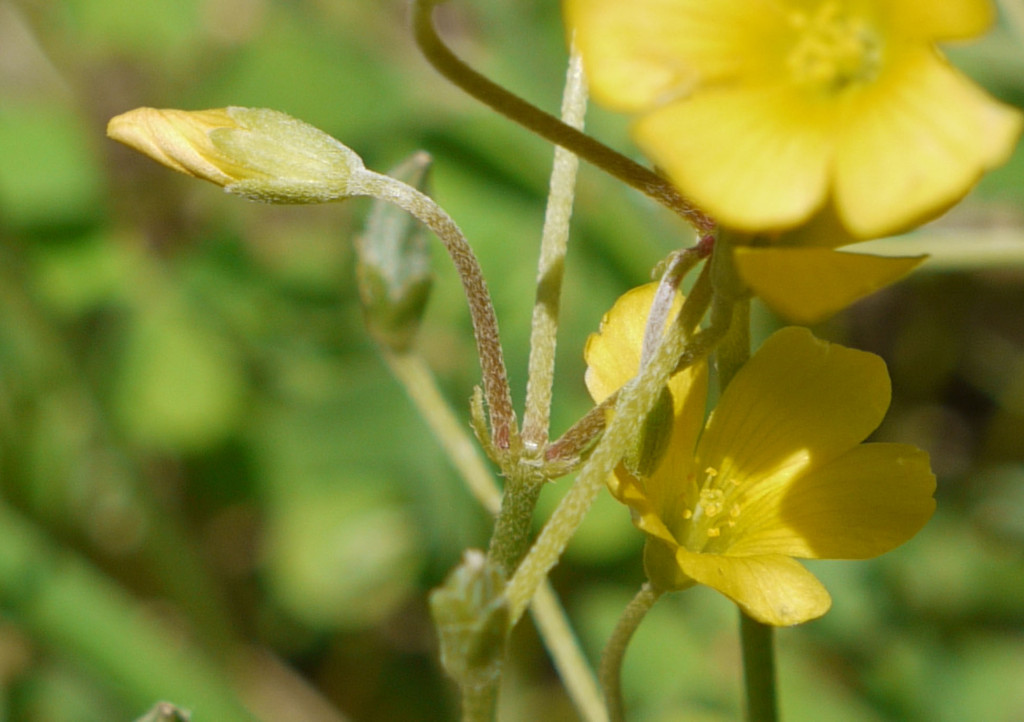 Seed capsules have five ridges which create the five-sided capsule. Yellow wood sorrel’s seed capsules point upwards.
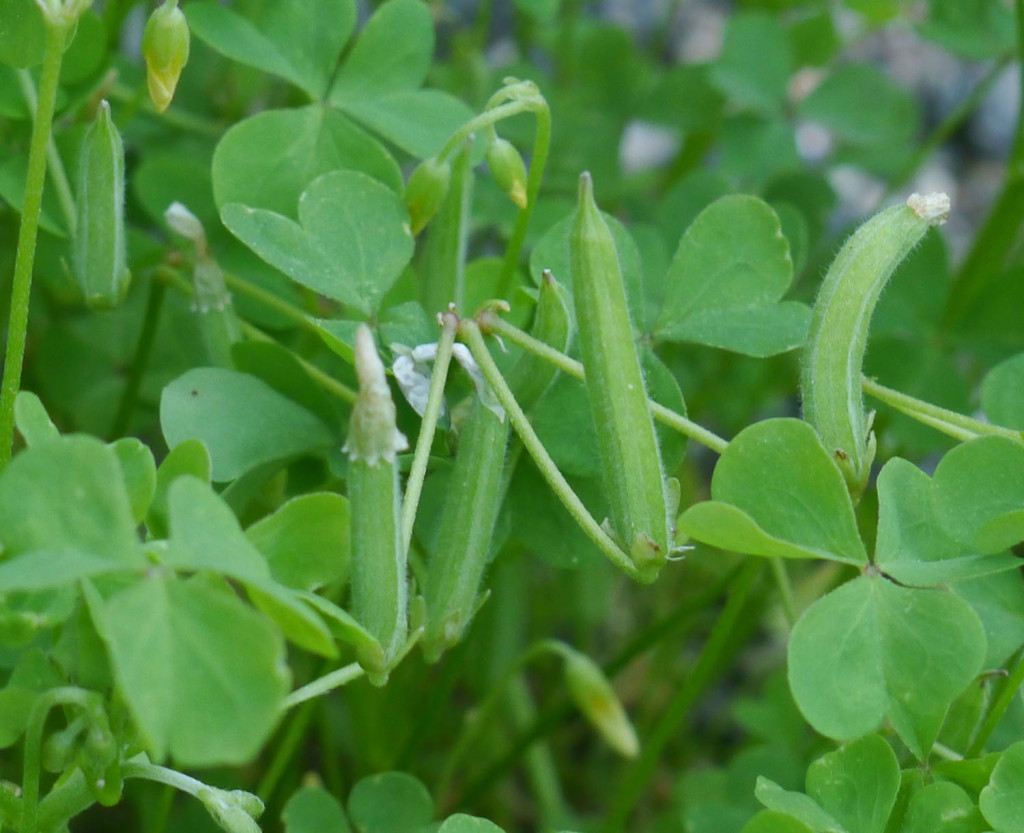 After the seed capsules mature and dry out, they split open to shoot their seeds some distance from the parent plant.