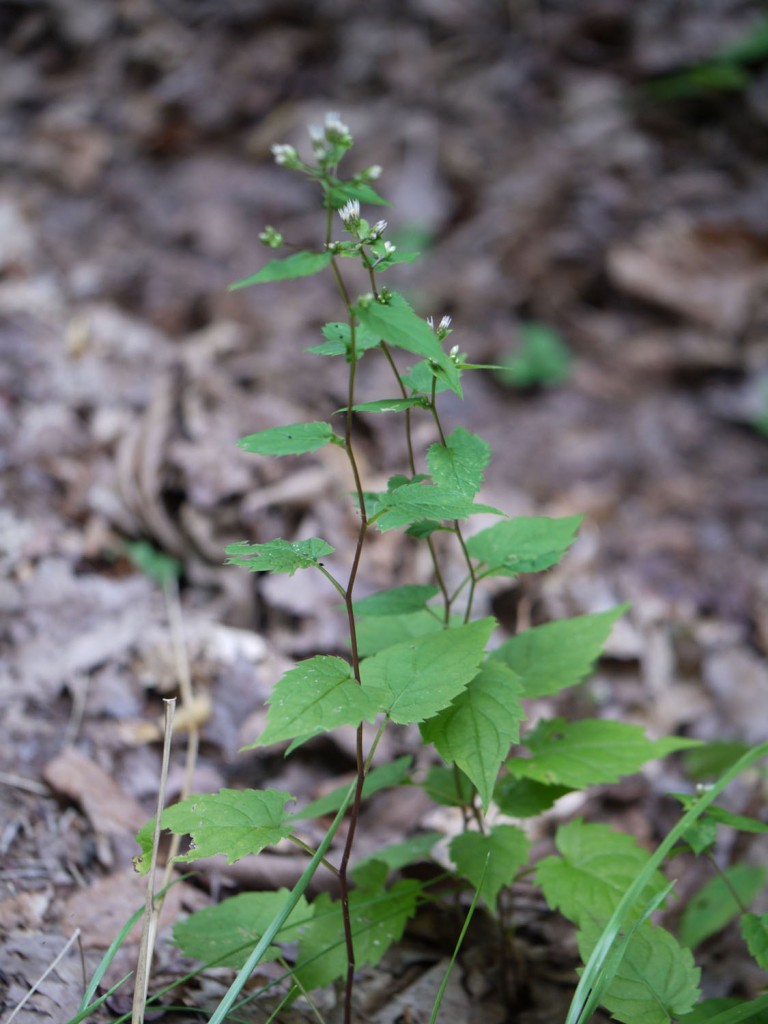
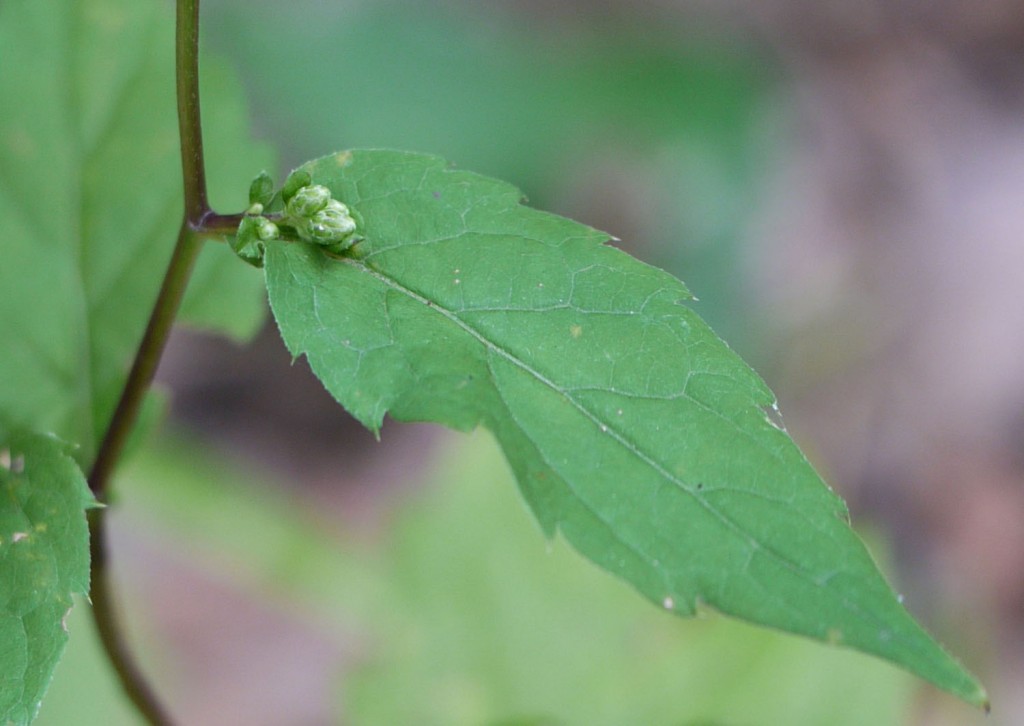
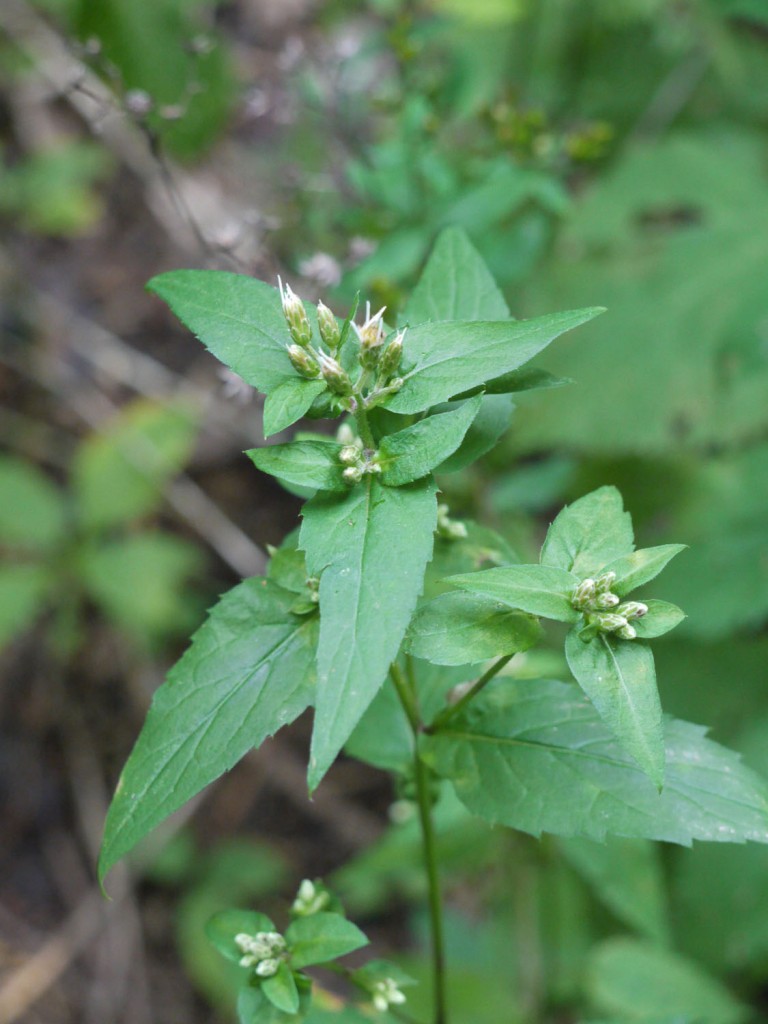
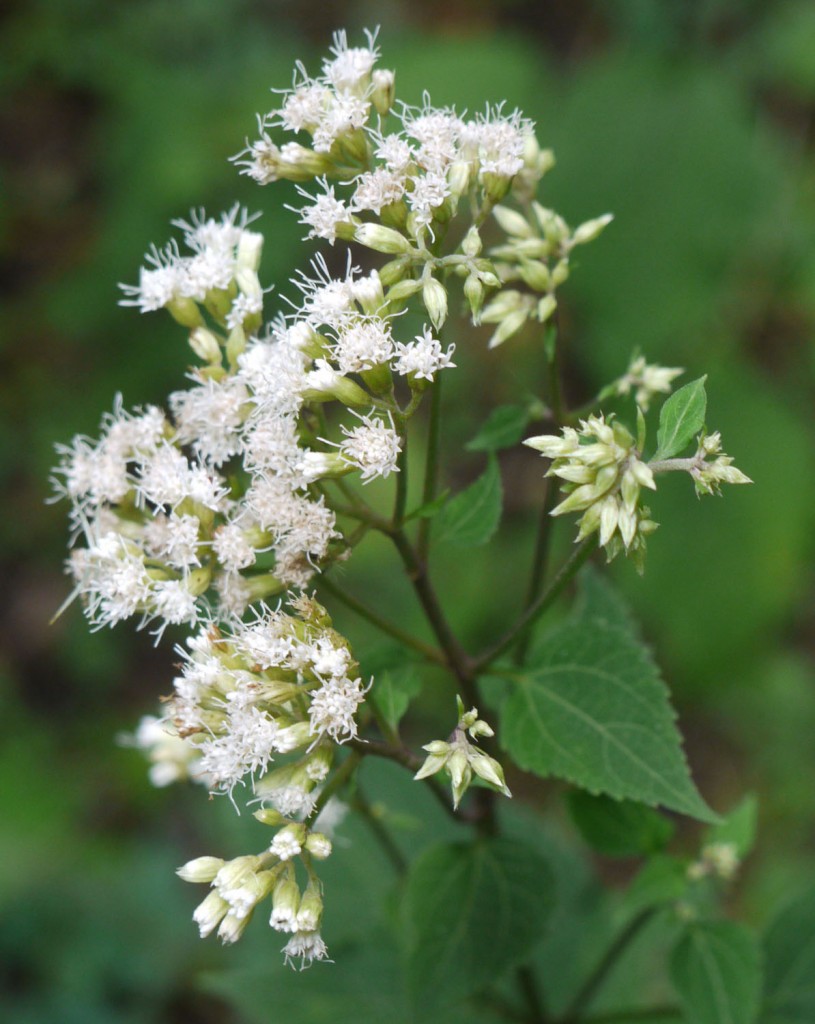
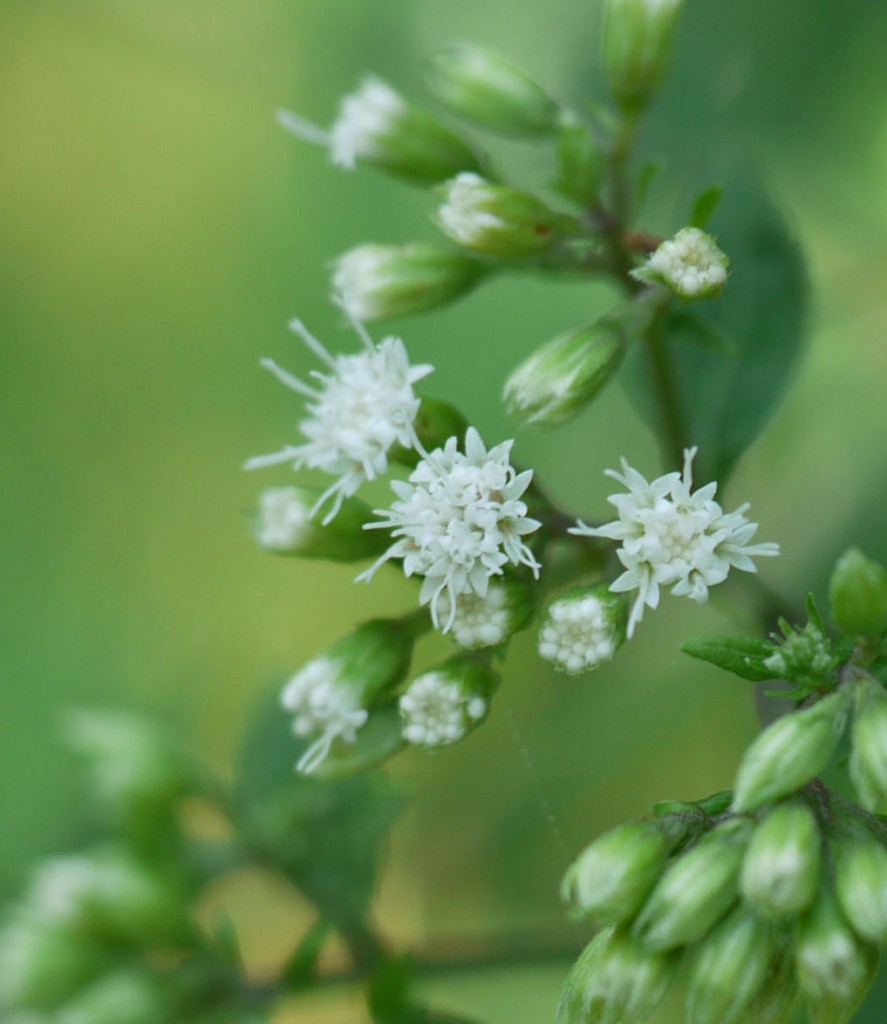
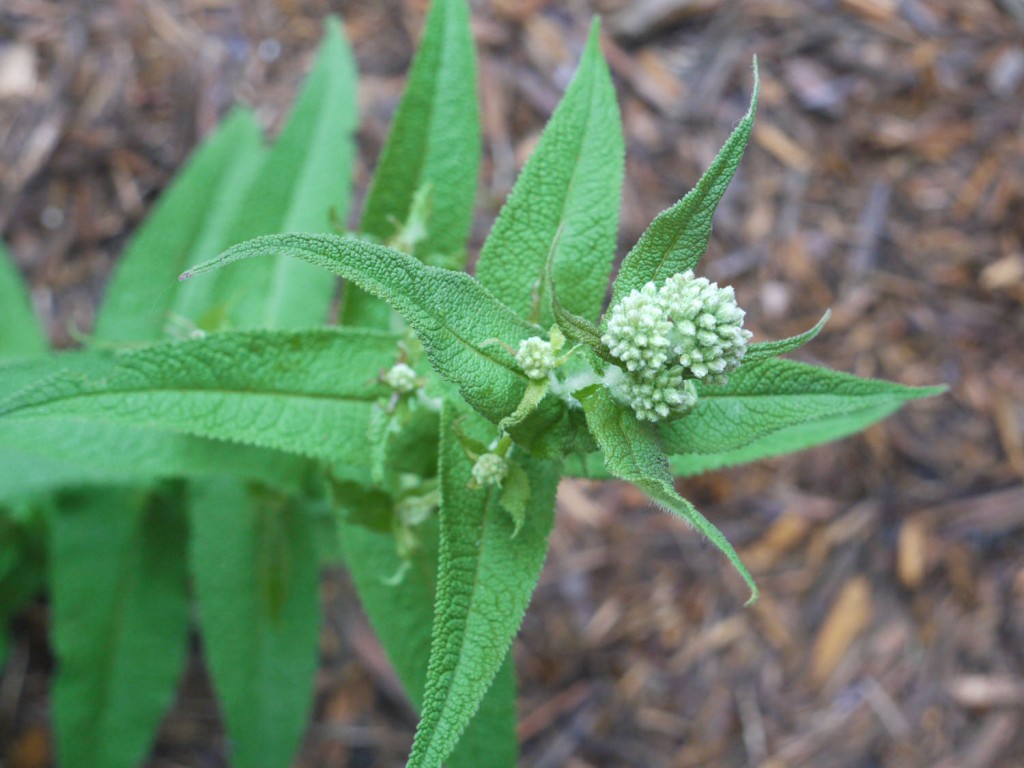
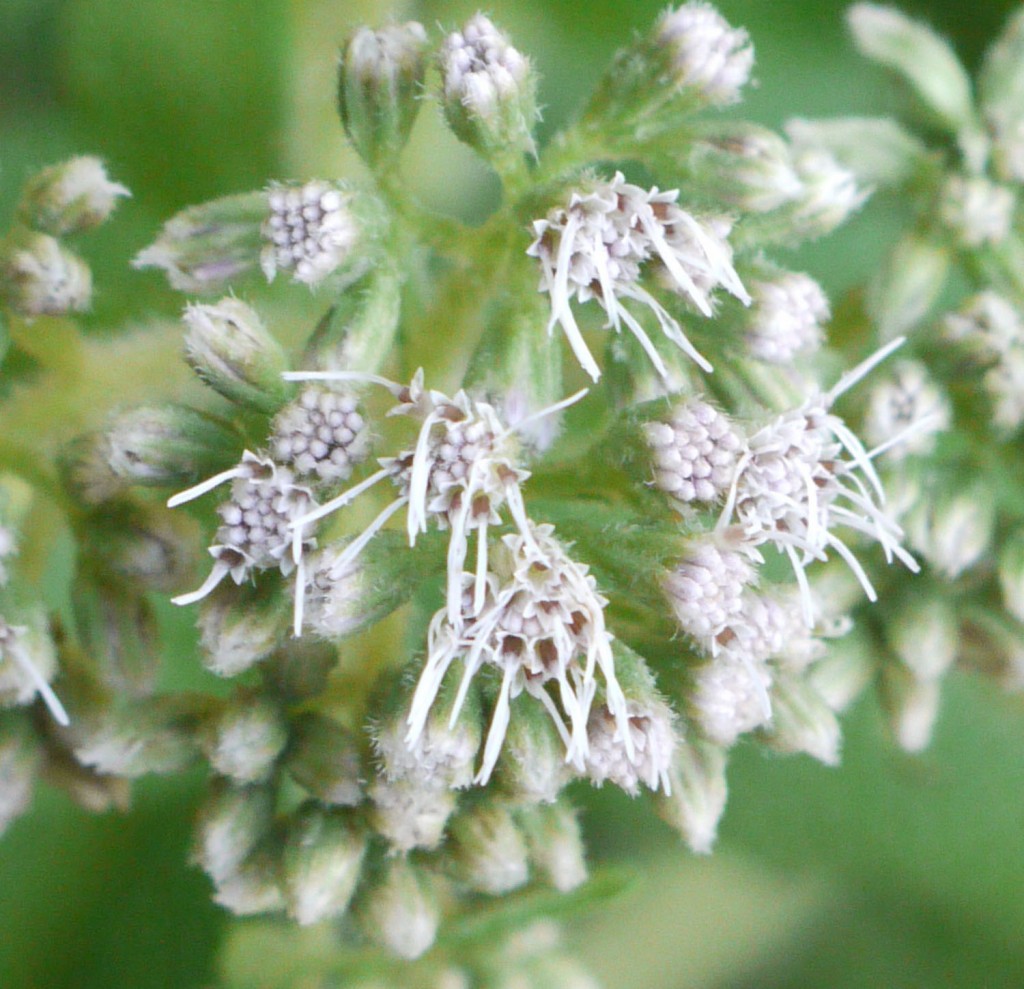
There are two ragweeds found throughout North America: Common ragweed (Ambrosia artemisiifolia) and Great ragweed (Ambrosia trifida). Let’s start with Great ragweed (pictured above) and study its parts and life cycle . . .
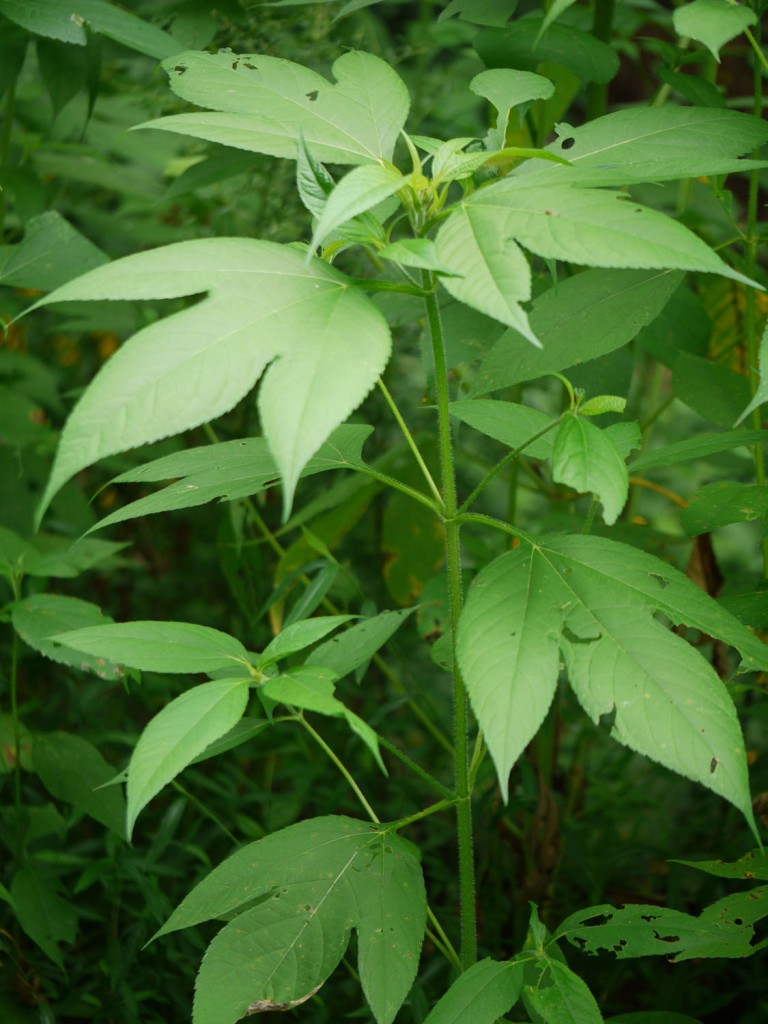
Great ragweed (Ambrosia trifida)
The lower leaves of Great ragweed have three — sometimes five — lobes (the trifida species name) while the upper leaves of a mature plant are elliptical:

Great ragweed
As the plant begins its reproductive phase, it starts with growing its staminate (male) flower spikes:
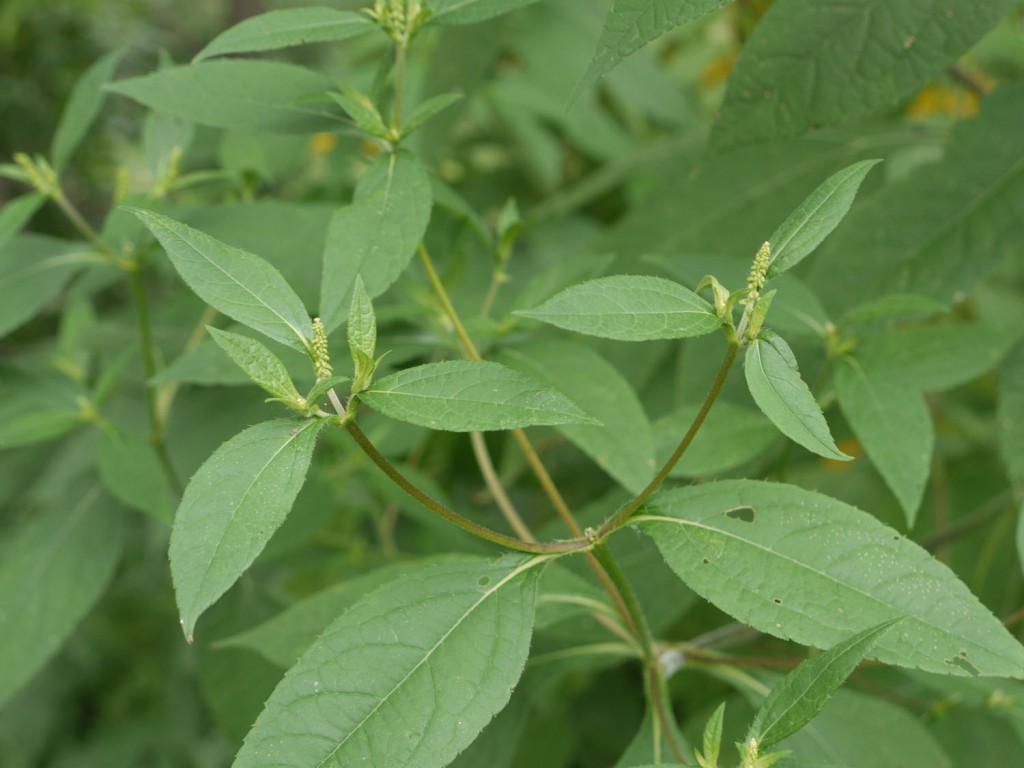
Great ragweed
Initially, the staminate flower spikes look fuzzy:
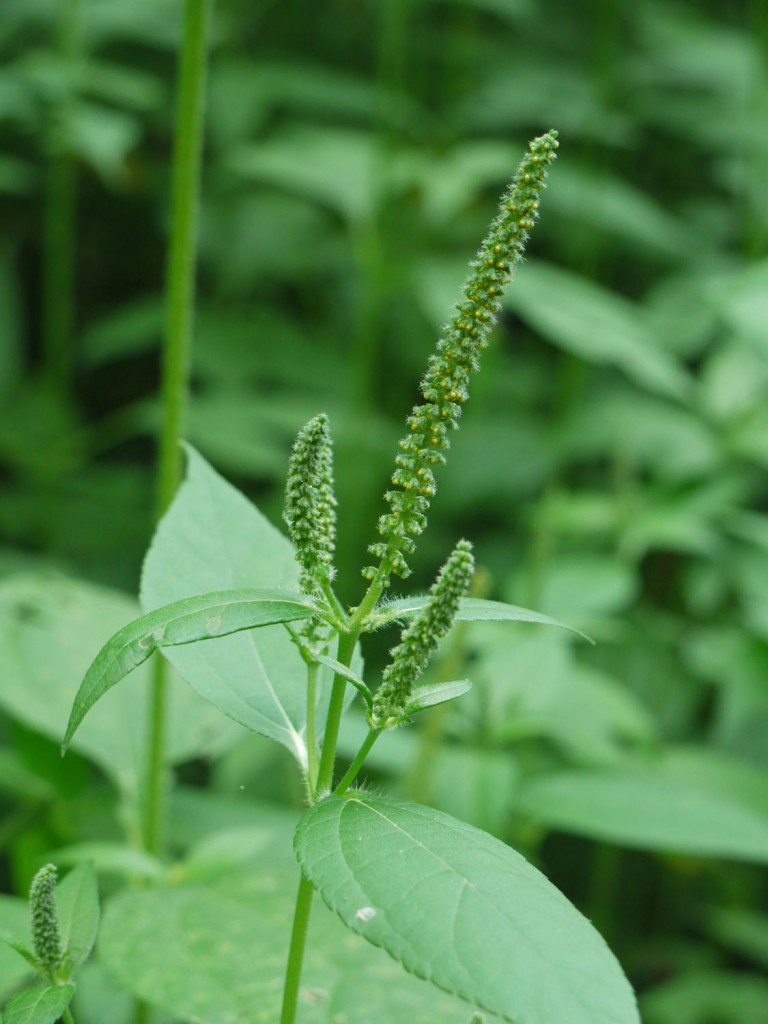
Great ragweed
Here’s a closer view of the developing staminate flower spike. . .
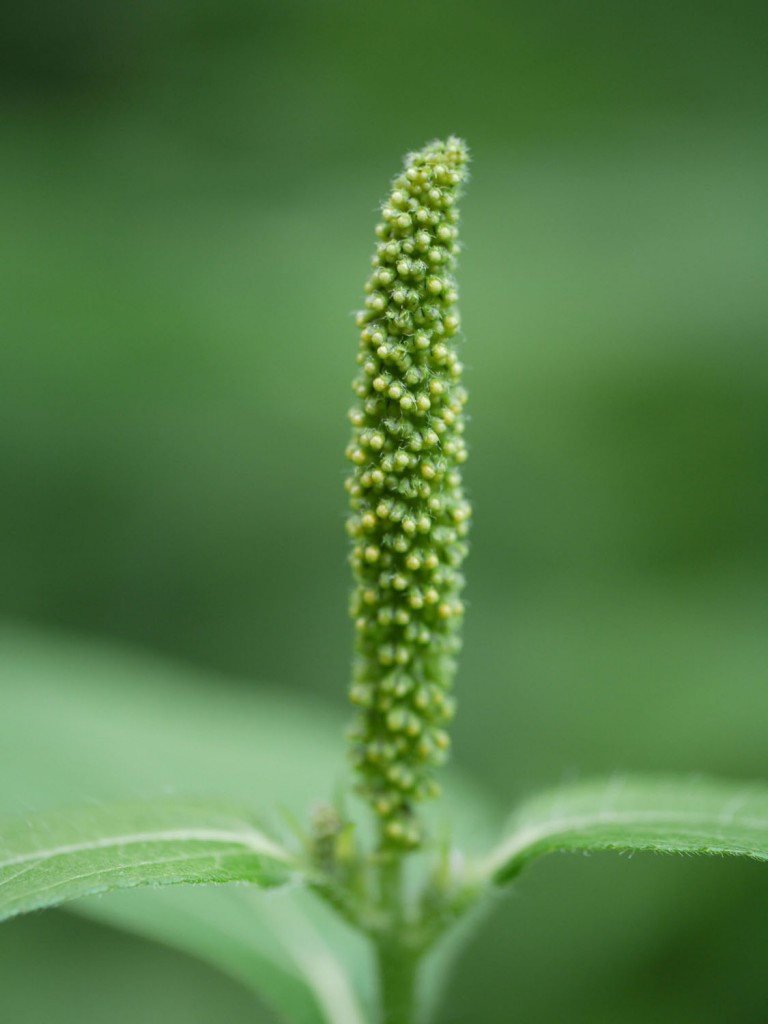
Great ragweed
. . . and a closer view. . .
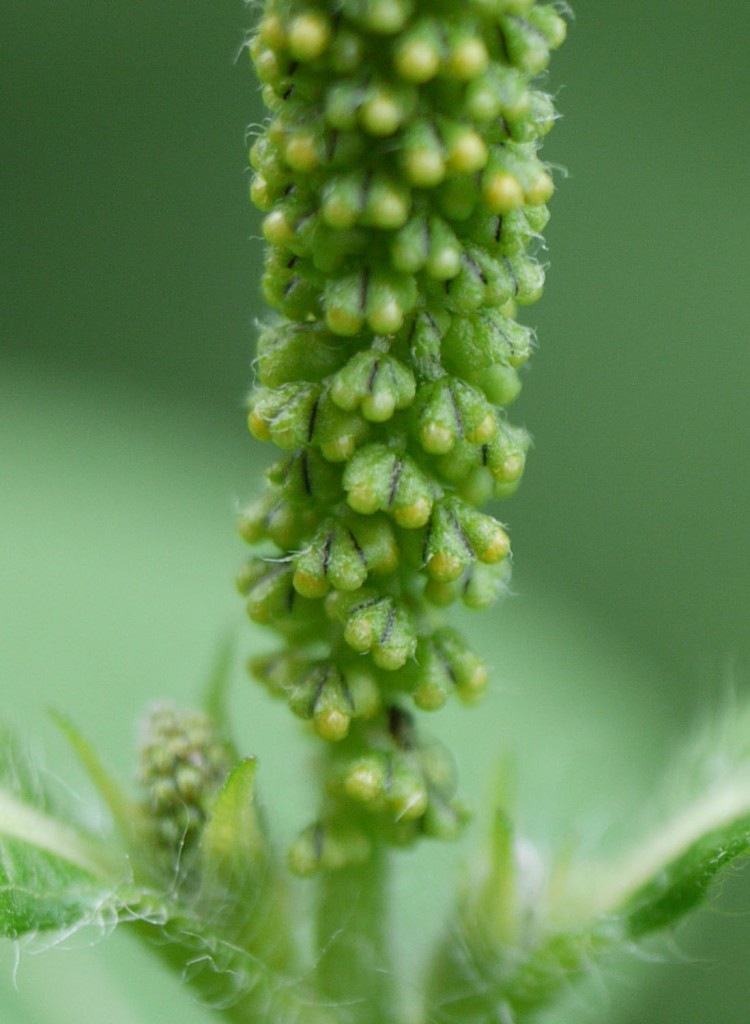
Great ragweed
. . . and an even closer view — with the staminate flowers open, spread along the spike, and producing pollen:
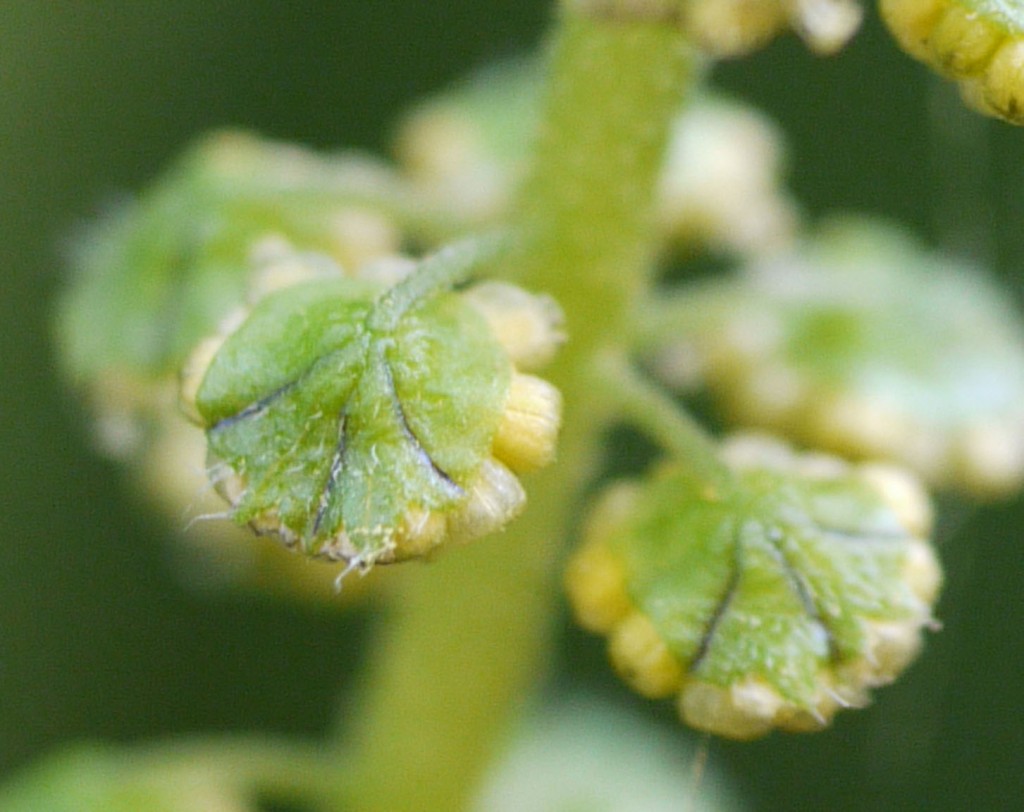
Great ragweed
Let’s pull back and look at the top of a Great ragweed plant:
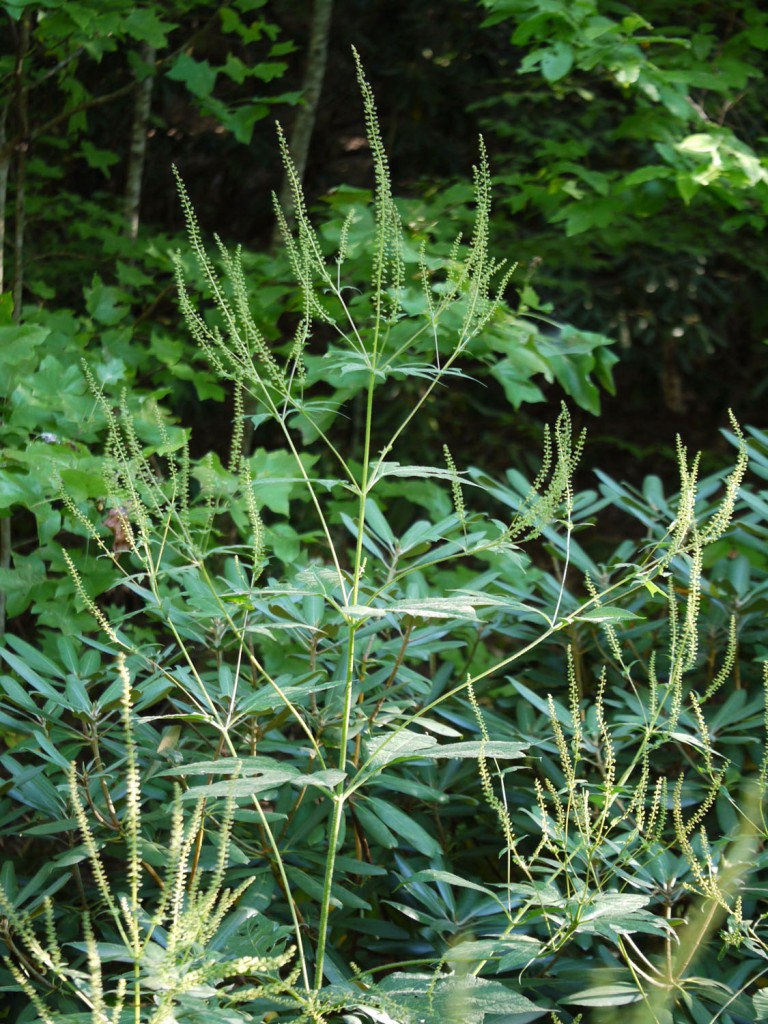
Great ragweed
All those staminate flower spikes have elongated and look thin and “weedy” now. At the base of the staminate flower spike, and from various points where leaves are attached to the plant’s stalk, the pistillate (female) flowers have grown. They are well-positioned to receive the wind-borne pollen from the staminate flowers:
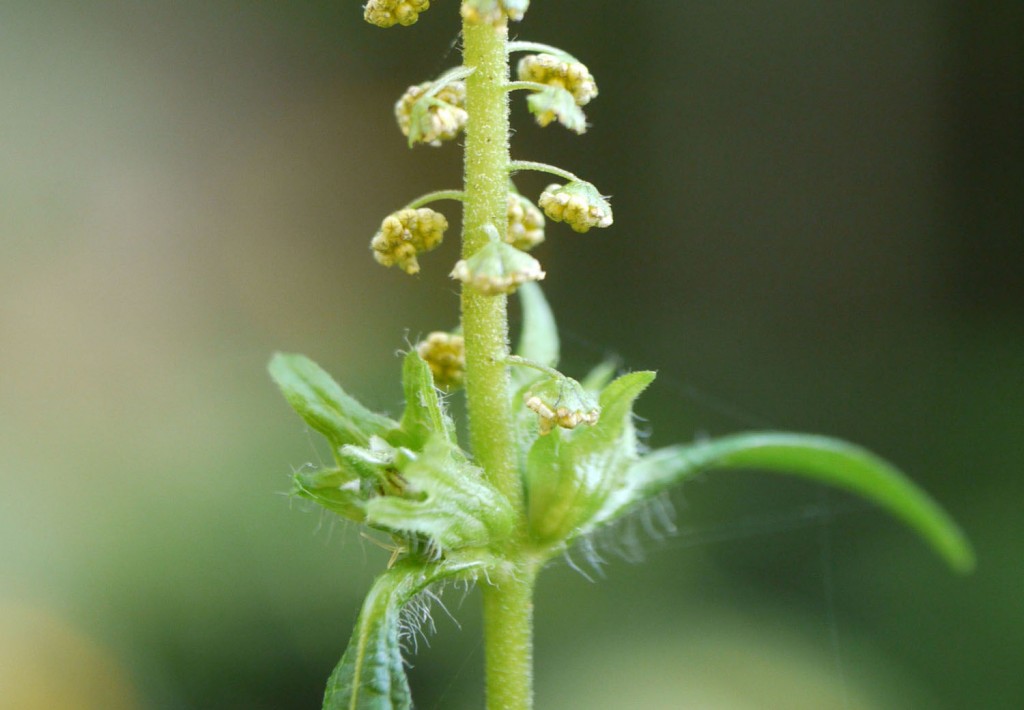
Great ragweed
After the flowers are pollinated, the Great ragweed plant looks like this:
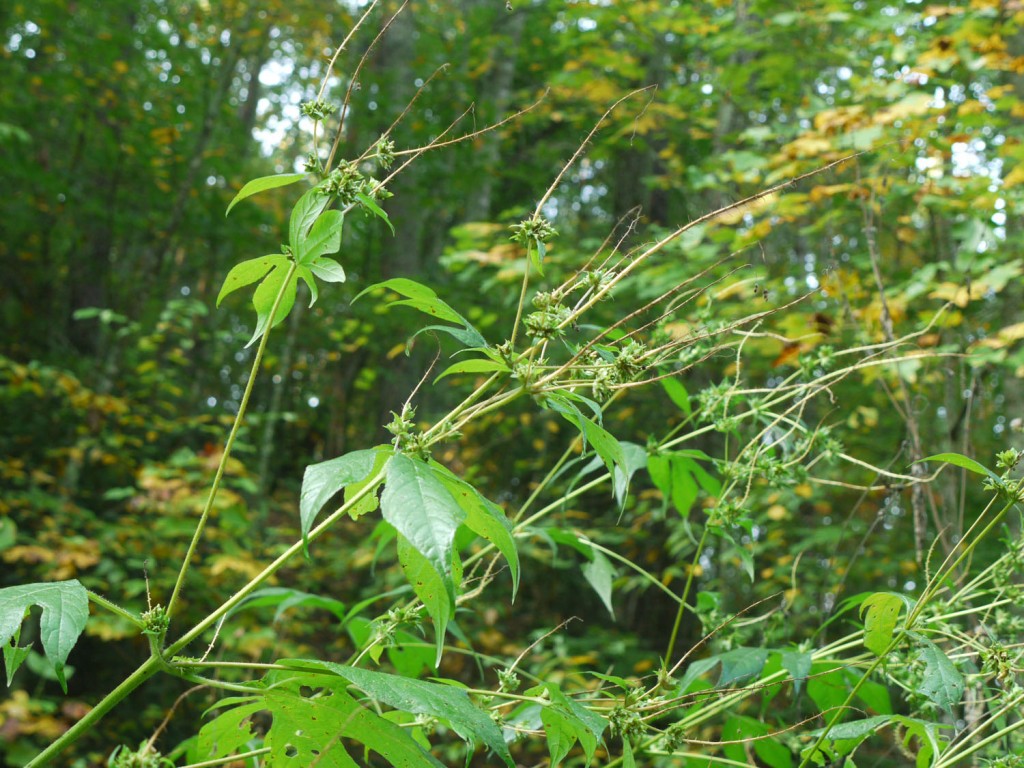
Great ragweed
You can see the clusters of pistillate flowers — now developing the seeds — and the flower spikes stripped of their dead staminate flowers:
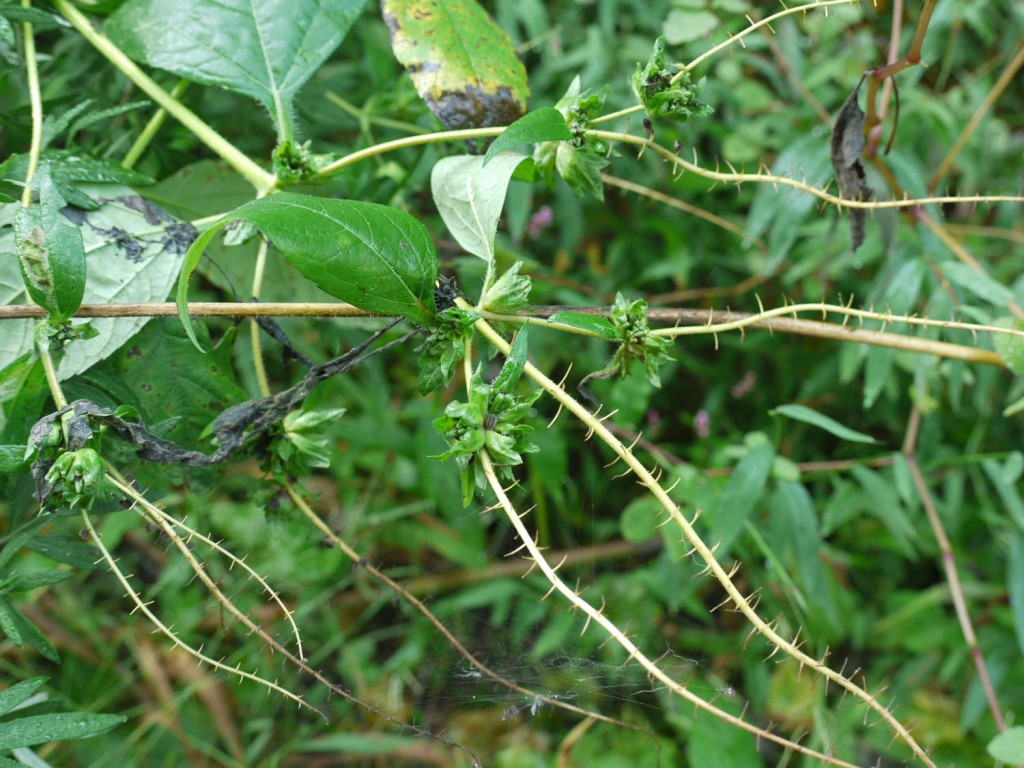
Great ragweed
Here’s a closer view of the pistillate flower cluster (for scale, note the ant along the stem) . . .

Great ragweed
. . . and a final very close shot of the pistillate flower as the seeds are developing:
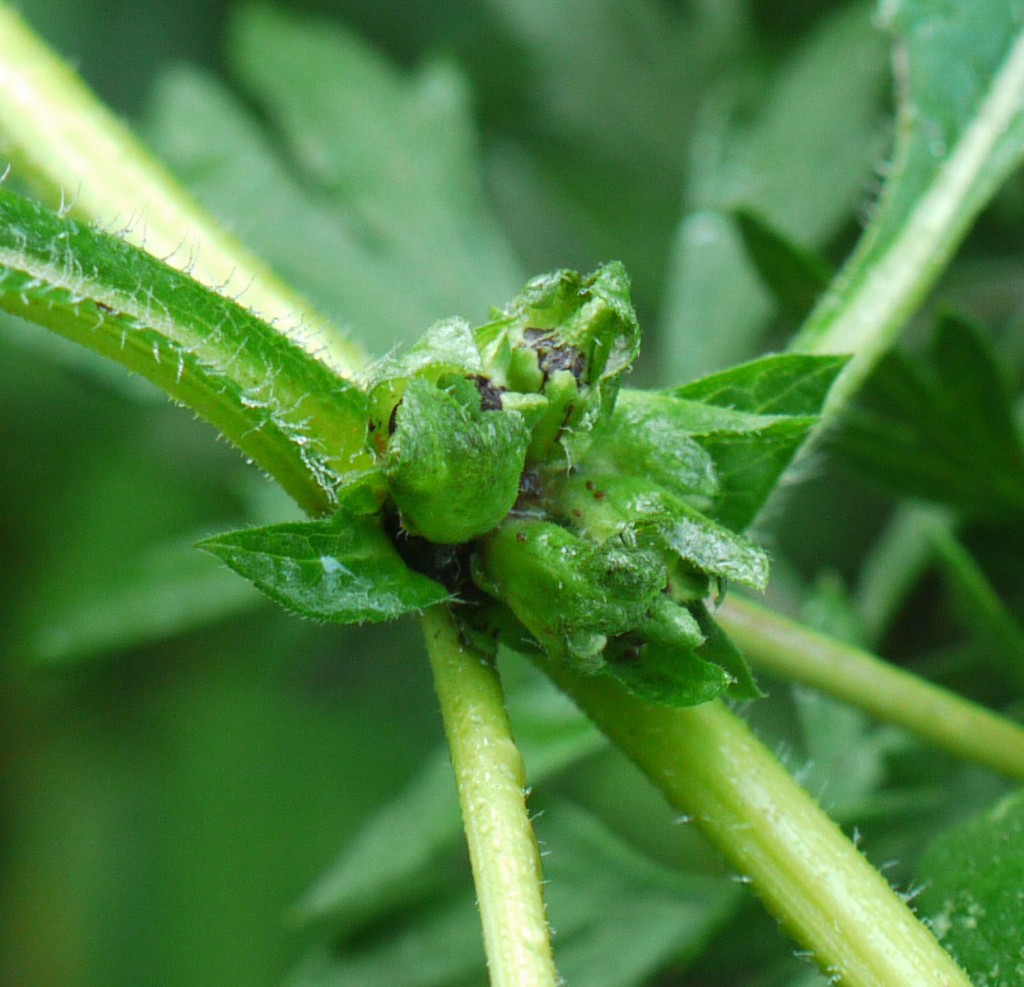
Great ragweed
Now, let’s turn to Common ragweed (Ambrosia artemisiifolia). As you look at these photos you can see the similarities between these two ragweeds. Common ragweed is in the foreground and some leaves from Great ragweed are in the background (in the photo below). This gives a sense of the relative difference in size between the two ragweeds.
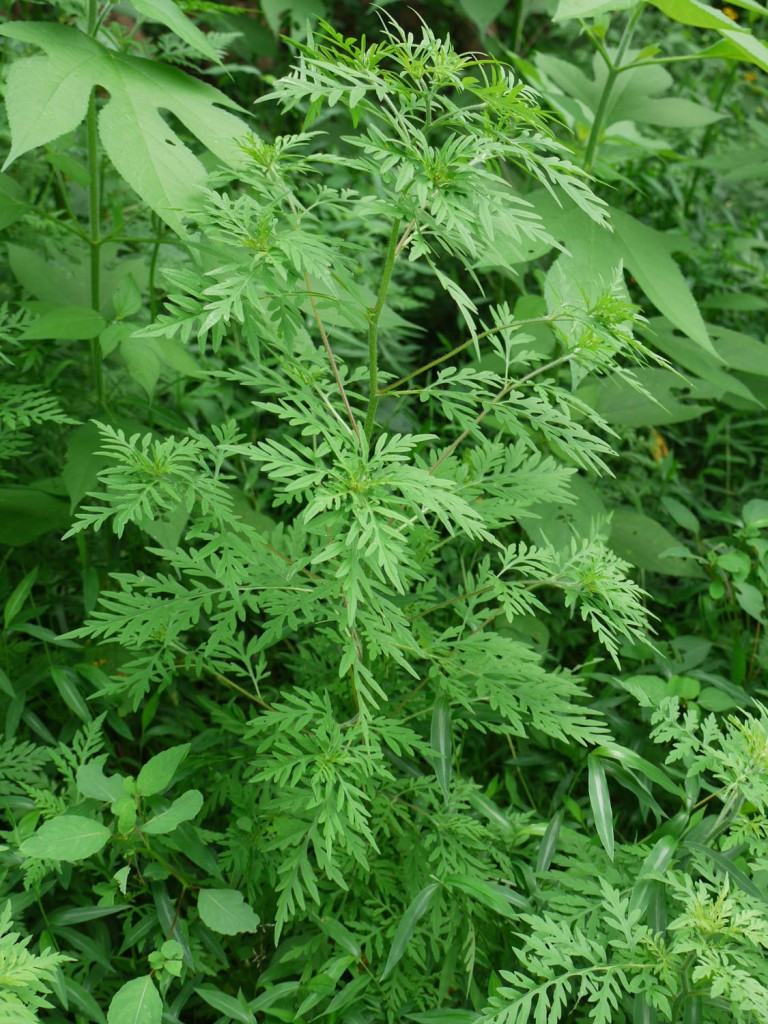
Common ragweed
Common ragweed has deeply cut lobes on all its leaves:

Common ragweed
Here are its developing staminate flower spikes:
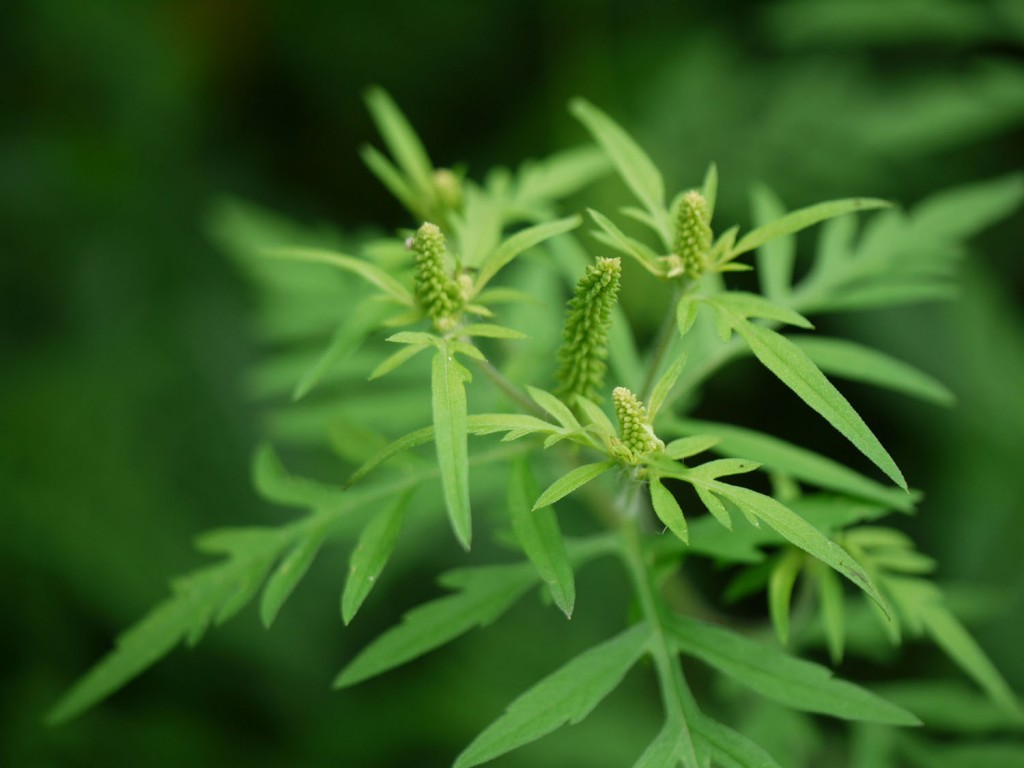
Common ragweed
Just as with Great ragweed, the Common ragweed’s flower spikes elongate . . .

Common ragweed
. . . and the flower heads spread along the length of the spike:
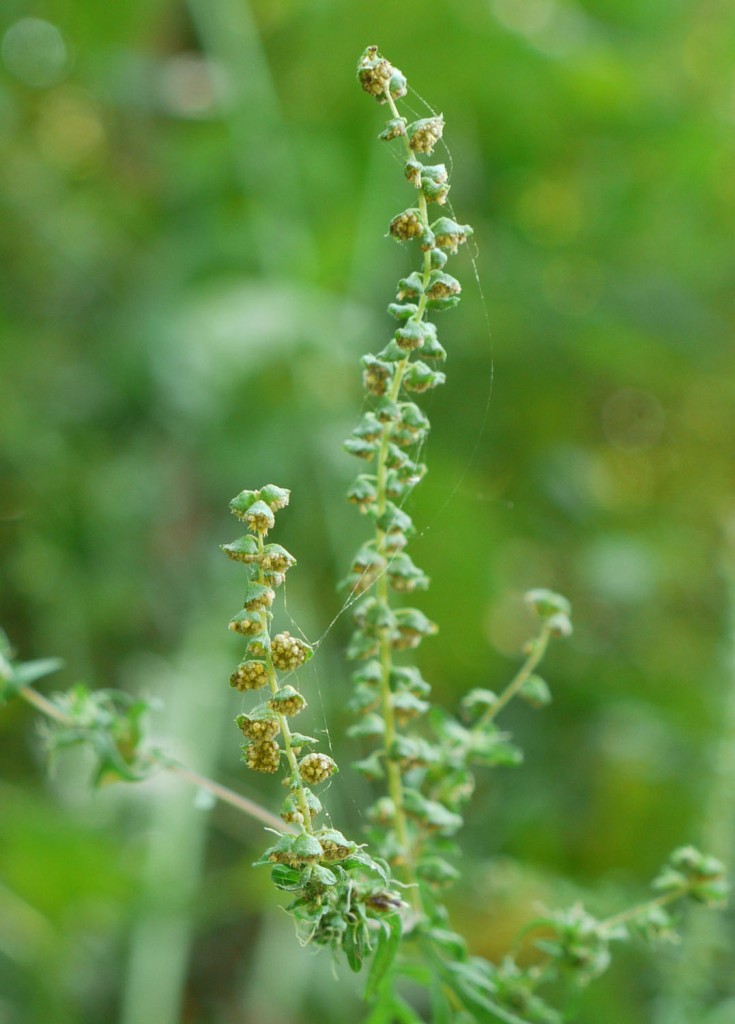
Common ragweed
The pistillate flowers, again, are primarily at the base of the staminate flower stalk:
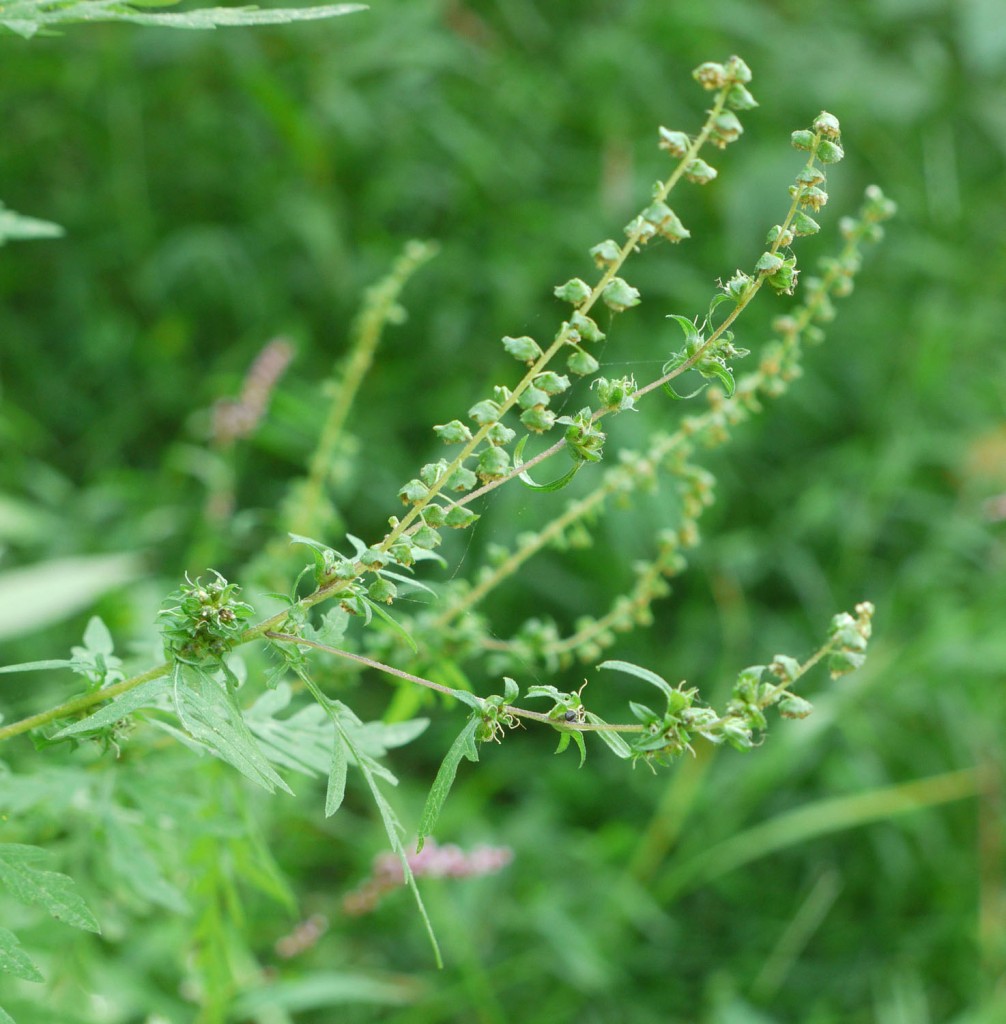
Common ragweed
This final photo is a close-up view of the clustered pistillate flowers on a Common ragweed plant. The dead stalk to the left is the staminate flower spike. We are looking down into the pistillate flower clusters.
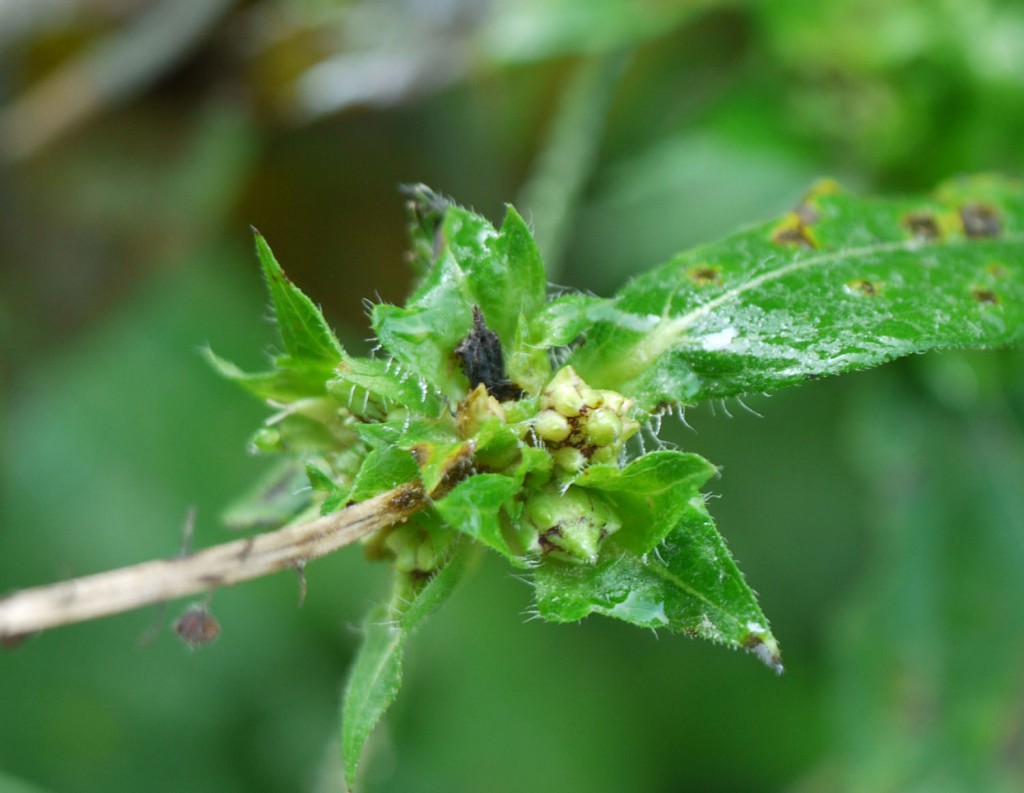
Common ragweed