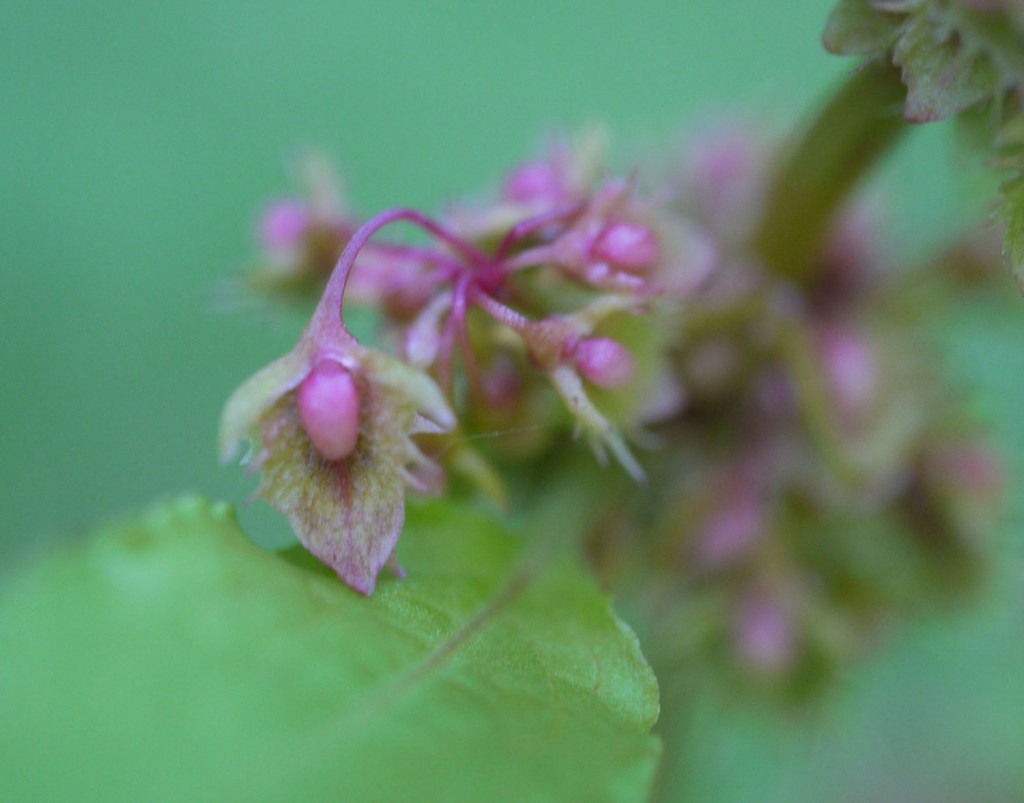
Mystery plant 011

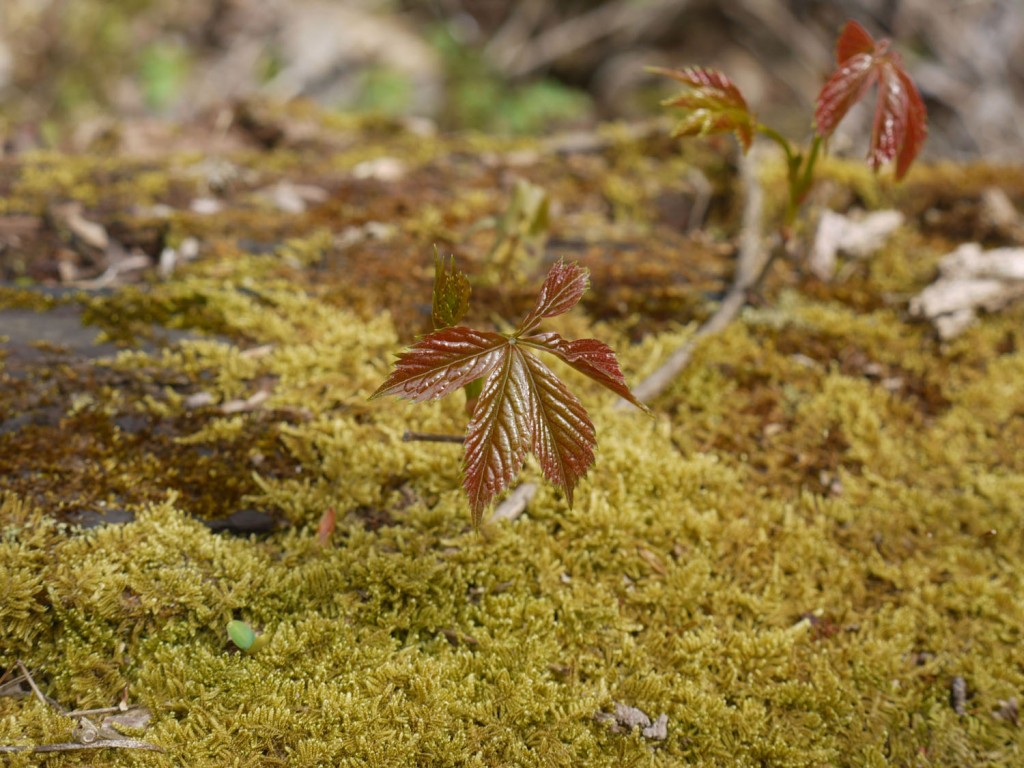
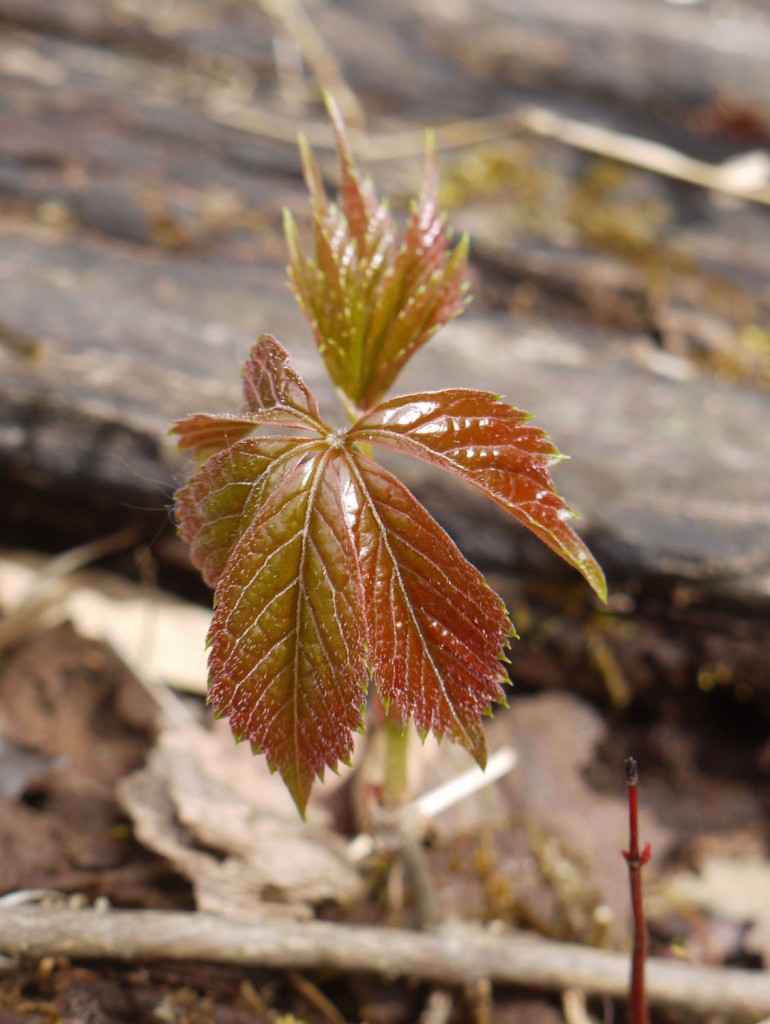
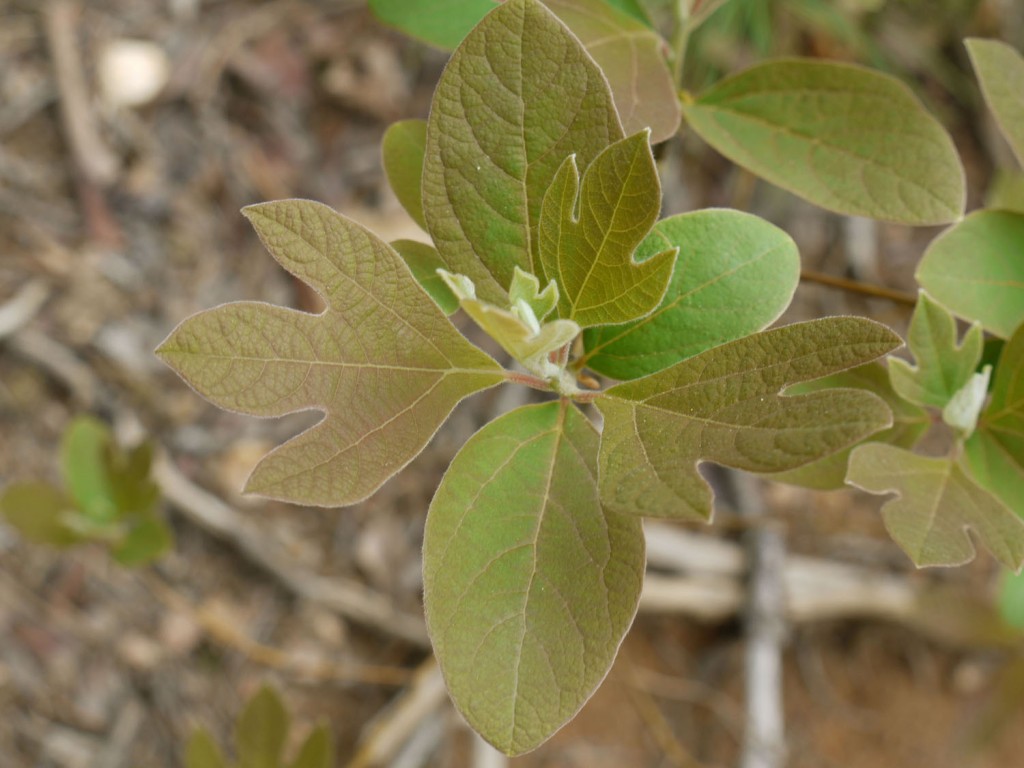
This tree is relatively short at maturity.  The leaves are its most striking feature.  When you can identify it, please post a comment with  both the common and scientific names.  Feel free to add other information or a personal story you have about this tree.

011-a

Leaves in the spring

011-b

Leaves in the summer

011-c

Tree in the fall

011-d

Leaves in the fall


ANSWER (subsequently added to this post to facilitate the “search” function for these images):  Sassafras (Sassafras albidum)

Posted in Mystery plant | 2 Comments

Poison ivy “looks similar” to Virginia creeper

Virginia creeper and poison ivy

Virginia creeper and poison ivy

People are frequently confused by these two plants when they are first learning to identify poison ivy (Toxicodendron radicans).  Although the individual leaflets are similar, Virginia creeper (Parthenocissus quinquefolia) has five leaflets to each leaf while poison ivy has three.  Let’s make some other comparisons between these “looks similar” plants.

Starting in the spring, here are photos of each plant as it begins growing new leaves:
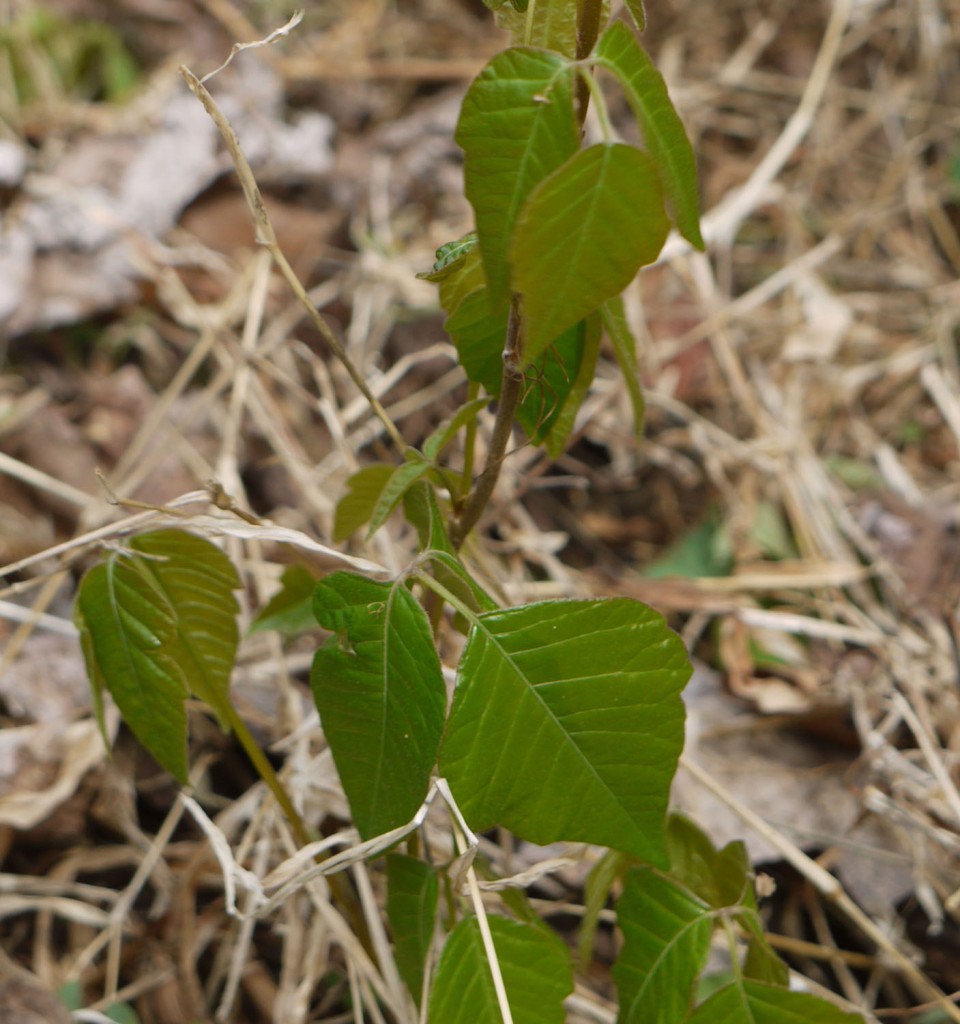
Poison ivy 1

Poison ivy

Poison ivy 2

Poison ivy

Virginia creeper 1

Virginia creeper

Virginia creeper 2

Virginia creeper

The leaves of Virginia creeper become green as they mature:

Virginia creeper 3

Virginia creeper

Here’s a full-sized Virginia creeper leaf with its five leaflets.  Note the leaflets all meet close together in the center of the leaf.

Virginia creeper 4

Virginia creeper

In contrast, poison ivy has the three leaflets and the center leaflet has a petiolule (a longer “stem’):

Poison ivy 3

Poison ivy

Here’s a cluster of poison ivy along the ground . . .
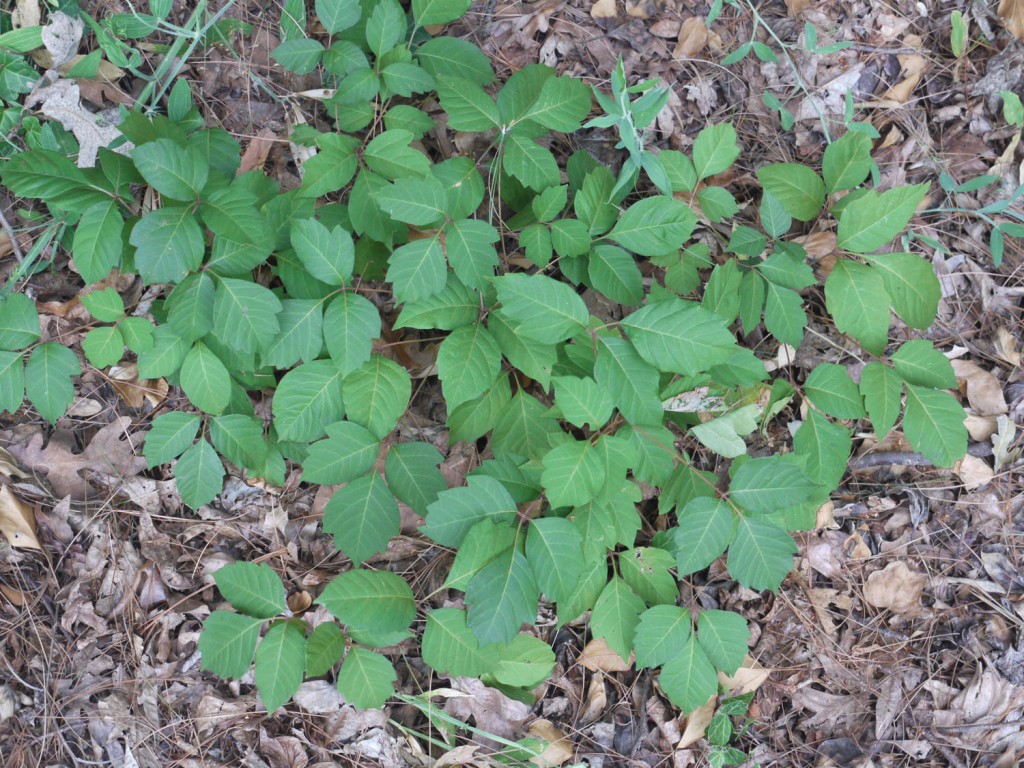
Poison ivy 4

Poison ivy

. . . and some branches of it growing up a tree’s trunk . . .
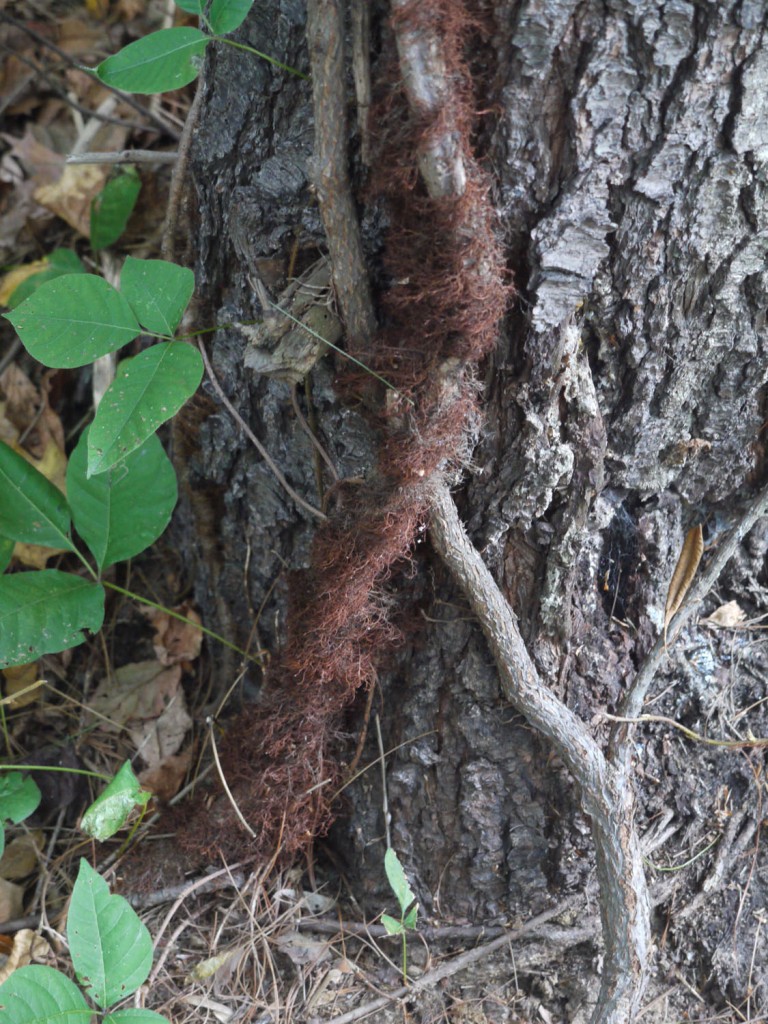
Poison ivy 5

Poison ivy

. . . to a leafy canopy of poison ivy within a tree’s leaves:
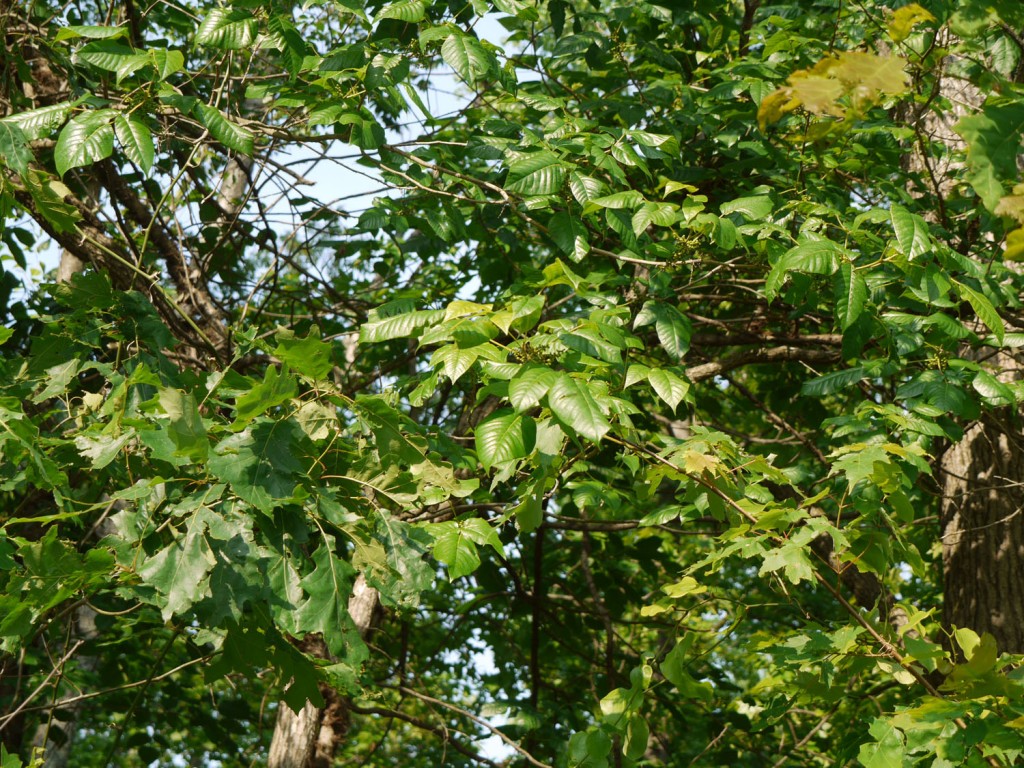
Poison ivy 6

Poison ivy

Here are three examples of Virginia creeper growing along the ground . . .

Virginia creeper 5

Virginia creeper

. . . hanging down . . .
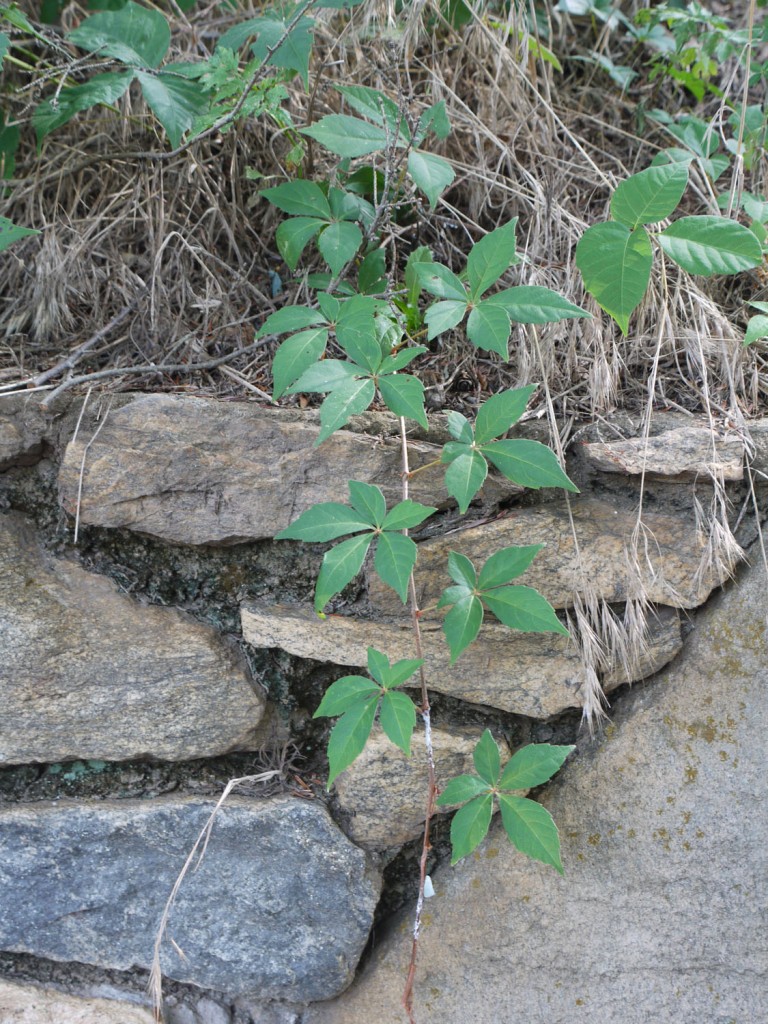
Virginia creeper 6

Virginia creeper

. . . and climbing a tree’s trunk:

Virginia creeper 7

Virginia creeper

As poison ivy’s berries develop, they are in a cluster.  Eventually, the berries will turn white.
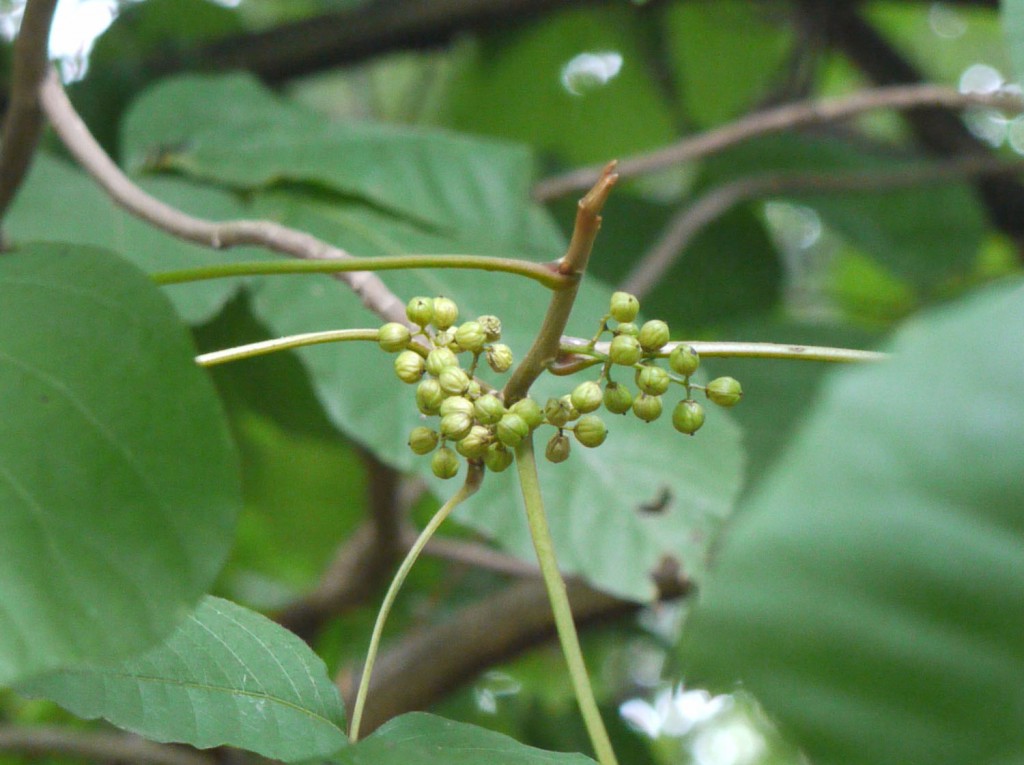
Poison ivy 7

Poison ivy

The developing Virginia creeper berries, which will turn dark purple with red stems when ripe, look like this:

Virginia creeper 8

Virginia creeper

The leaves of Virginia creeper turn rosy and yellow as they age in the fall:
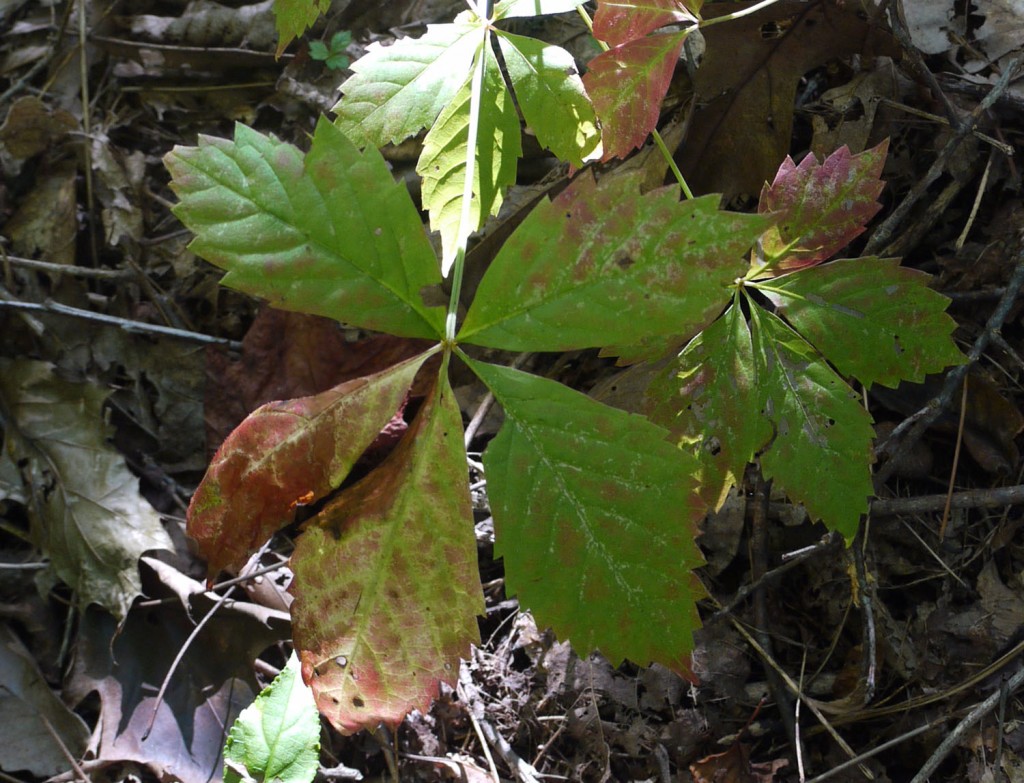
Virginia creeper 9

Virginia creeper

Similarly, poison ivy’s leaves also turn rosy and golden in the fall:
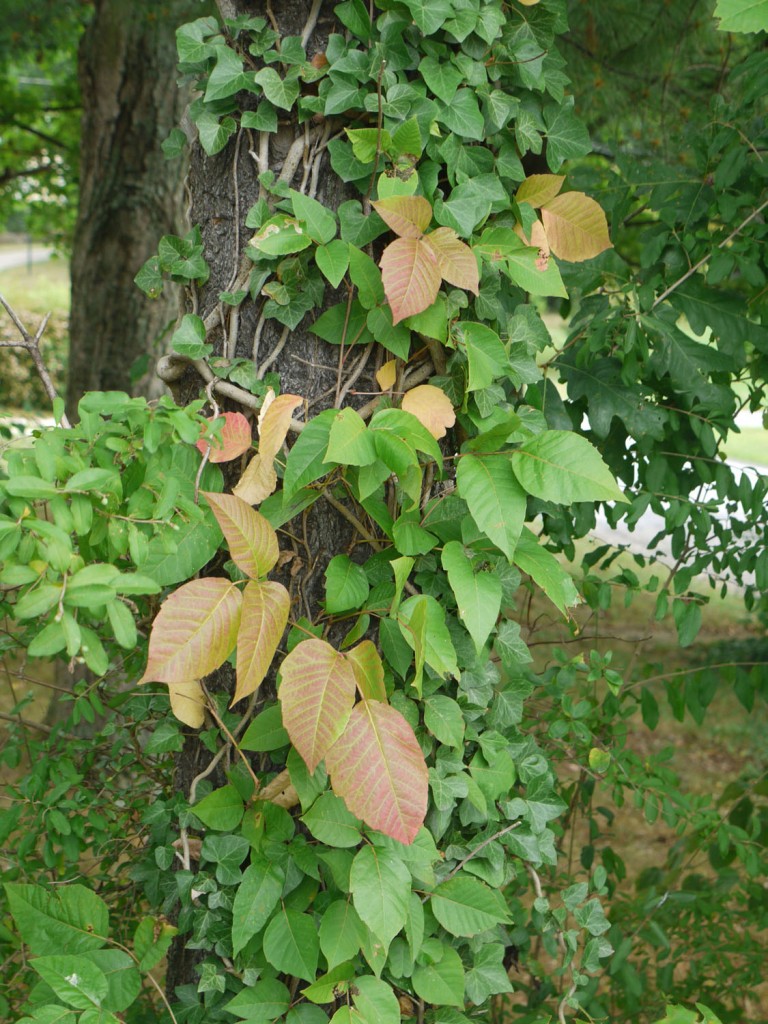
Poison ivy 8

Poison ivy

When poison ivy climbs a surface, it develops a “hairy” stem which is most evident during the winter season.

Poison ivy 9
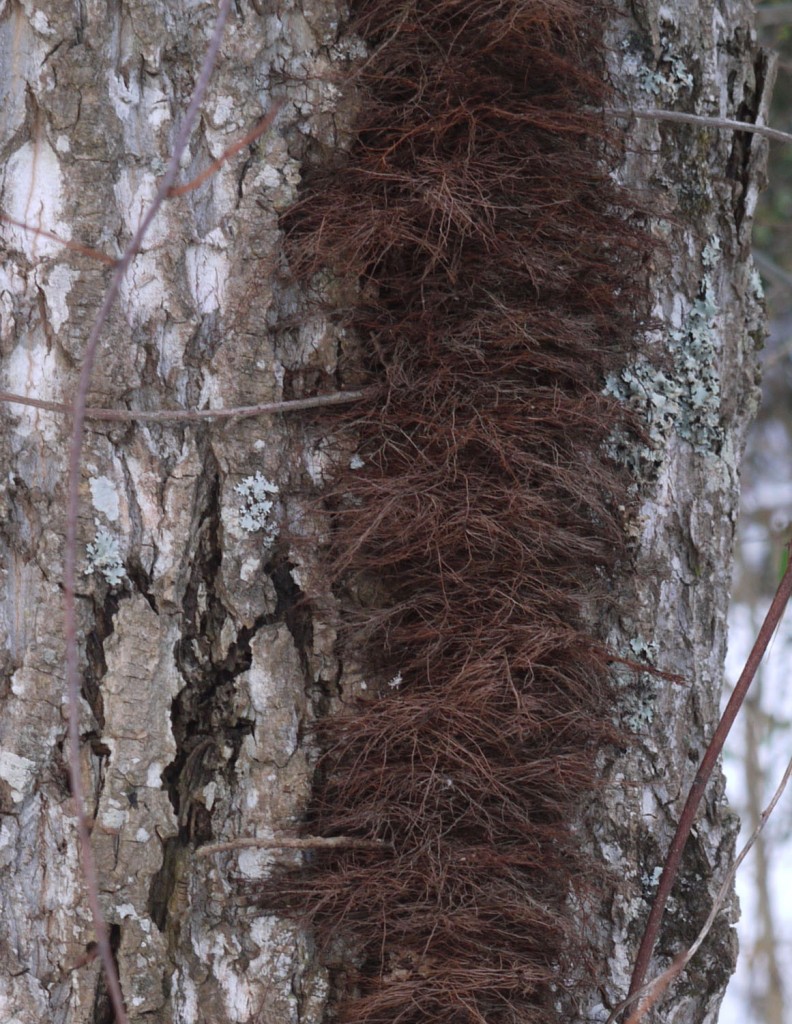
Poison ivy

Poison ivy 10

Poison ivy

Hopefully, this comparison has assisted you in developing a strong mental image of poison ivy (a hazardous plant) and Virginia creeper (which looks similar).  And perhaps you will now be better able to identify poison ivy in all seasons of the year.

Posted in Plant comparisons | 37 Comments

What is yellow dock?

Bitter dock

Bitter dock (Rumex obtusifolius)

Many folks like to use yellow dock to make personal tinctures.  There are two species of dock which are both referred to as “yellow dock” and which are both used for medicinal purposes.  The common name of yellow dock refers to the beautiful yellow color of the root — visible when you cut into it.

The two species of dock which we’ll review here are Bitter dock (Rumex obtusifolius) which is pictured above and Curly dock (Rumex crispus) which looks like this:

Curly dock

Curly dock (Rumex crispus)

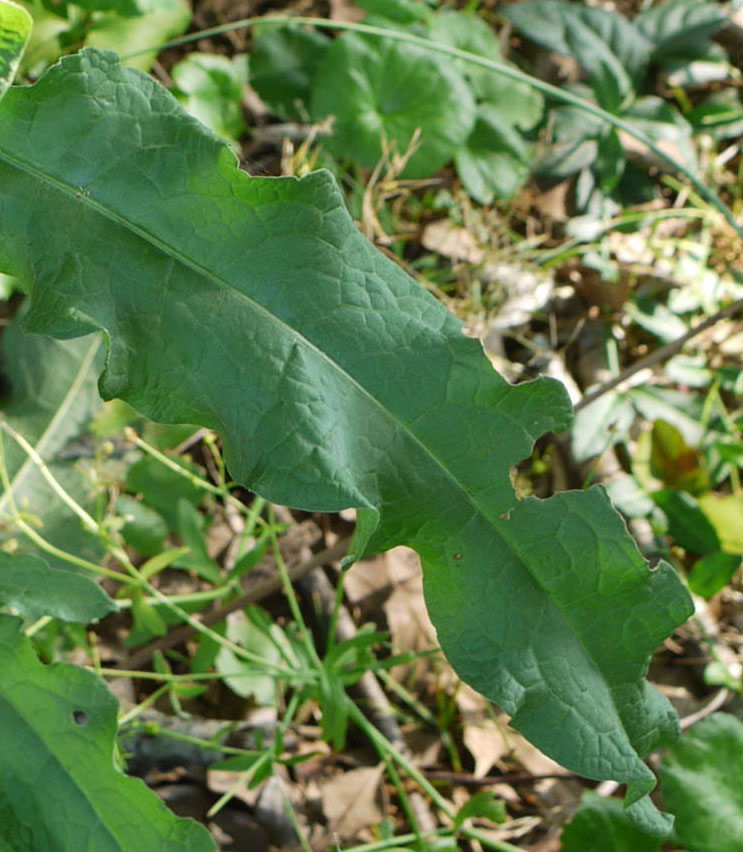
I have found two primary ways to distinguish between these species.  The first is the look of the plant’s lower leaves.  Bitter dock — also called broad-leaved dock — has leaves which are fairly “flat” across the surface.

Bitter dock leaf

Bitter dock (Rumex obtusifolius)

Curly dock — also called curled dock — has leaves with lots of “ruffles” across the leaf and along the edges.  The leaves are also lance-shaped as compared to the broad leaves of bitter dock.

Curly dock leaf

Curly dock (Rumex crispus)

A second distinguishing characteristic requires you to look very closely at the dock’s seeds (its “fruit”).  Bitter dock has sharp points, or spines, on the edges of its fruit’s wings.

Bitter dock flower stalk

Bitter dock (Rumex obtusifolius)

Bitter dock fruit

Bitter dock (Rumex obtusifolius)

Curly dock has wings of the fruit which are smooth-edged — in contrast to its curly-edged leaves.

Curly dock flower stalk

Curly dock (Rumex crispus)

Curly dock fruit

Curly dock (Rumex crispus)

Since the seeds and seed stalks persist through the winter season, you can identify this plant by the fruit’s wings even in the winter.

Bitter dock fruit in winter

Bitter dock (Rumex obtusifolius)

Posted in Plant comparisons | 7 Comments