While walking through the woods on a spring day, you may be fortunate enough to see the above plant. Or this plant . . .
 Wait a minute! Aren’t those the same species of plant?
Let’s look at the leaves. Here are the leaves of the first plant. . .
 And here are the leaves of the second plant. . .
 They certainly look similar — with highly dissected compound leaves.
So let’s look more closely at the inflorescence. The first plant. . .
 The second plant. . .
 Hhmmm. Both have white flowers. But something is a bit different between the two of them.
Okay, let’s put each plant’s flower side-by-side. How would you describe the difference?
 For the plant on the left, the flower’s spurs rise upward, spread apart a bit, and extend above the point of connection to the flower stalk. For the plant on the right, the flower’s spurs are shorter, rounded, and barely above the connection point to the flower stalk.
The left-most flower is from a Dutchman’s breeches (Dicentra cucullaria) while the right-most flower is from a Squirrel corn (Dicentra canadensis).
You might find these plants when their flowers are dying or when they’ve already developed seed capsules.

Dutchman’s breeches and Squirrel corn
Or you might find only the foliage. The next comparison image shows leaves which look a bit different. It seems like the Dutchman’s breeches leaves are somewhat wider within their dissected lobes — at least with these specimens. This may be misleading since illustrations (and comments) in field guides show (and state) the leaves are mostly the same.
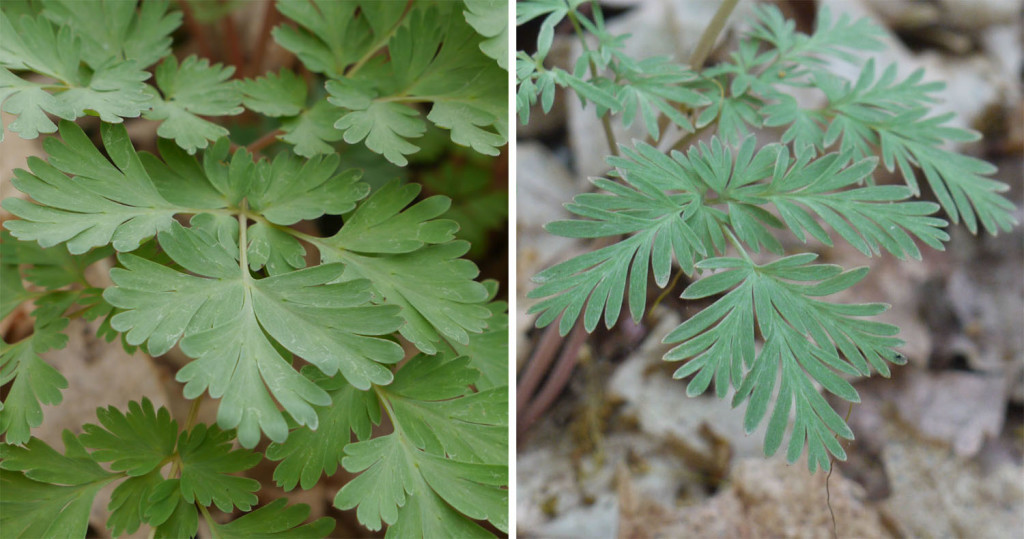
Dutchman’s breeches and Squirrel corn
The best way to distinguish between these two Dicentras is to find them in bloom.

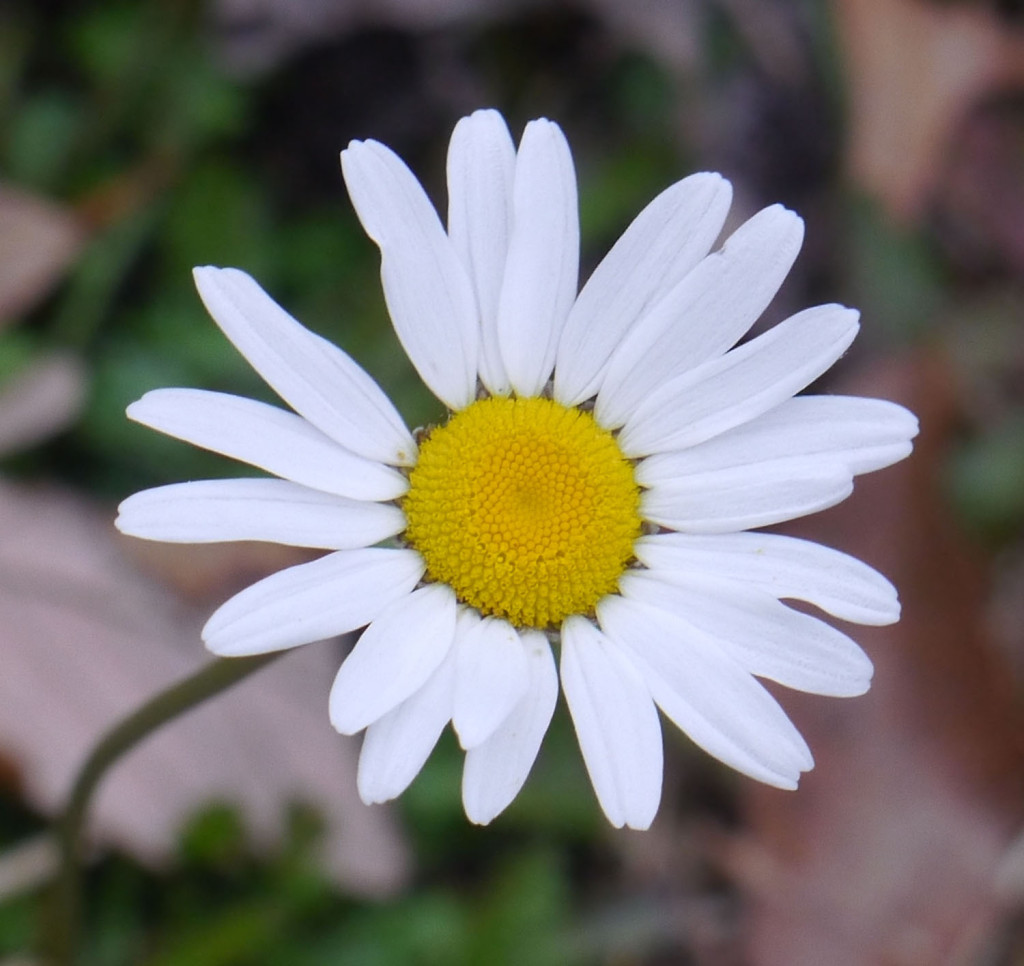 Oxeye daisy (Leucanthemum vulgare) is one of those summer flowers that’s so common we sometimes forget to stop and admire it. It’s a member of the Asteraceae family. The flower heads consist of yellow disk florets in the center and white ray florets around the circumference.
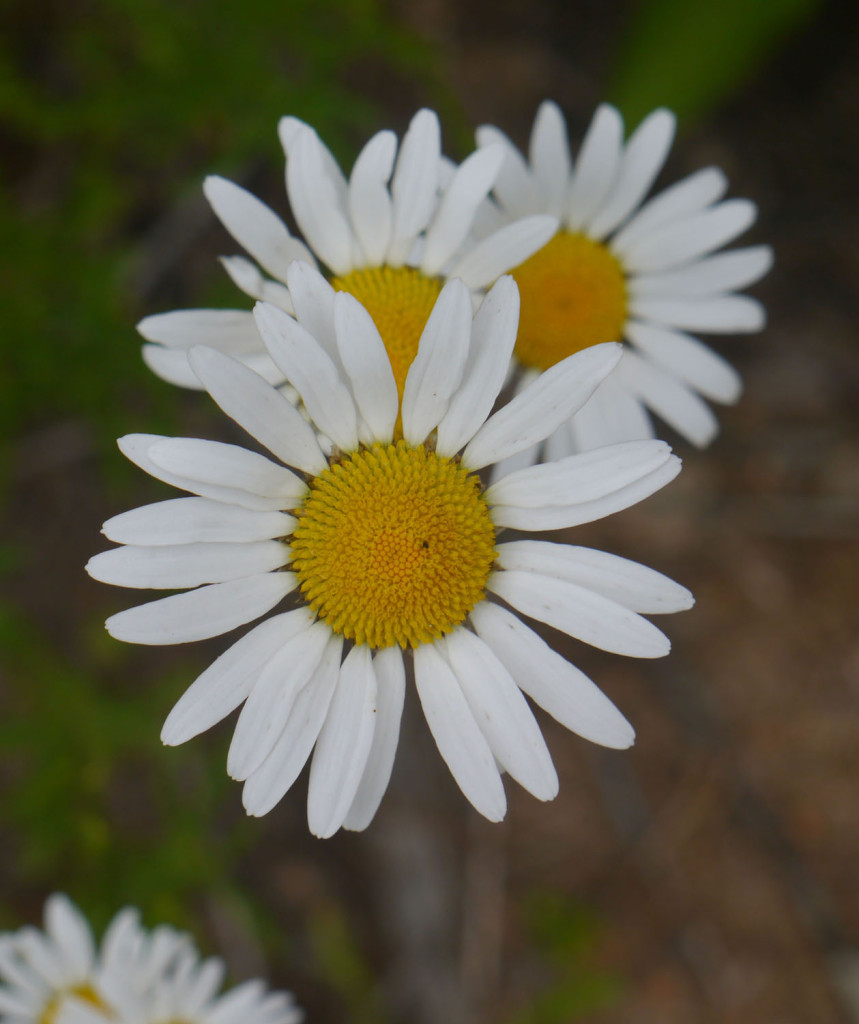 After blooming, the flower heads become seed heads. Oxeye daisy continues growing, blooming and developing seeds throughout the summer.
 The leaves have an interesting — almost indescribable — shape. (And they are edible!)
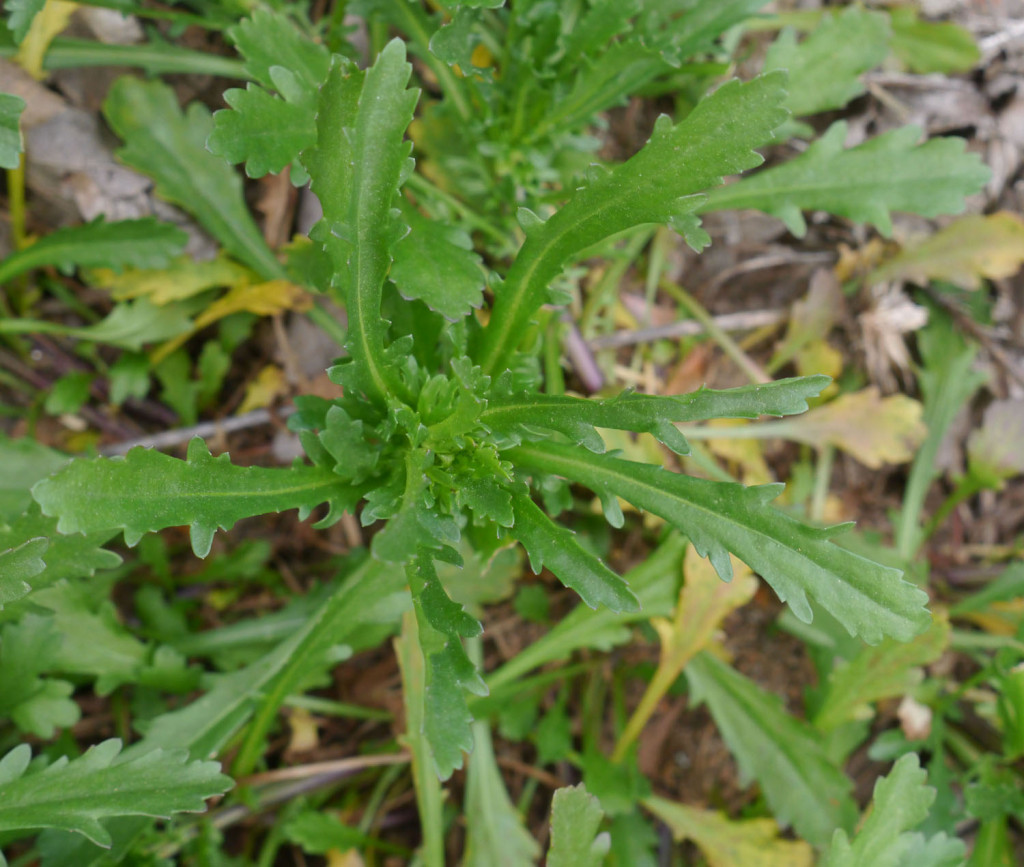 Watch this video to learn about Oxeye daisy (Leucanthemum vulgare) in all seasons of the year and to discover its two methods of reproduction.