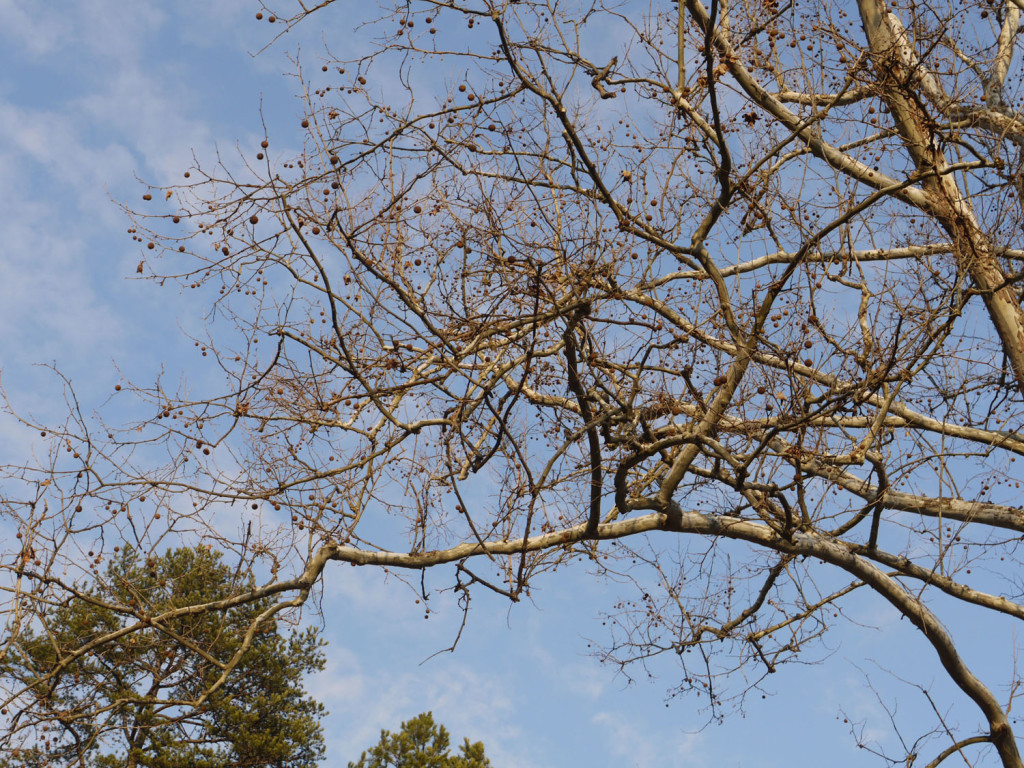
 One way to identify a tree during winter is to look up. Sometimes there will be dried seed capsules still hanging from the otherwise bare branches. Here’s another tree in winter:
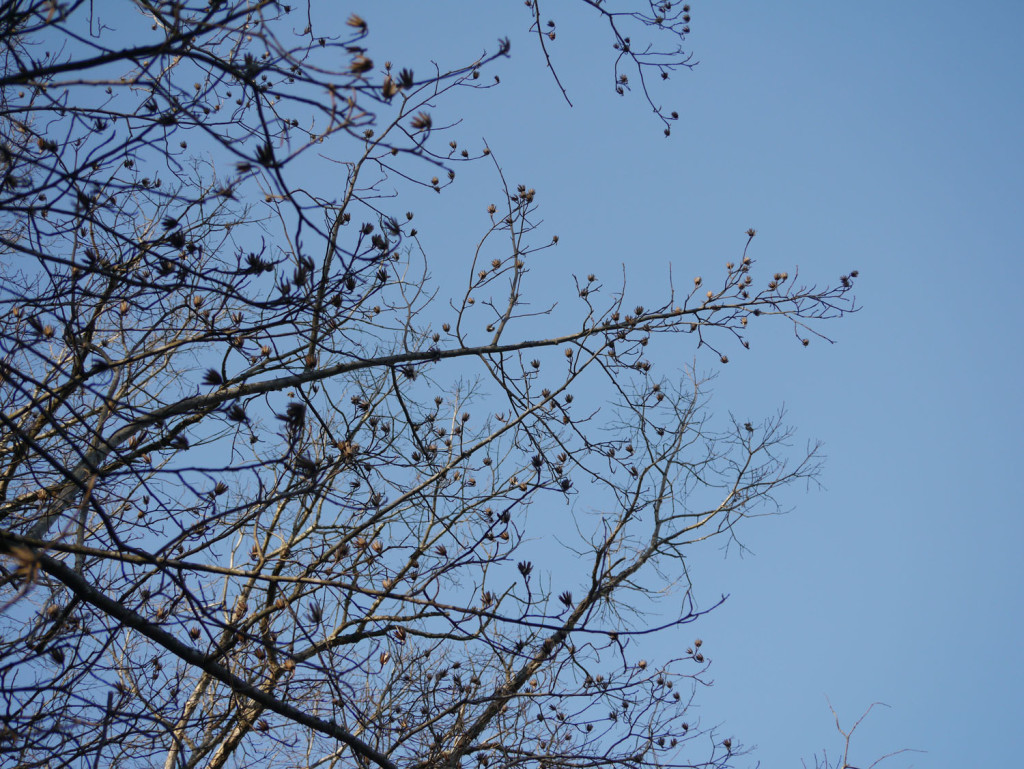 And here’s a third tree:
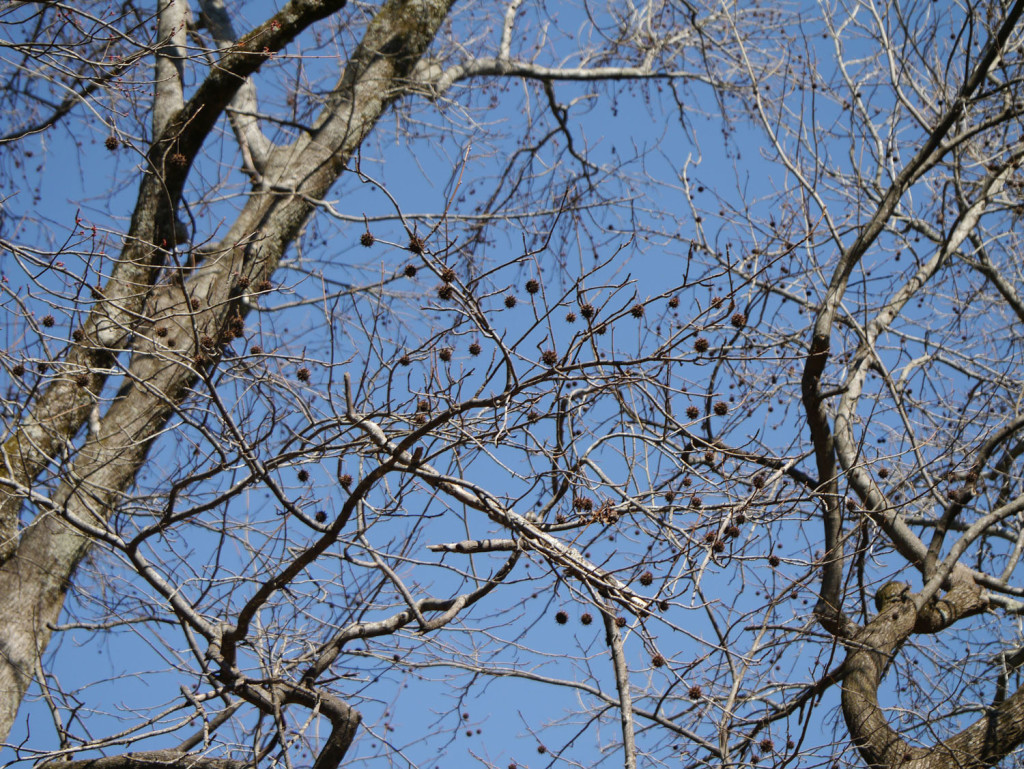 It’s still difficult to tell these trees apart so let’s look at some lower branches which are closer to us. The first tree:
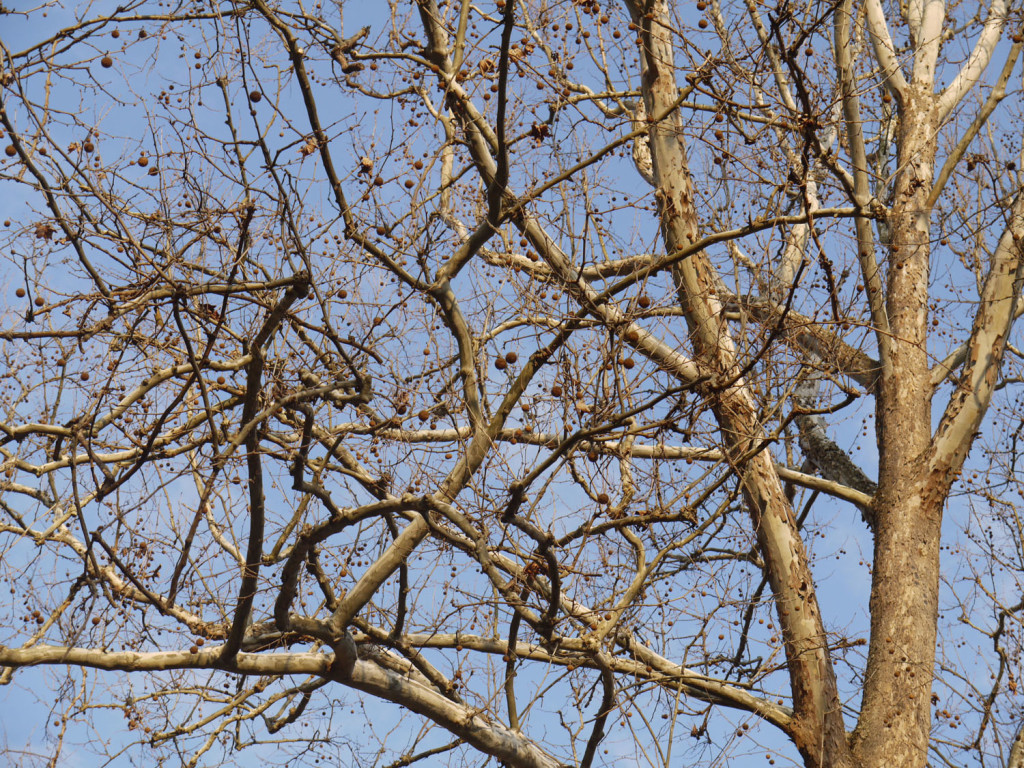 And the second tree:
 Now let’s look at the first tree’s seed capsule.
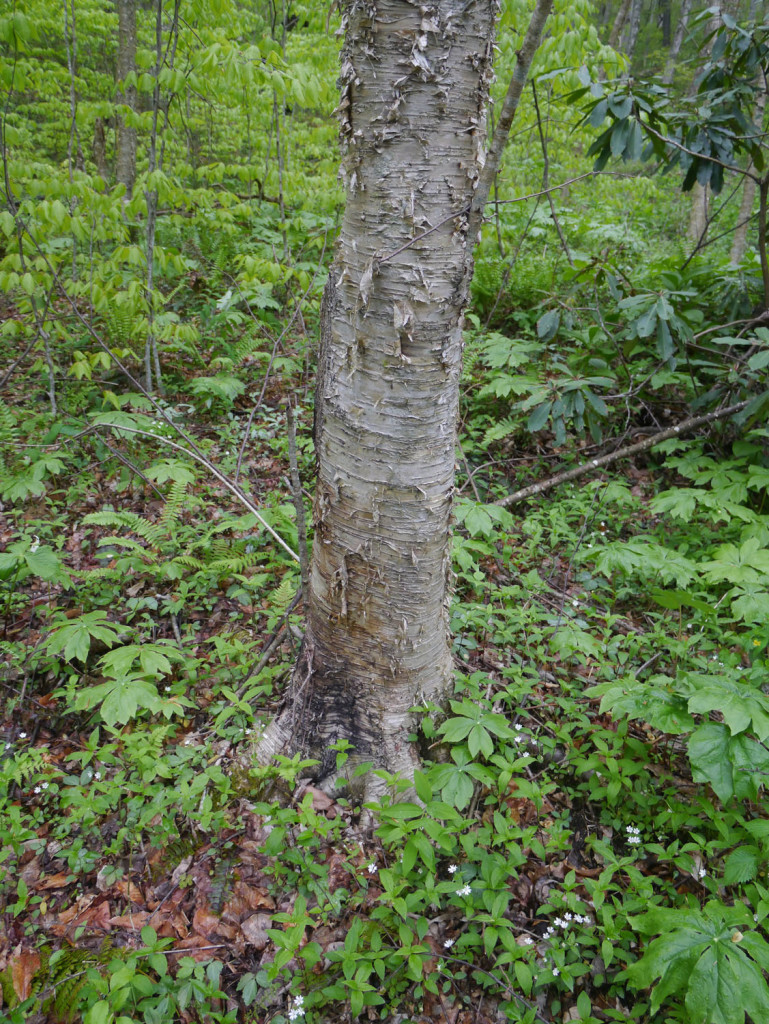
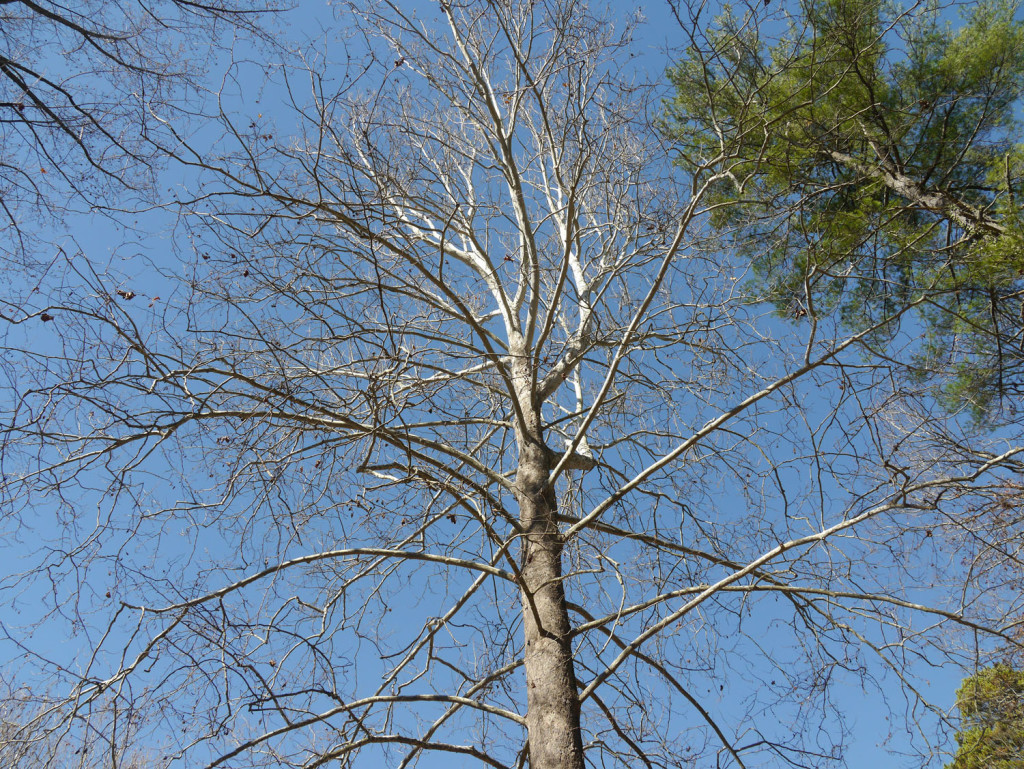
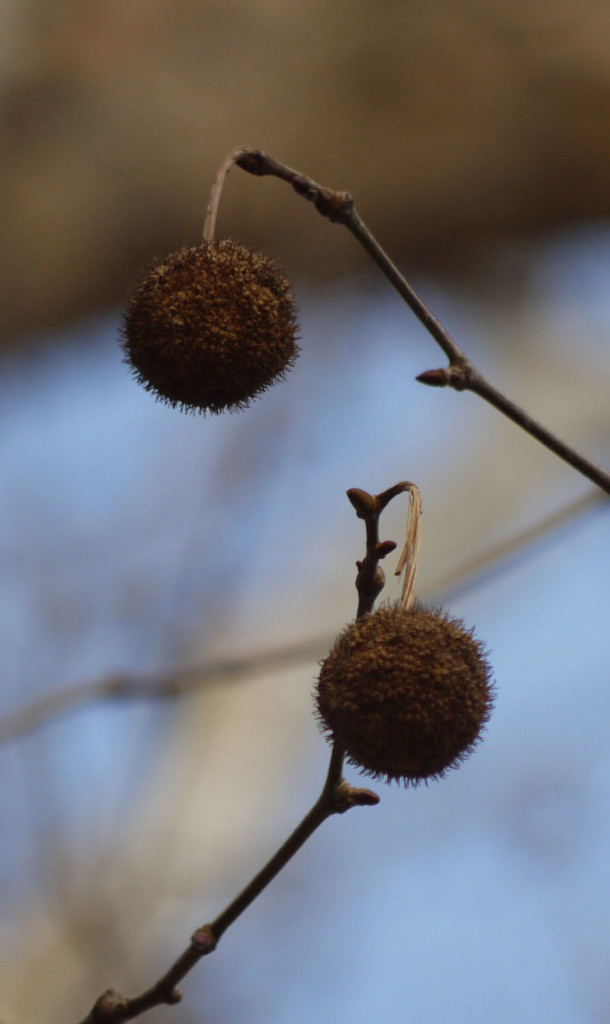 Ah yes, this is a Sycamore (Platanus occidentalis). Its upper branches are white.
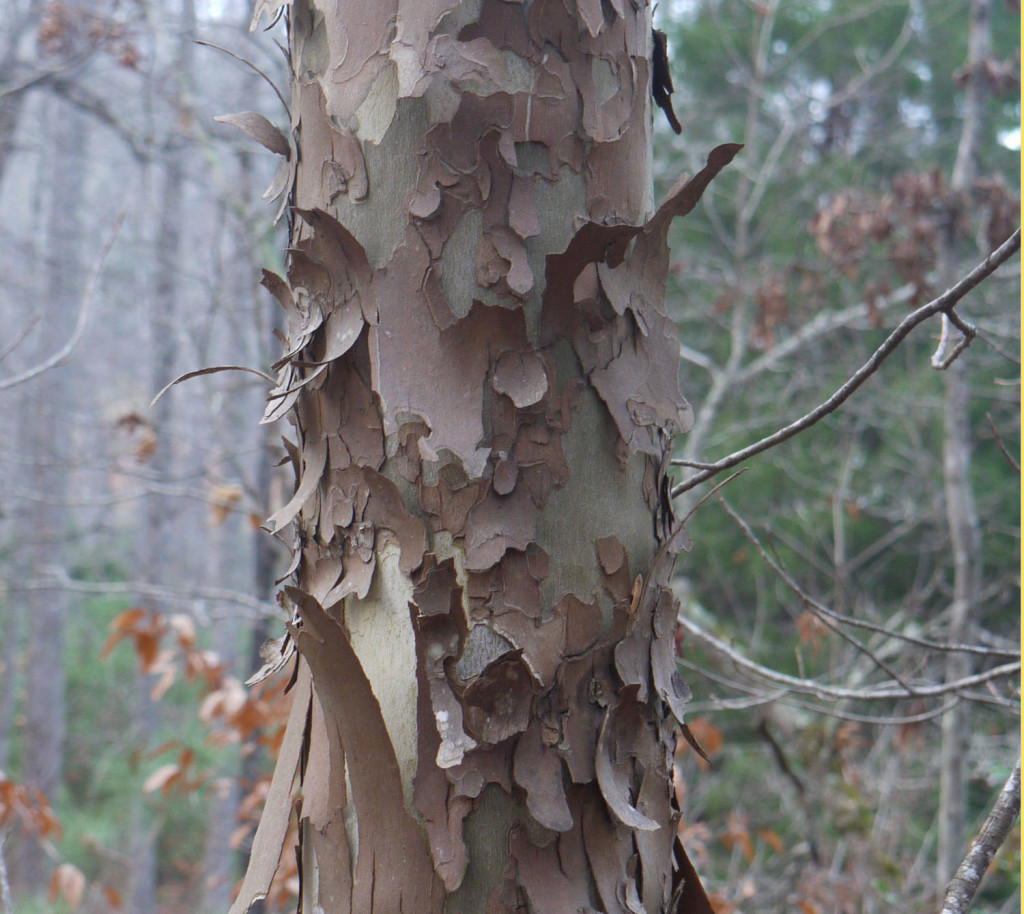
 Shreds of bark peel away lower down a Sycamore’s trunk.
Returning to the second tree, here are the remains of two seed capsules.
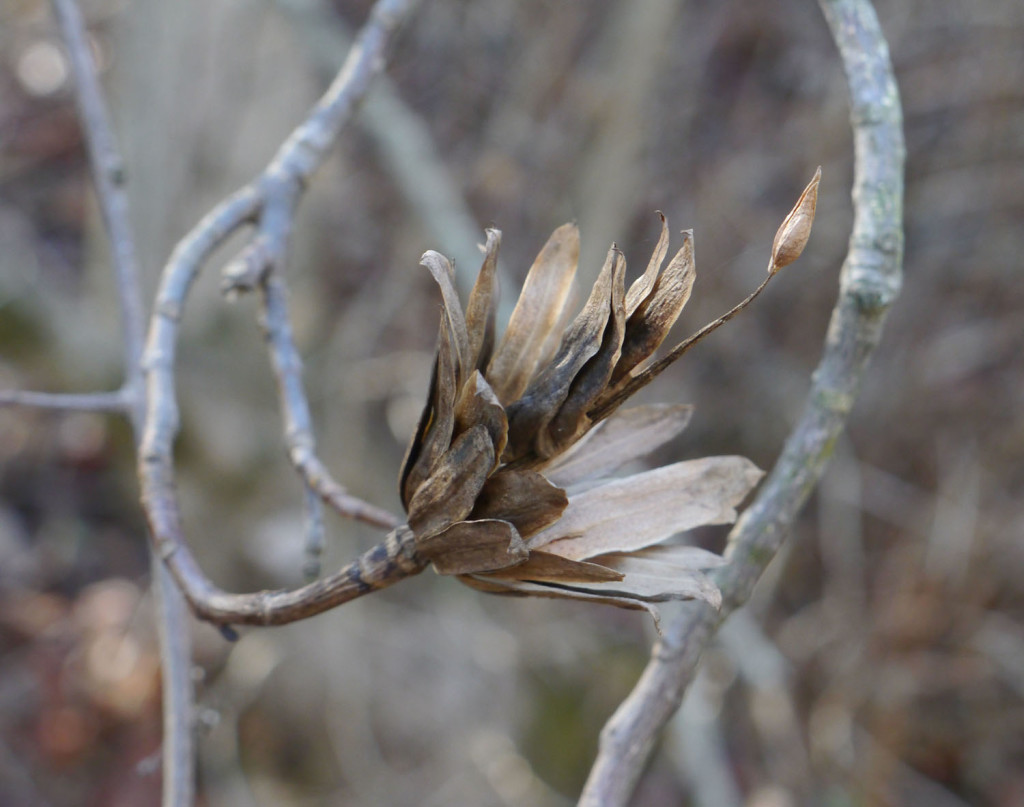
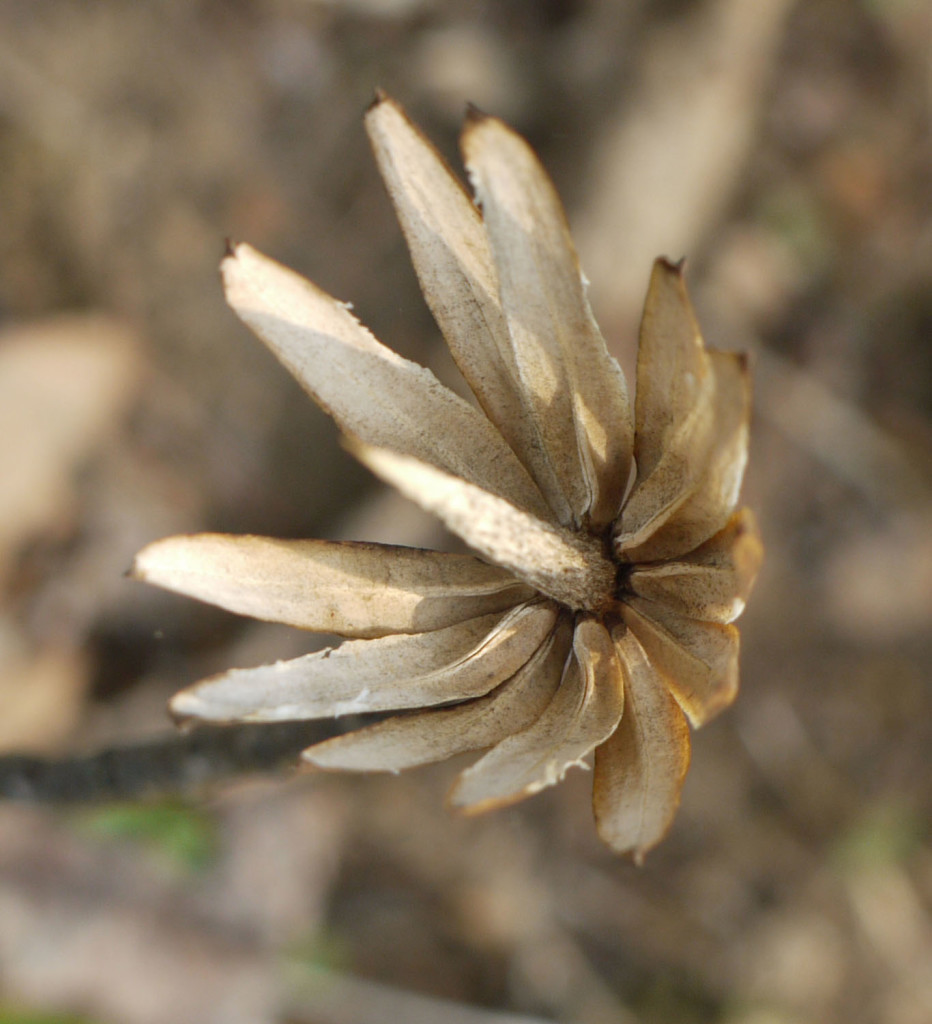 These seed capsules belong to a Yellow poplar (Liriodendron tulipifera).
Yellow poplar’s light gray bark remains relatively smooth and even.
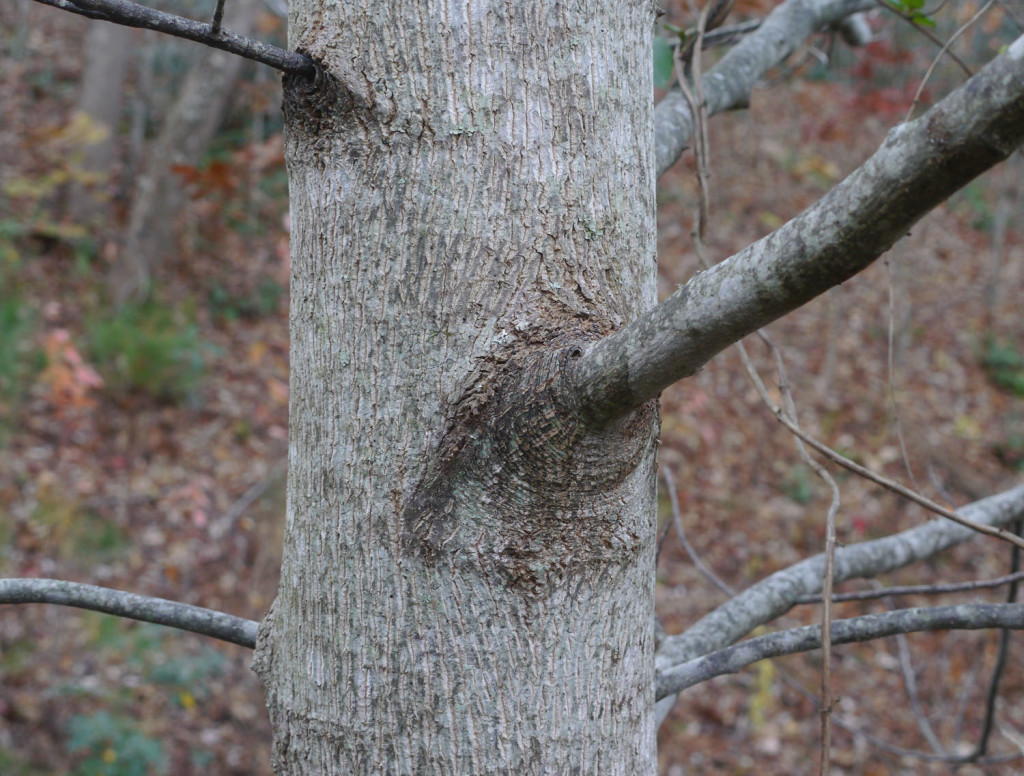
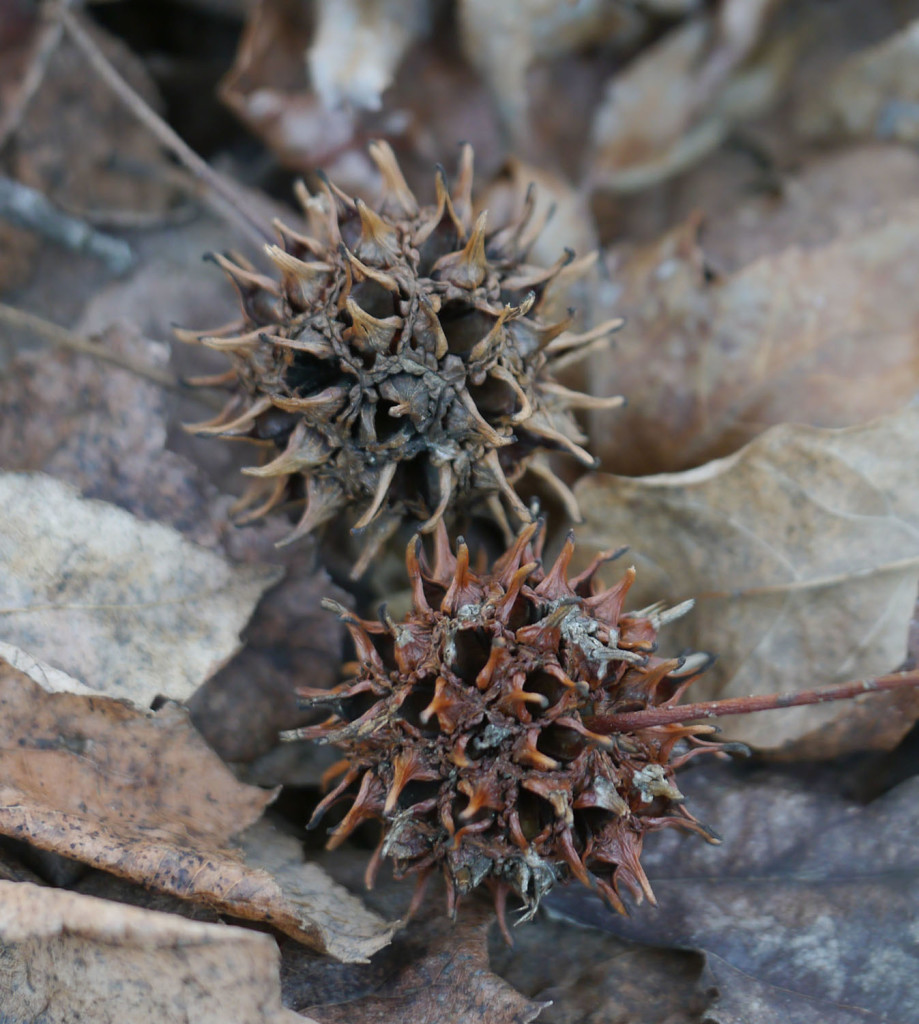
Let’s look at the third tree again. Sometimes the best way to get close to a seed capsule is to look on the ground for fallen ones.
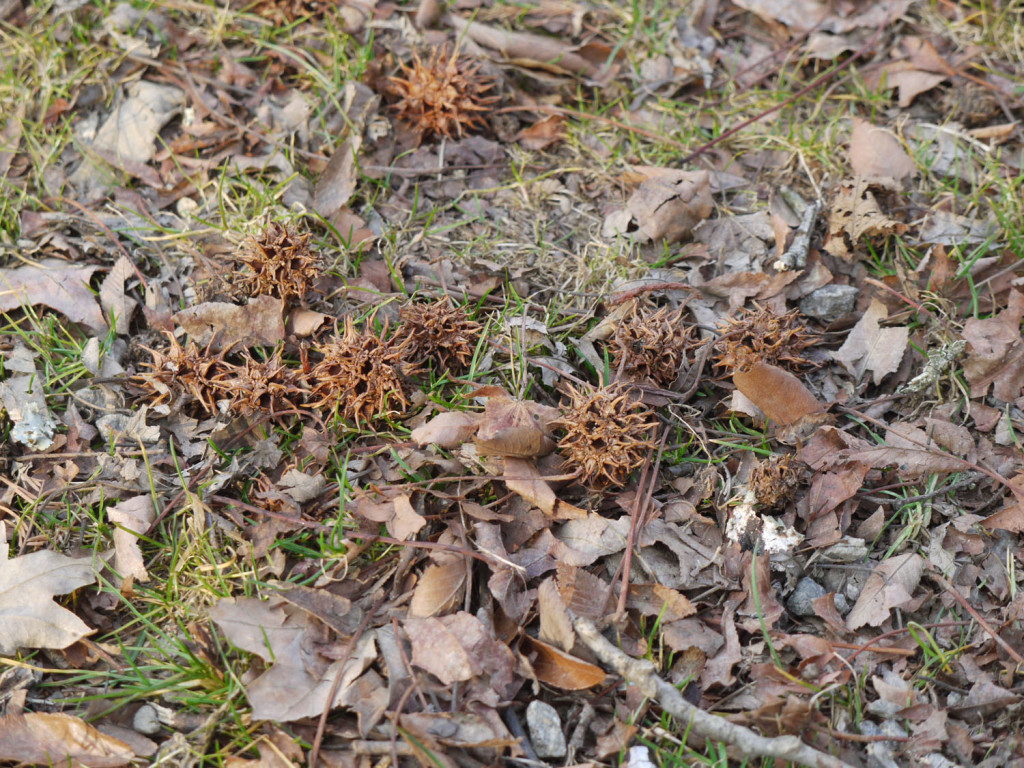 These seed capsules grow on a Sweetgum (Liquidambar styraciflua).
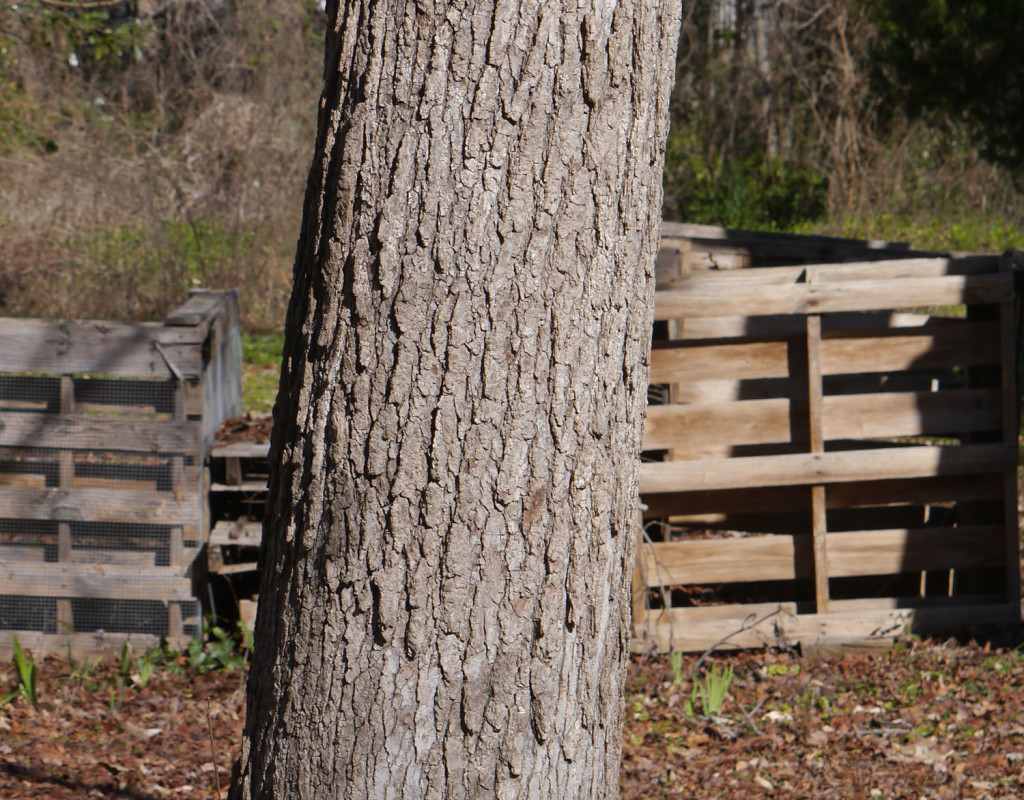
 Sweetgum’s bark is evenly ridged.

 Lyre-leaved sage (Salvia lyrata) is a perennial which blooms in the spring. Its flowers are tubular, with upper and lower lips, and slightly protruding stamens.
 As a member of the Lamiaceae (Mint) family, Lyre-leaved sage develops nutlets within its protective sepals.
 The basal leaves are lyrate, with pinnate venation.
 Watch this video to see more hairy parts of Lyre-leaved sage (Salvia lyrata) as well as some great close-up photos of developing nutlets.