Three lovely lobelias

Three lobelias

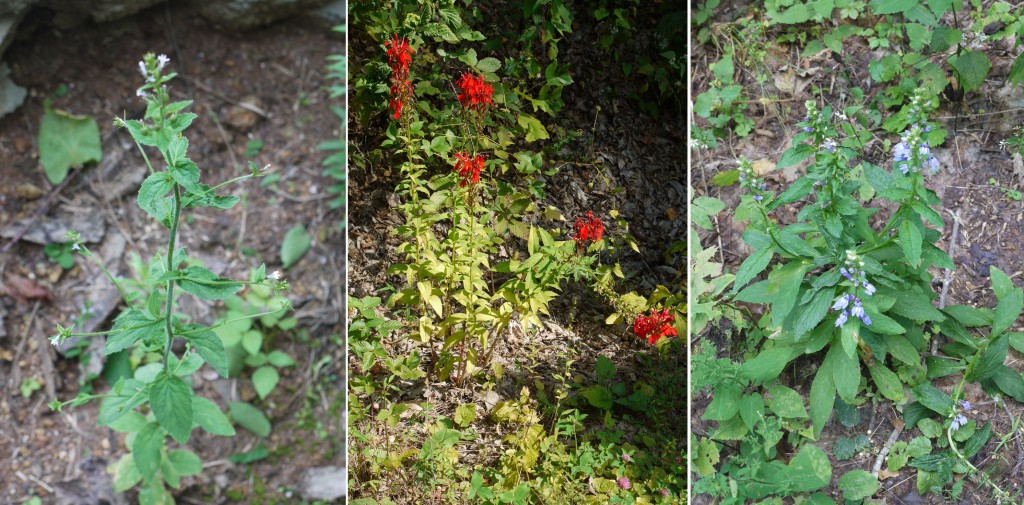
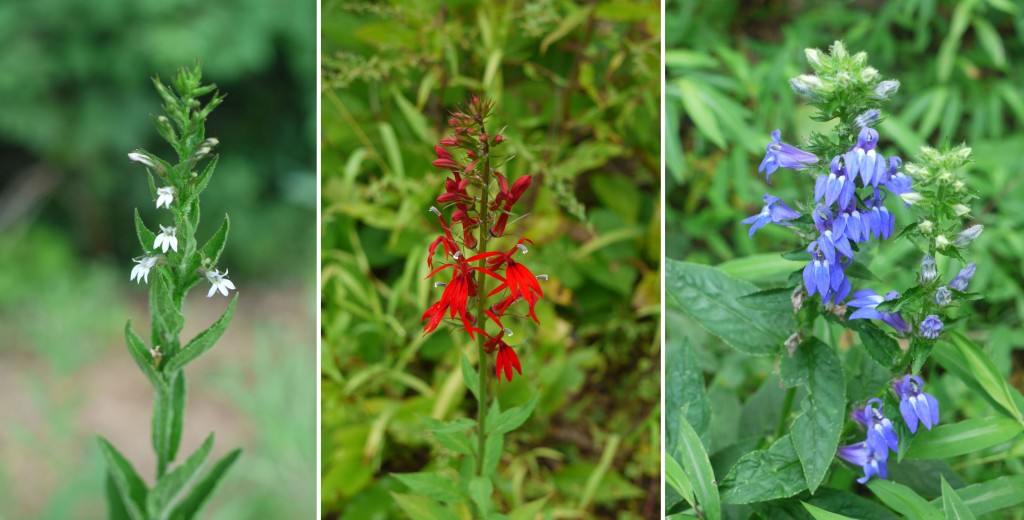
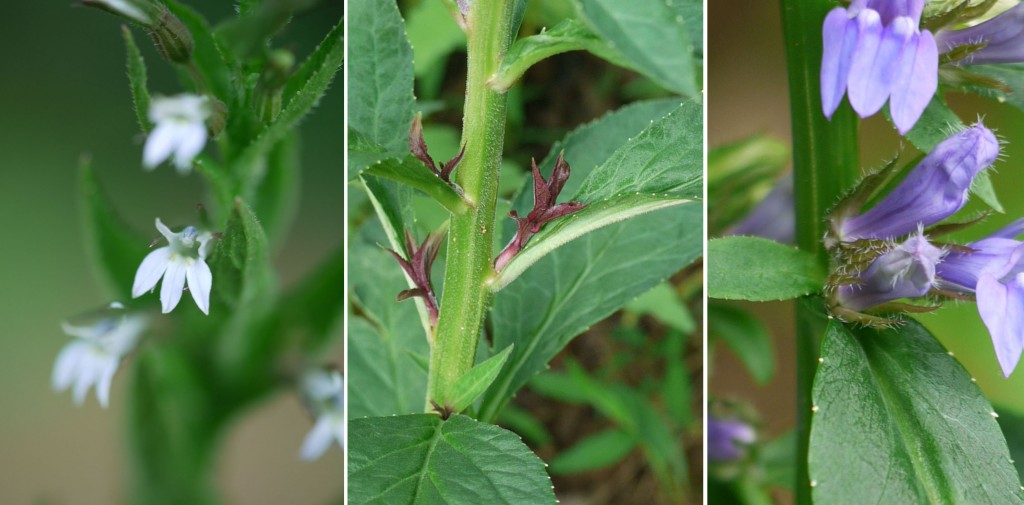
Three lobelias . . . three different colors . . . three similar flower shapes . . . and three similar leaves and stems.  Here’s a closer view of the top flowering portion of each plant:
Three lobelias

Do you recognize any of these wildflowers?  The one on the left is commonly referred to as Indian tobacco.  Its scientific name is Lobelia inflata.  The middle wildflower is Cardinal flower with the scientific name of Lobelia cardinalis.  And the right-most plant is Great lobelia whose scientific name is Lobelia siphilitica.

Not only do these plants have a raceme of flowers at the top of each plant, they also develop flowers from their leaf axils.
Three lobelias

Let’s look more closely at each lobelia’s flower.  See what you notice about how similar they are.
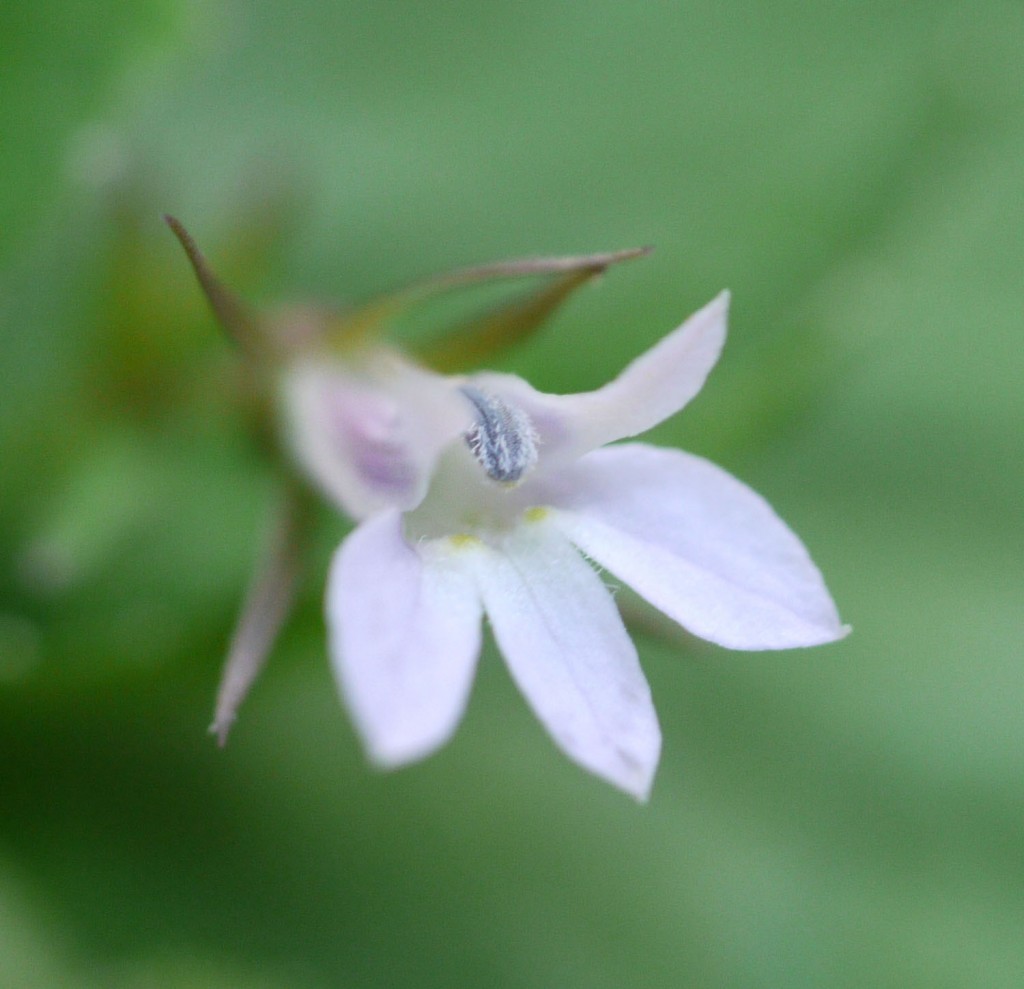
Indian tobacco

Indian tobacco (Lobelia inflata)

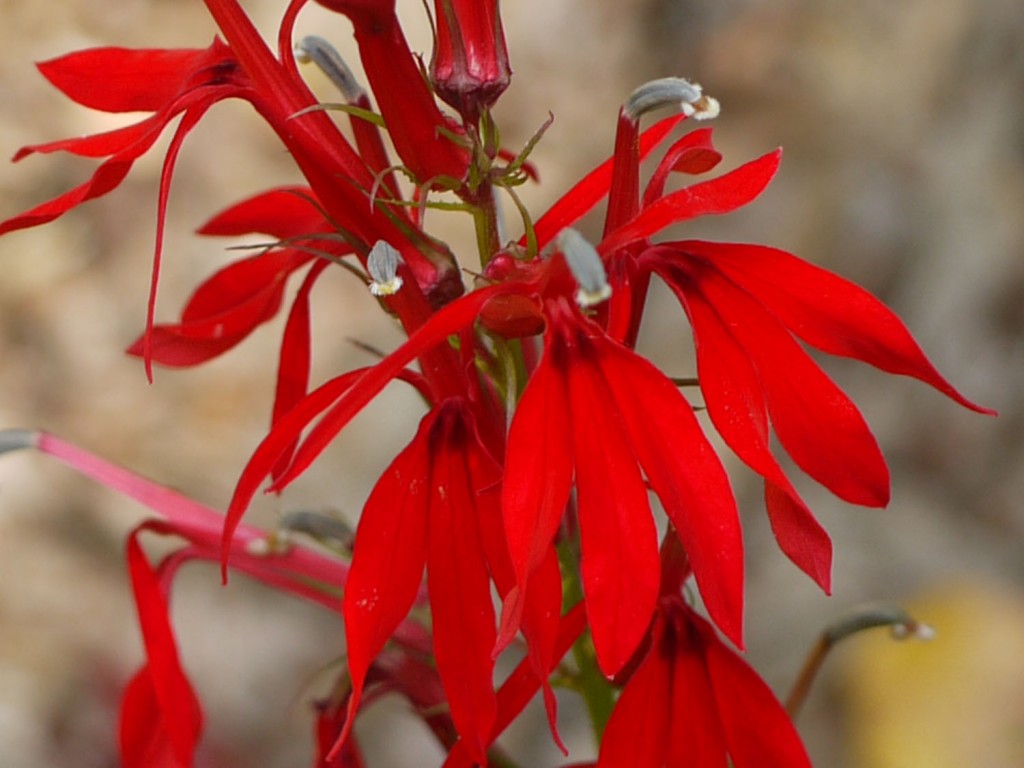
Lobelia cardinalis

Cardinal flower (Lobelia cardinalis)

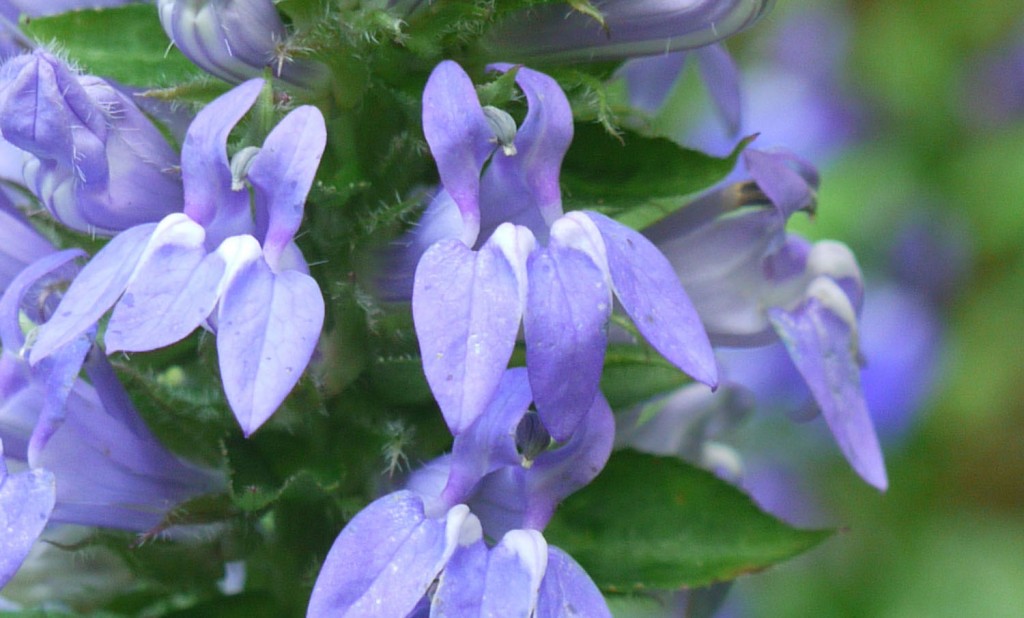
Lobelia siphilitica

Great lobelia (Lobelia siphilitica)

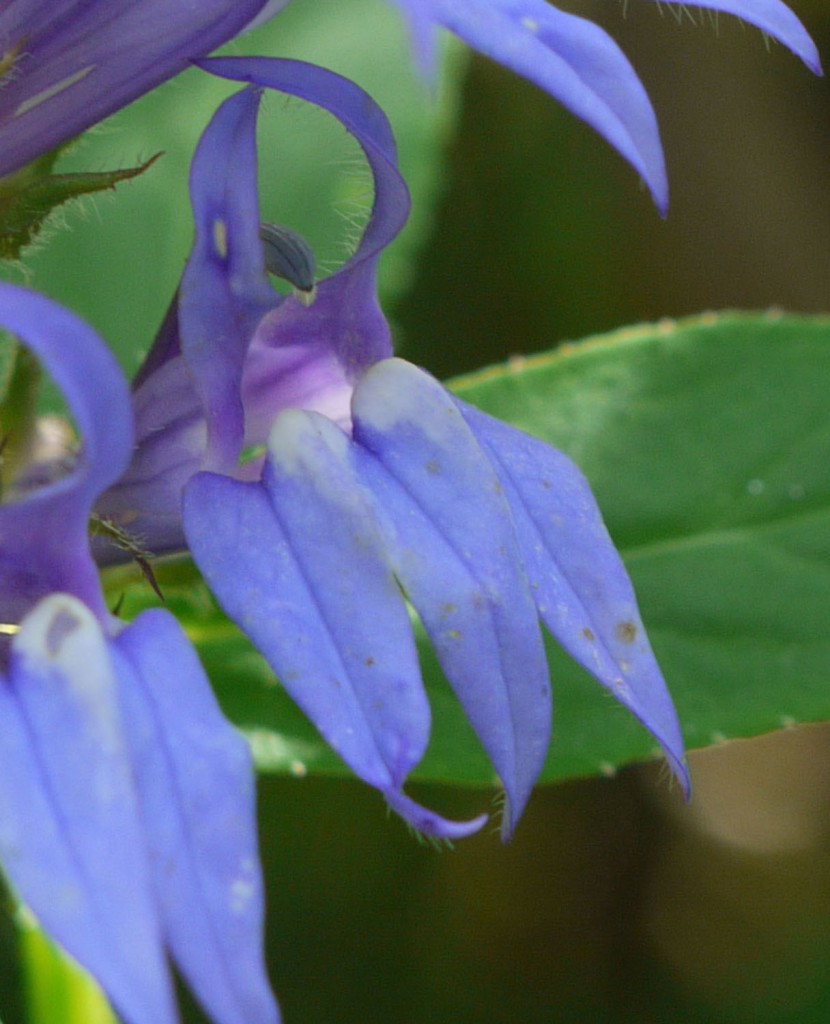
What I notice is that each bilaterally symmetrical flower is “two-lipped” with two lobes in the upper lip and three lobes in the lower lip.  They also have a long pistil which curves downward so that the tip is over the opening into the deeper parts of the flower where the nectar resides.  The stamens are actually fused to the pistil.

You can see this most clearly in the Indian tobacco image above.  Here are two more photos which provide closer views of the flower so you can see the unique pistil these lobelias have.
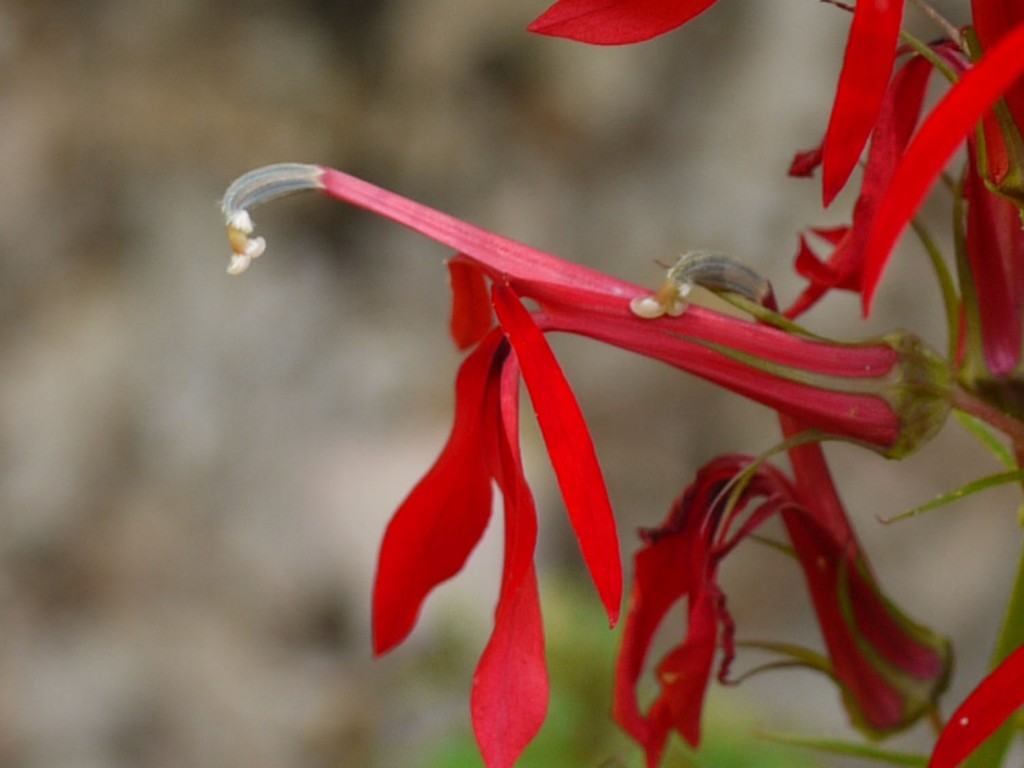
Lobelia cardinalis

Cardinal flower (Lobelia cardinalis)

Lobelia siphilitica

Great lobelia (Lobelia siphilitica)


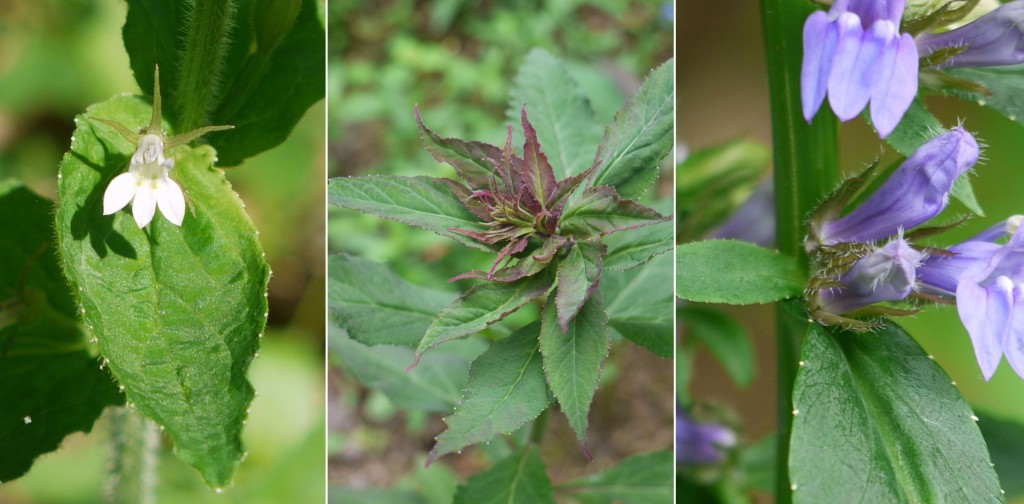
Now, let’s compare the three plants’ leaves and stems.  Look carefully . . .
Three lobelias

Each lobelia’s leaf has finely toothed margins. They also have what appear to be small white dots along the margin. As for the stems, they have fine hairs. (I realize you may not be able to see this very well with the Great lobelia photo.  Click on the third composite image–up above–to see the downy hairs on the Cardinal flower’s stem.)

This last image provides a good view of the white dots along the leaf margin for Indian tobacco. You can also see its hairy stem.
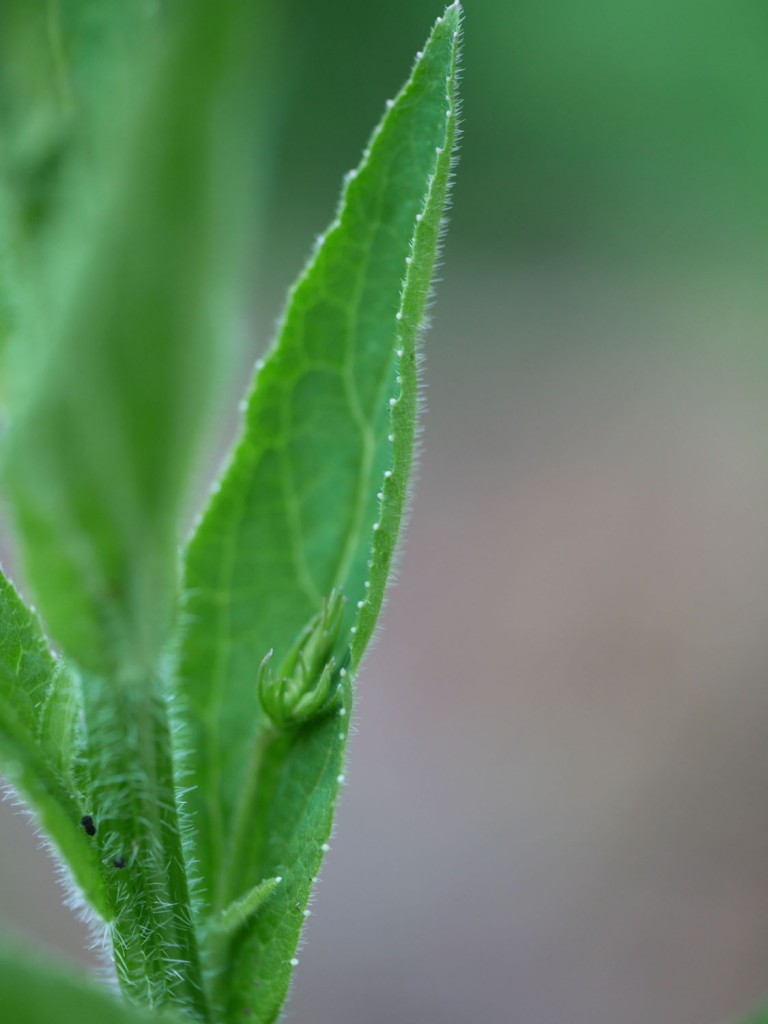
Lobelia inflata

Indian tobacco (Lobelia inflata)
Posted in Plant comparisons | 5 Comments

Mystery plant 017

This is a common (and native) plant throughout most of the North American continent.  As you scroll down through the images, see just which image is the one which gives you the “ah-ha” moment as to which plant this is.  When you know the name of the plant, please give both its common and scientific names.  (You get a bonus point for the most accurate species name.)  Also, please share any personal stories you have about this plant.

017-a

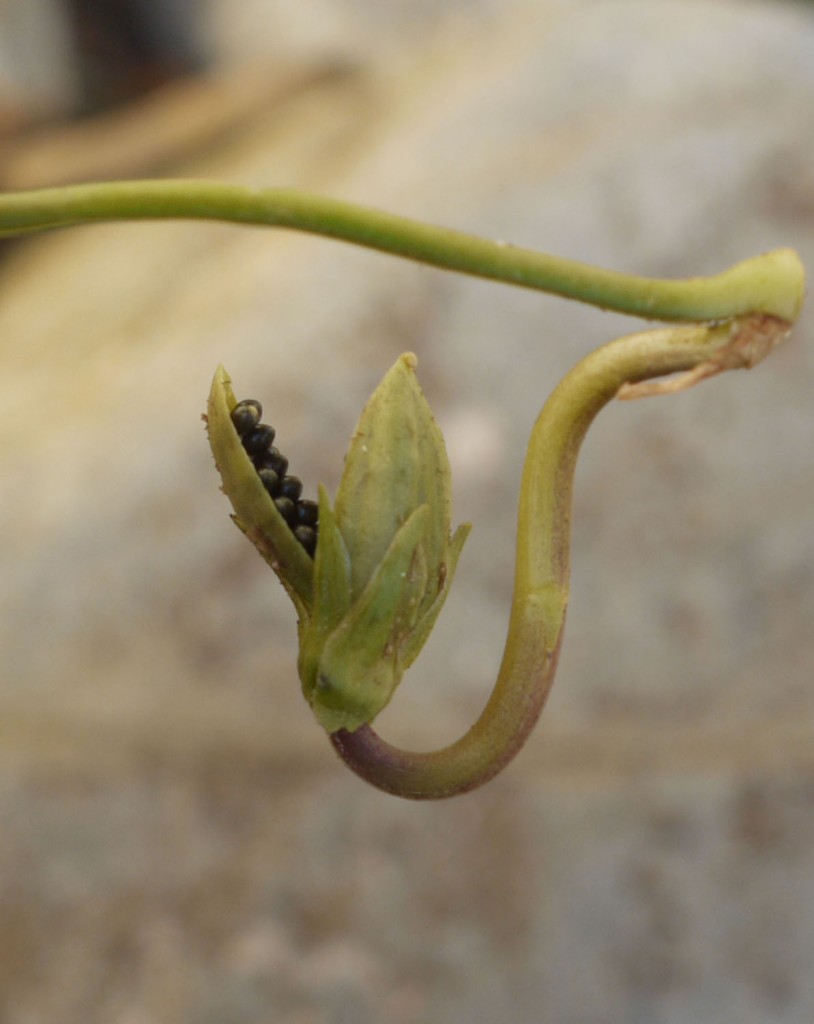
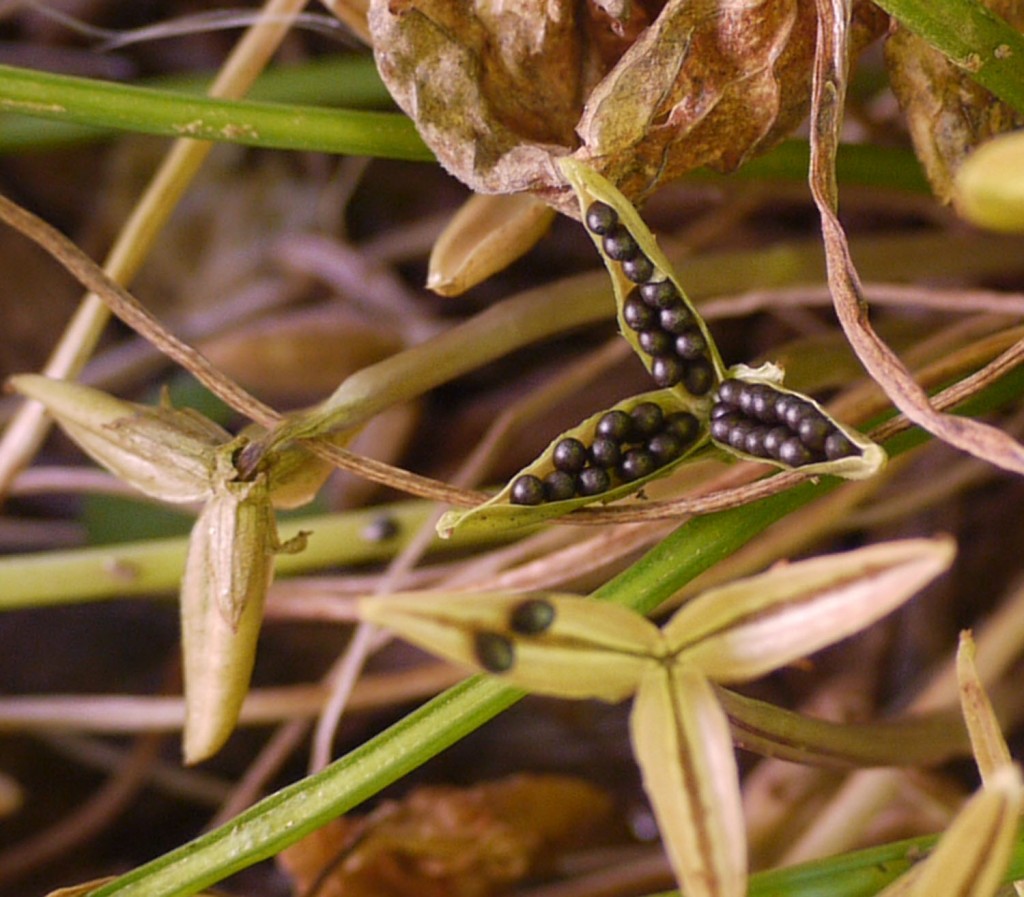
Seed capsule

017-b

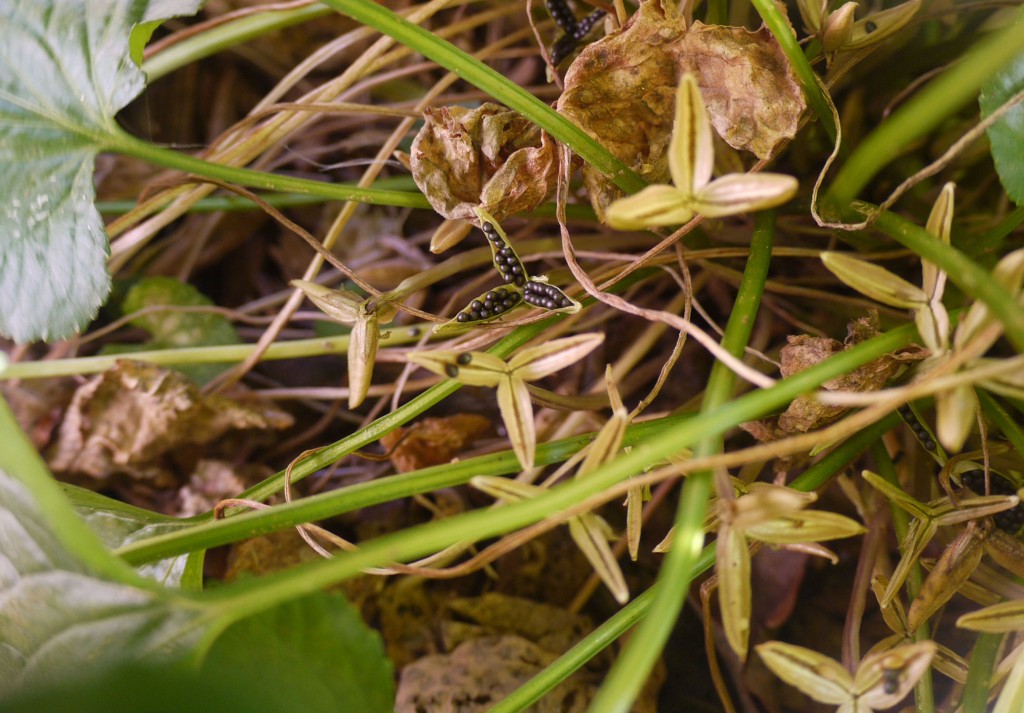
Open seed capsules–with and without seeds

017-c

Base of plant

017-d

Plant with open seed capsules

017-e

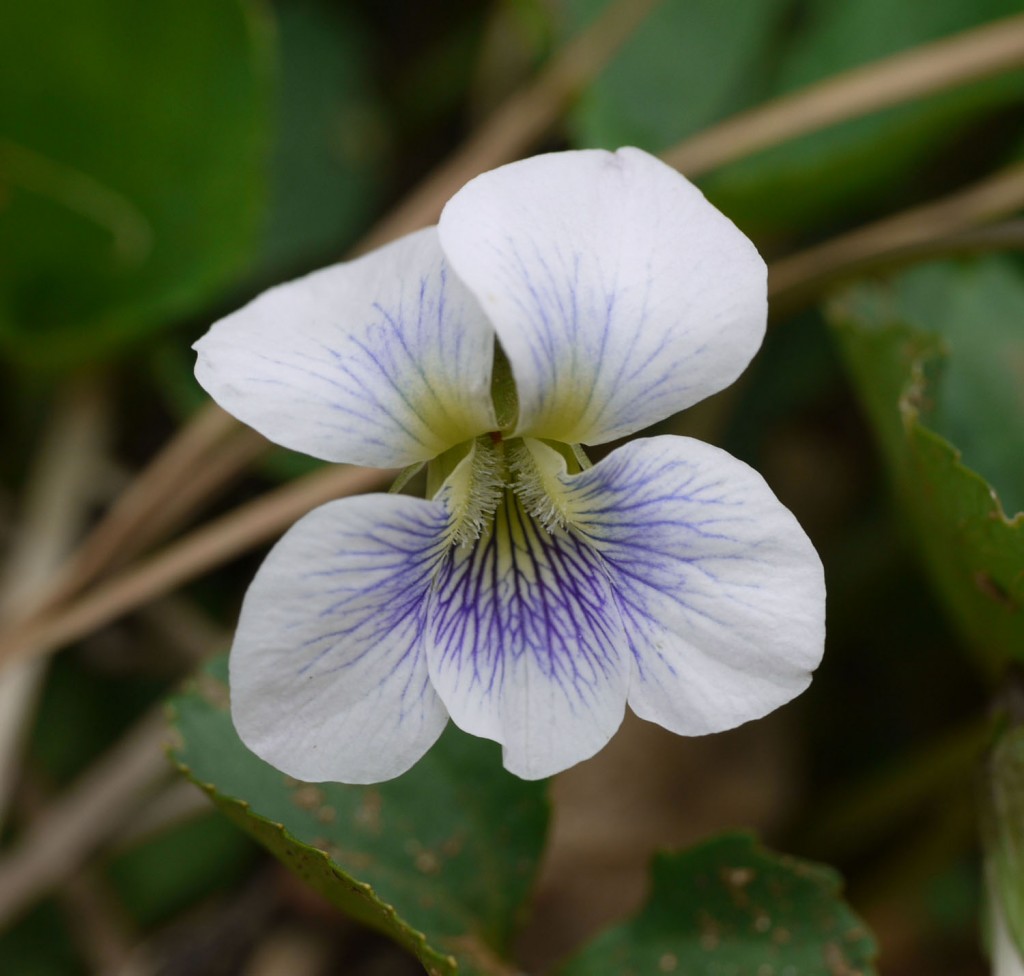
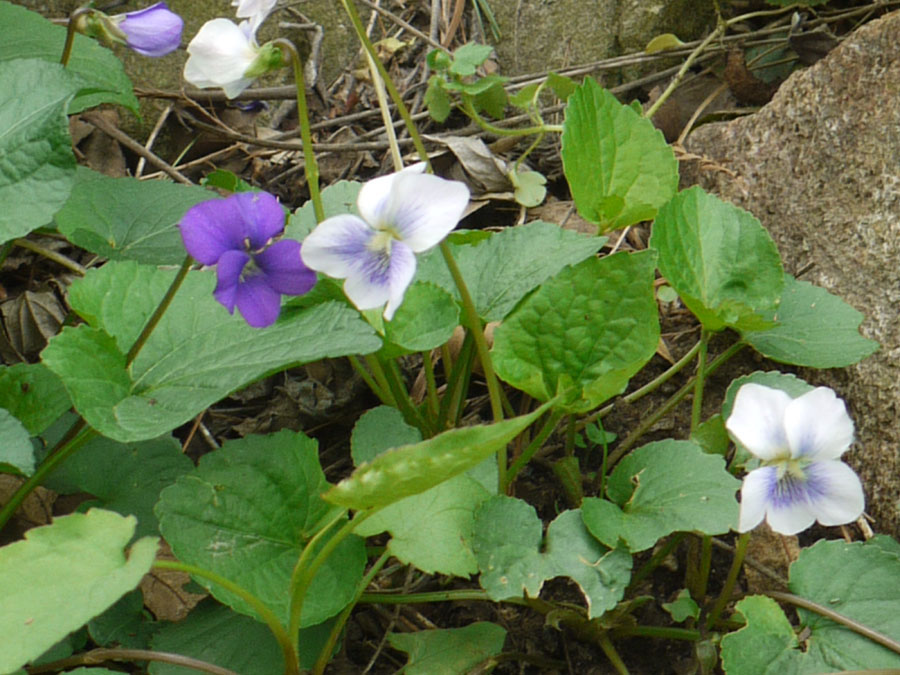
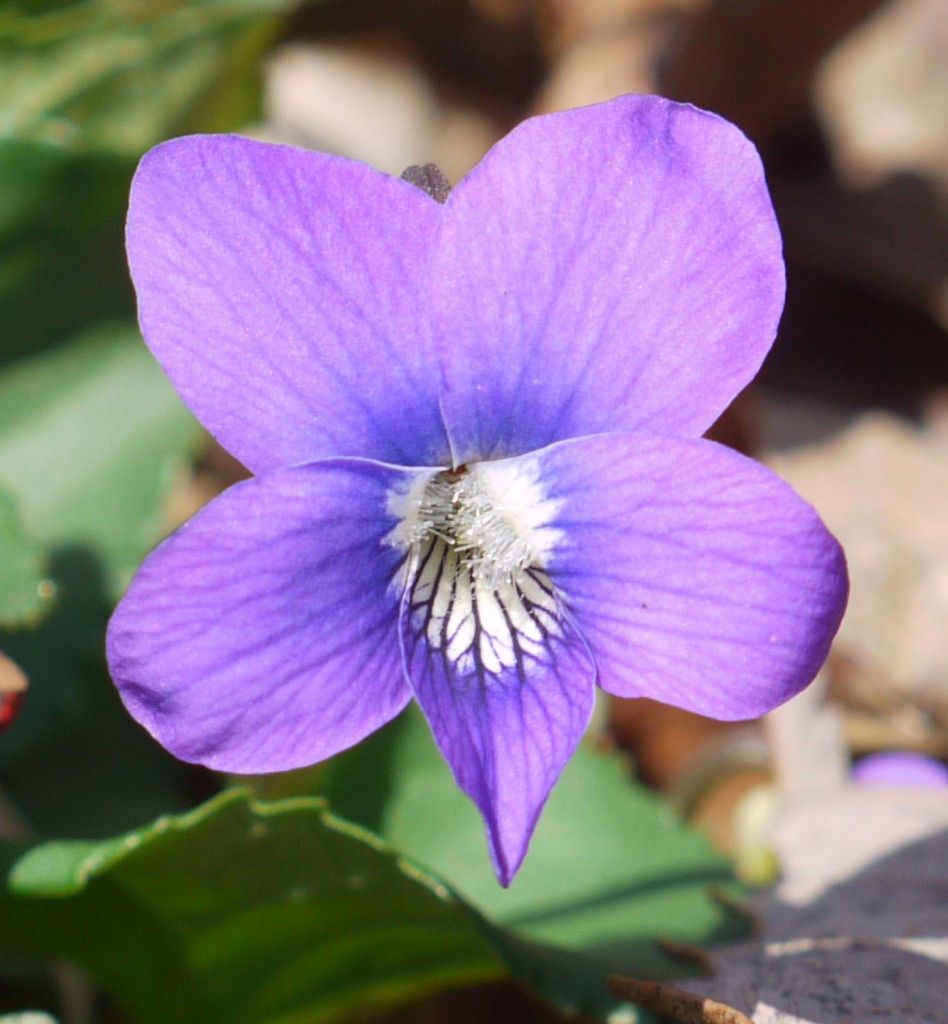
Flower

017-f

Flower

017-g

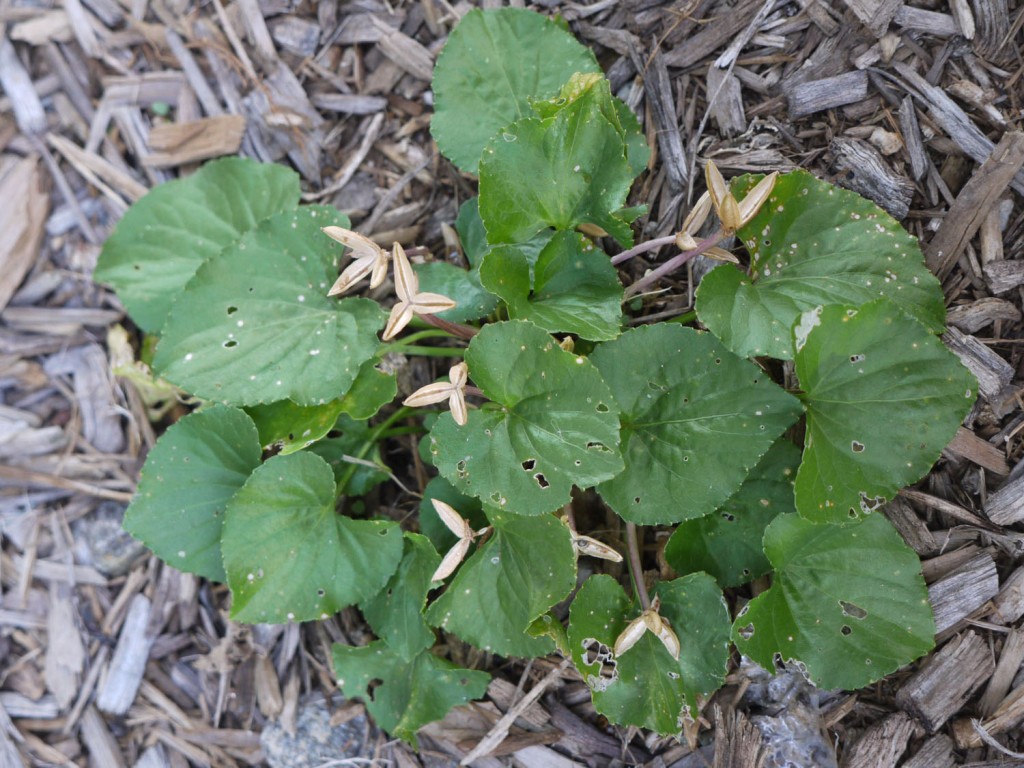
Group of plants


ANSWER (subsequently added to this post to facilitate the “search” function for these images):  Common violet (Viola sororia)

Posted in Mystery plant | 3 Comments

Virginia creeper and ginseng

Virginia creeperVirginia creeper (Parthenocissus quinquefolia) is one of those plants that can trip you up when you are looking for American ginseng (Panax quinquefolius).  Especially in the spring and fall when there are no flowers or berries on the ginseng plant.  Let’s compare their similarities and differences.

Virginia creeper is a vine growing along the ground or up a supporting structure.  Sometimes, the vine is buried under leaves and so the individual creeper leaves look like they might be ginseng coming up through the leaf litter.  Here’s another photo of Virginia creeper . . .

Virginia creeperNow let’s look at a single Virginia creeper leaf.

Virginia creeperThe leaf is palmately compound with five leaflets.  Three leaflets are larger and two are smaller.  Each leaflet’s margin is toothed with teeth that do not go all the way around the leaflet.  The leaflets are sessile (no petiolules) and their vein pattern is pinnate.

Turning to ginseng in the spring season . . .

GinsengGinseng’s leaf is also palmately compound with five leaflets (three large and two small).  The leaflets have toothed margins and pinnate venation.  Now here are the critical differences from Virginia creeper.  Ginseng’s three larger leaflets have petiolules!  (Sometimes the two smaller leaflets also have small petiolules.)  And the toothed margin entirely surrounds each leaflet.  Another distinctive detail is that the teeth on the ginseng leaflets are smaller and finer while Virginia creeper’s leaflets have larger (more coarse) teeth.

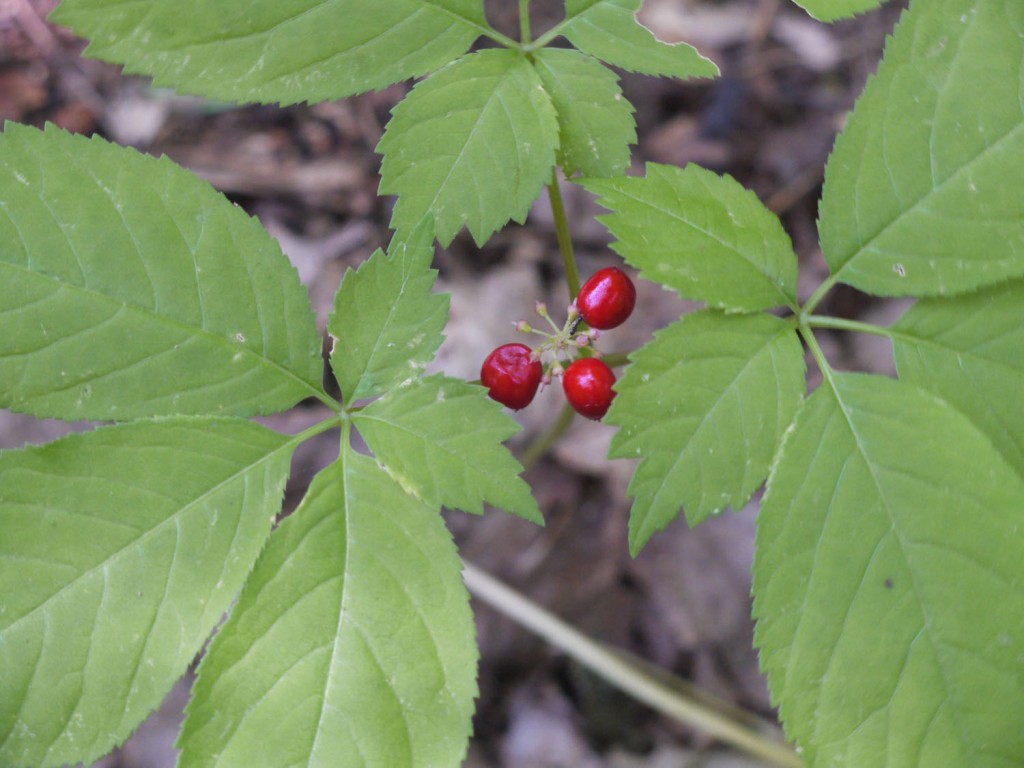
If we were to see ginseng after it has flowered and after its berries have matured to a bright red, it is much easier to find and identify this plant.

GinsengThis closer view of the ginseng berries also shows the more finely toothed margins of the three larger leaflets along with their petiolules.

GinsengThis last photo of ginseng demonstrates, once again, the palmately compound leaves and leaflets with petiolules in the fall — after the berries have dropped from the plant.

GinsengFor more detailed photos of American ginseng, visit the post for Mystery Plant 015.

Posted in Plant comparisons | 29 Comments