For our plant comparison we are going to look at dandelion (which most people know) and cat’s ear (a similar looking plant). Beginning with this image of a lush dandelion (Taraxacum officinale), we can see lots of flower heads and a number of new heads forming, along with some closed heads which bloomed recently. The dandelion could almost be an evergreen plant as it seems to grow year-round — at least whenever the temperature stays above freezing. Let’s go through the dandelion’s life cycle and then check out the cat’s ear similarities and differences.
The dandelion’s flower head begins developing low in the center of the rosette of leaves.
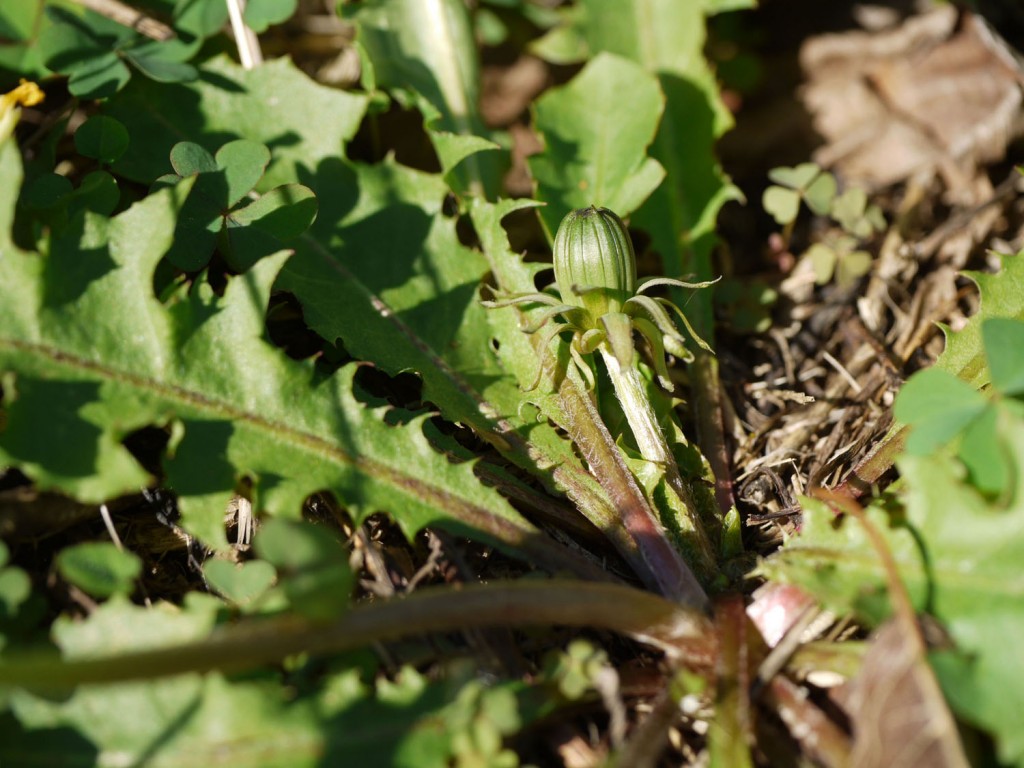 Gradually, the stem supporting the new flower head elongates until it rises well above the basal rosette.
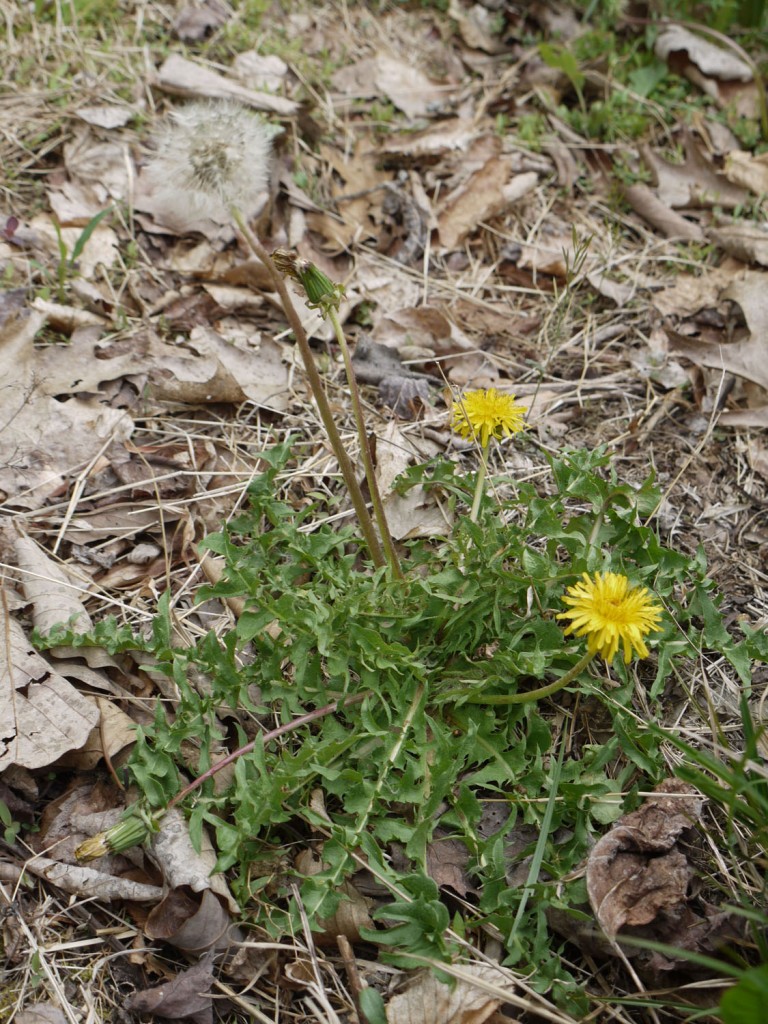 The dandelion’s hollow stem exudes a milky white substance (a type of latex) when broken. After the flower head has blossomed, it closes in on itself . . .
 . . . converts those fertilized ovaries to seeds with wings . . .
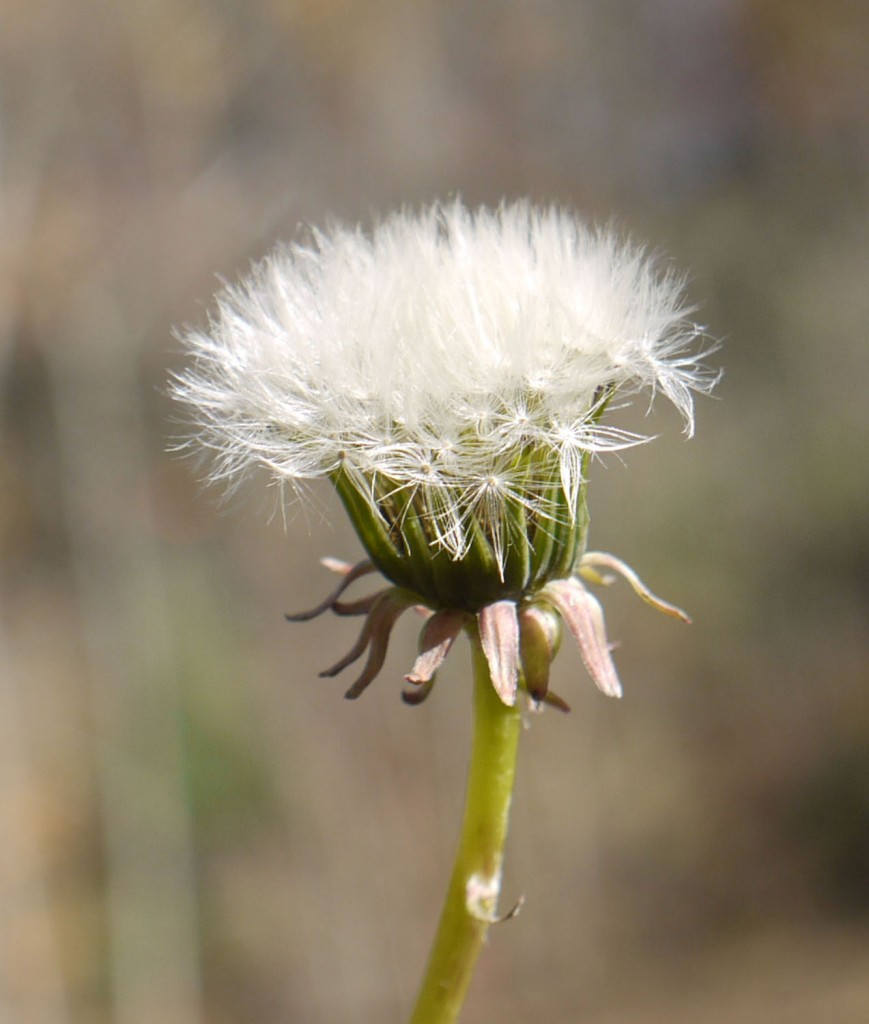 . . . and re-opens to create the familiar seed head which, once again, rises high above the basal rosette of leaves.
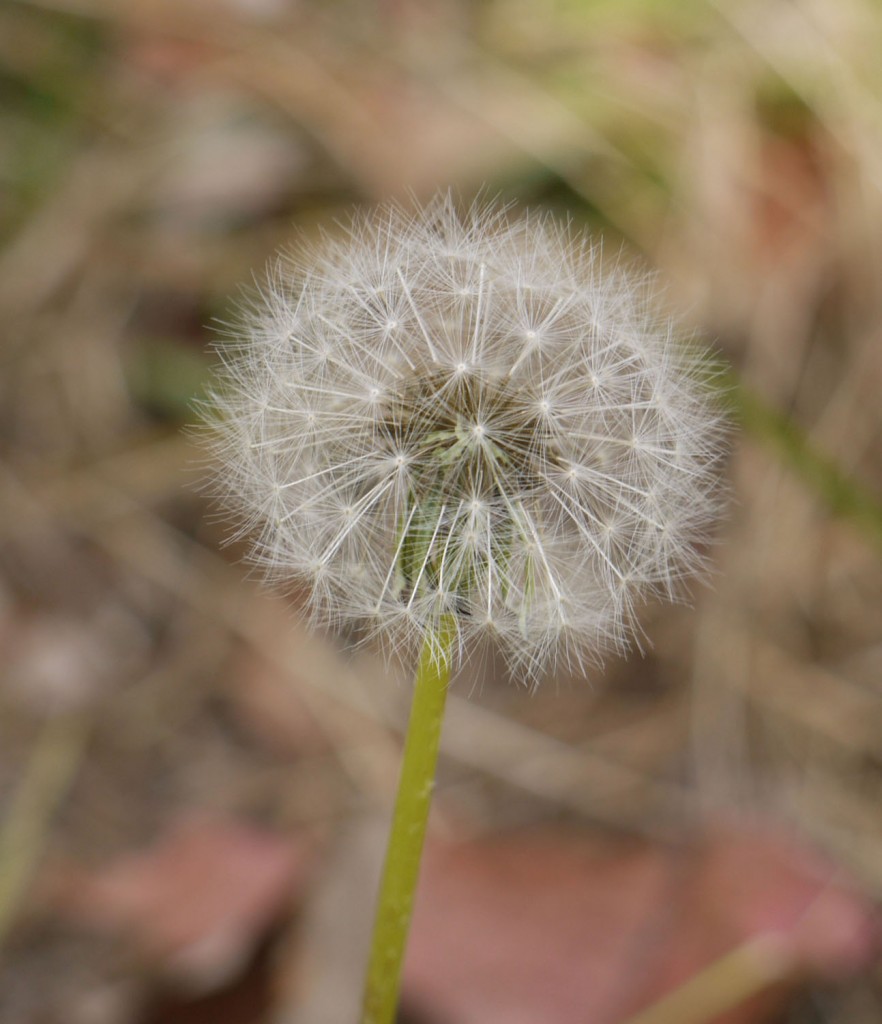
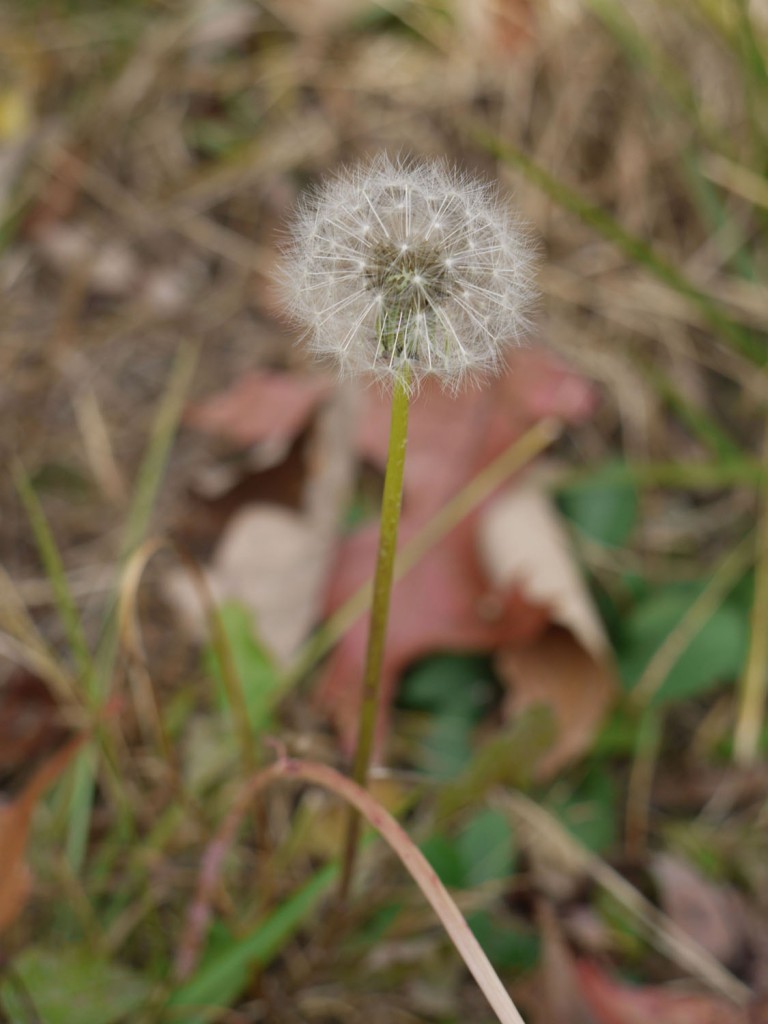 Note the fleshy stem supporting the seed head. Here’s a closer view of that head with its symmetrical arrangement of the winged seeds.
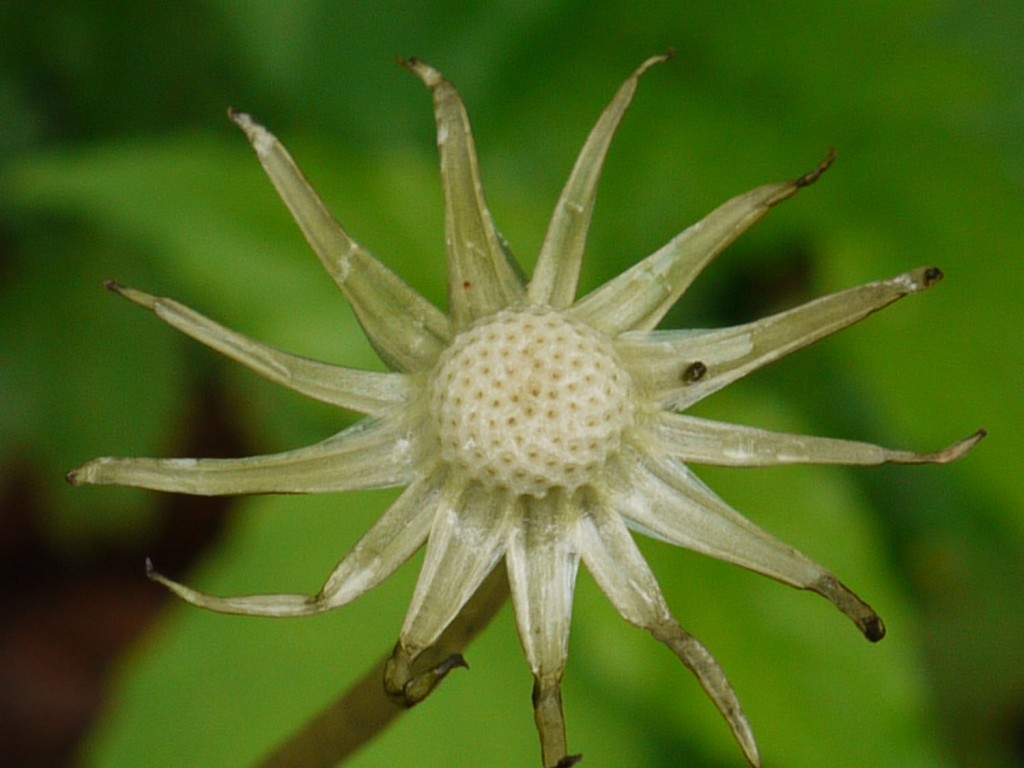
 After all the seeds have dispersed, what remains is the head’s receptacle. It, too, has a lovely pattern.
 Here is a final view of a dandelion plant. You can see that most of its flowers have converted to seeds and/or have sent the new seeds on their way — to the irritation of people who want perfect lawns — and to the delight of herbalists and wild food foragers.
 Cat’s ear (Hypochoeris radicata) looks, on first glance, very much like the dandelion — especially when you see an area full of the plants.
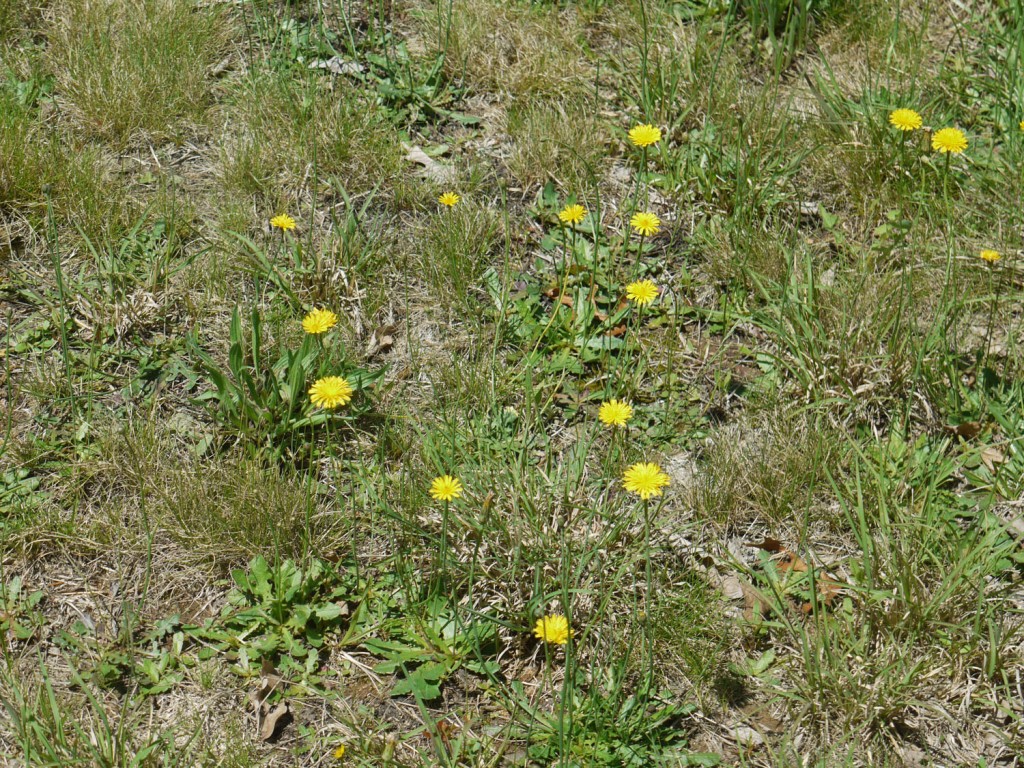 Let’s look more closely at this plant. Here is its flower head . . .
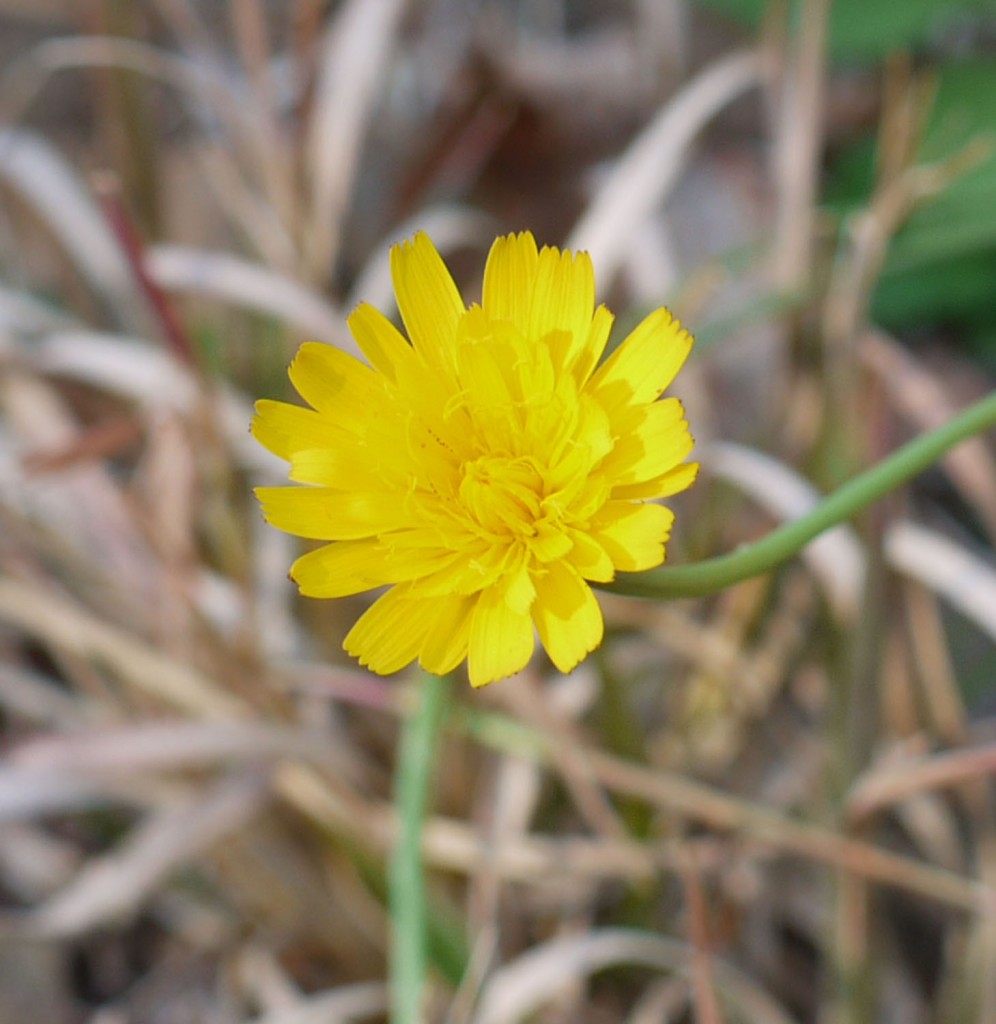 . . . which, in isolation, looks like a dandelion flower head. However, note its more wiry stem in the photo above and the next photo.
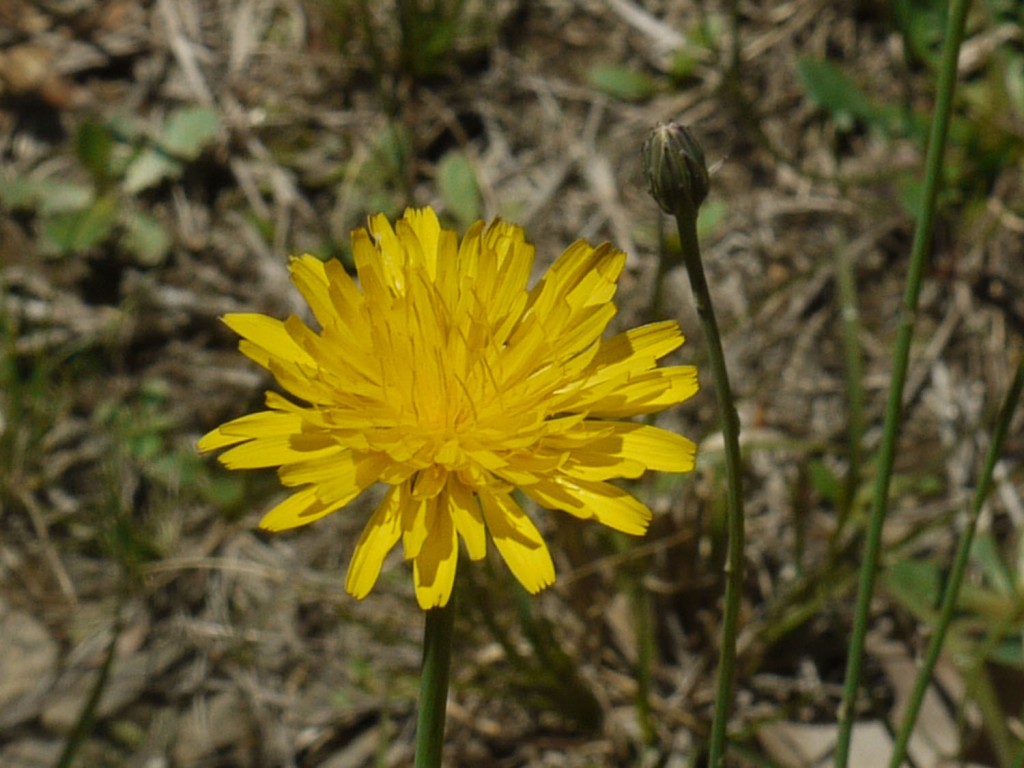 You can see a developing flower head in the background of the above photo. This flower head looks similar to — and yet, different from — the dandelion flower head. The difference is subtle.
As we stand back and look at the entire cat’s ear plant, we can see its flower heads rise on stems above the basal rosette of leaves.
 Although frequently a single flower head grows on a single stem (like the dandelion), it is just as likely the cat’s ear flower heads will appear on a branched stem. In contrast, the dandelion’s single flower head will only appear by itself on an unbranched stem. Along with the branched stems, this next photo shows the wiriness of the stems and the different looking unopened flower heads.
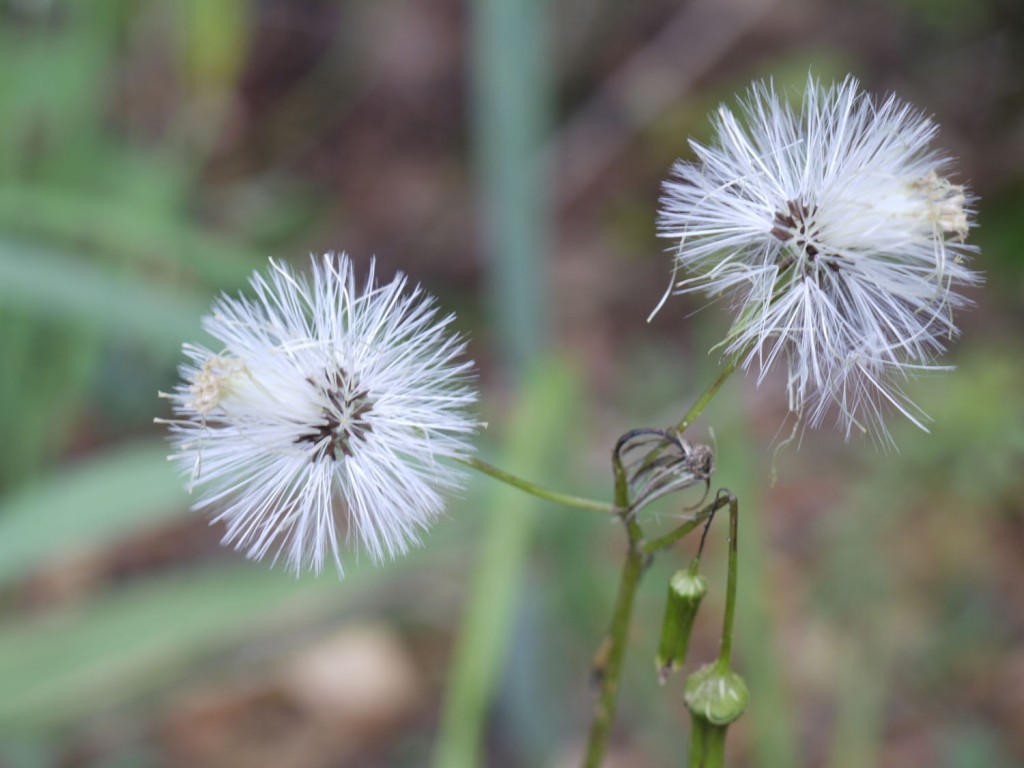
 After the flower heads have bloomed and become seeds, the heads re-open and spread their winged seeds — just like the dandelion.
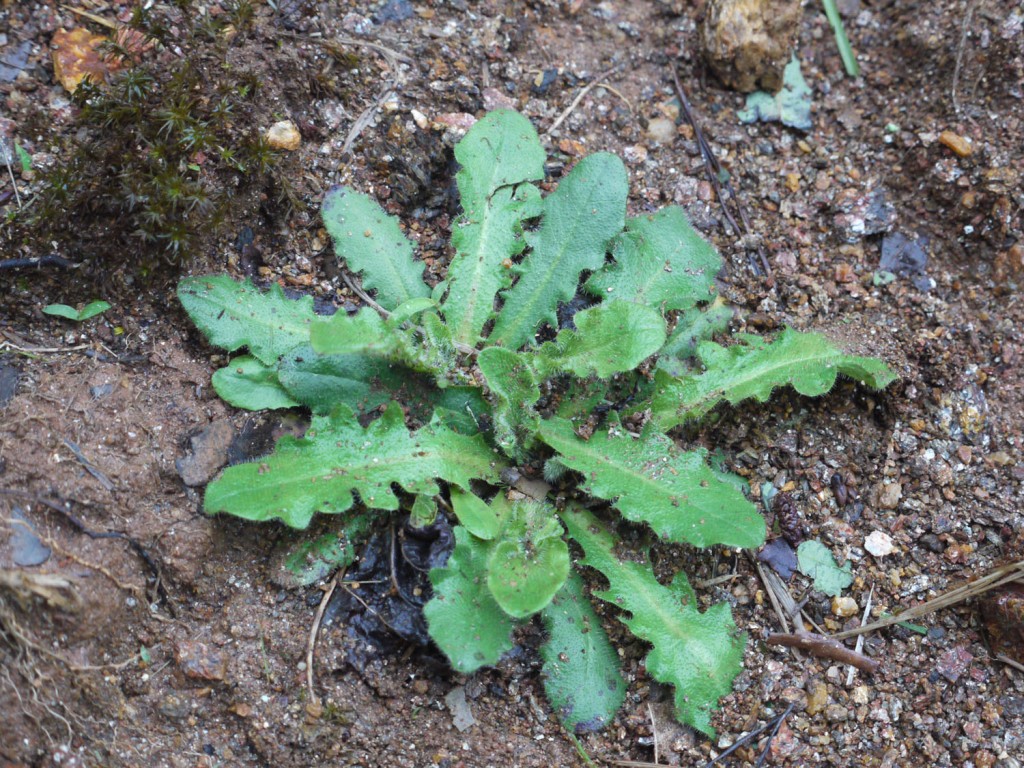
 Here’s a view of the basal rosette of a cat’s ear plant.
 And this is where we can finally see some distinguishing characteristics between dandelion and cat’s ear. The cat’s ear leaves are quite hairy while the dandelion leaves are smooth. When you look closely at the shape of the leaves — by placing them side by side — you can see the dandelion is definitely sharply toothed, with its teeth pointing back toward the center of the plant.
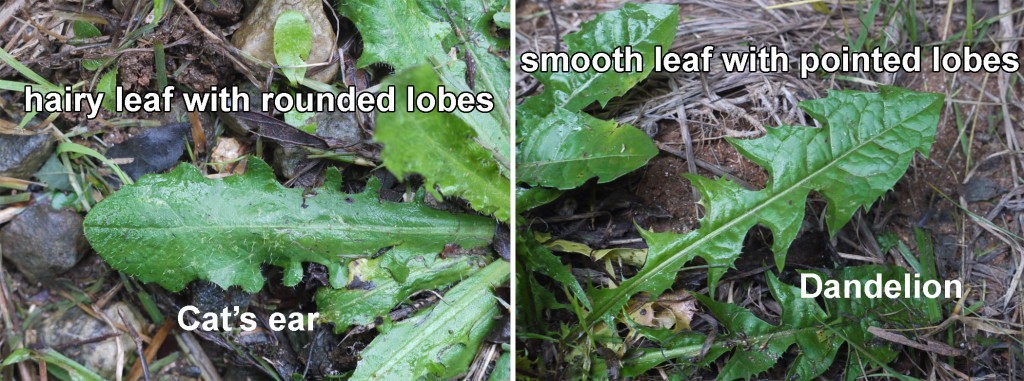 Those softly hairy leaves probably account for the common name given to cat’s ear.