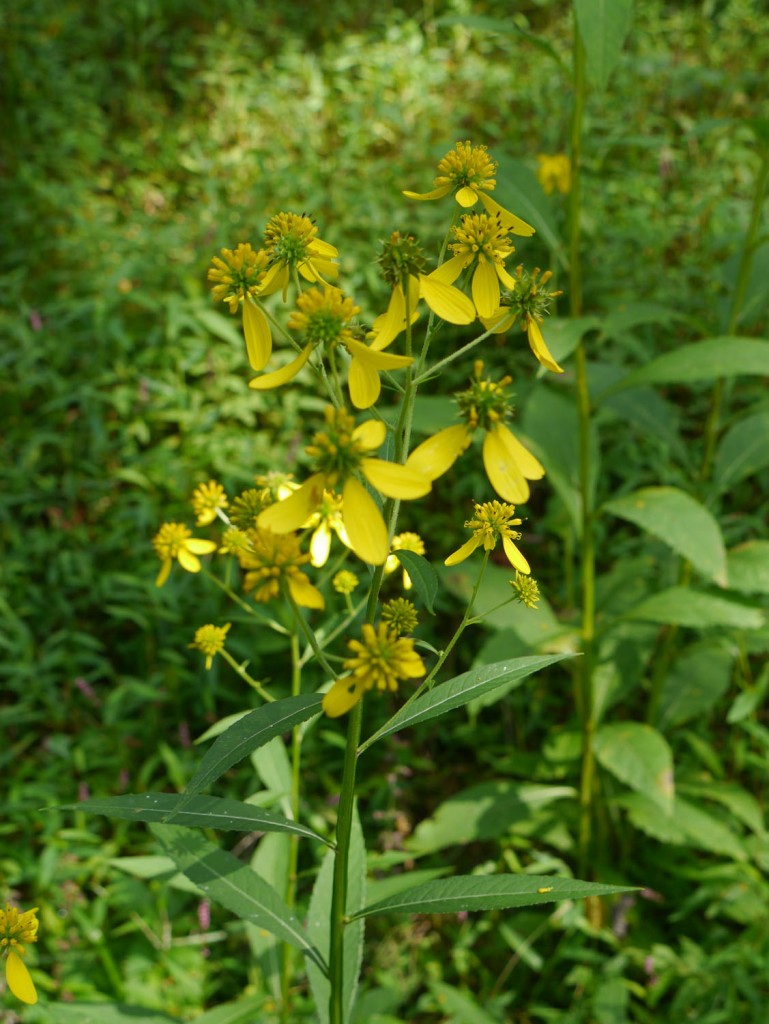
 During the late summer and early fall this plant makes its colorful appearance. It is a tall plant, frequently growing alongside streams and roads throughout the central and eastern portions of North America.
 Look at its beautiful flower . . .

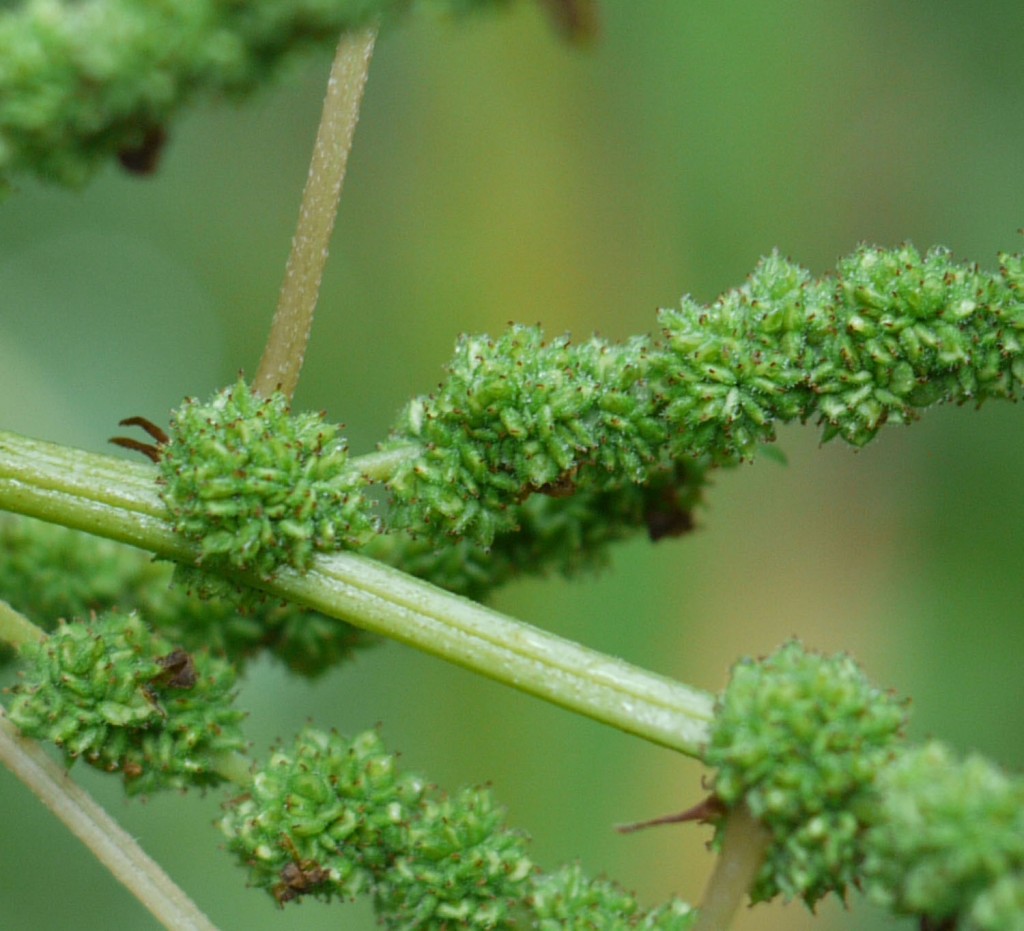
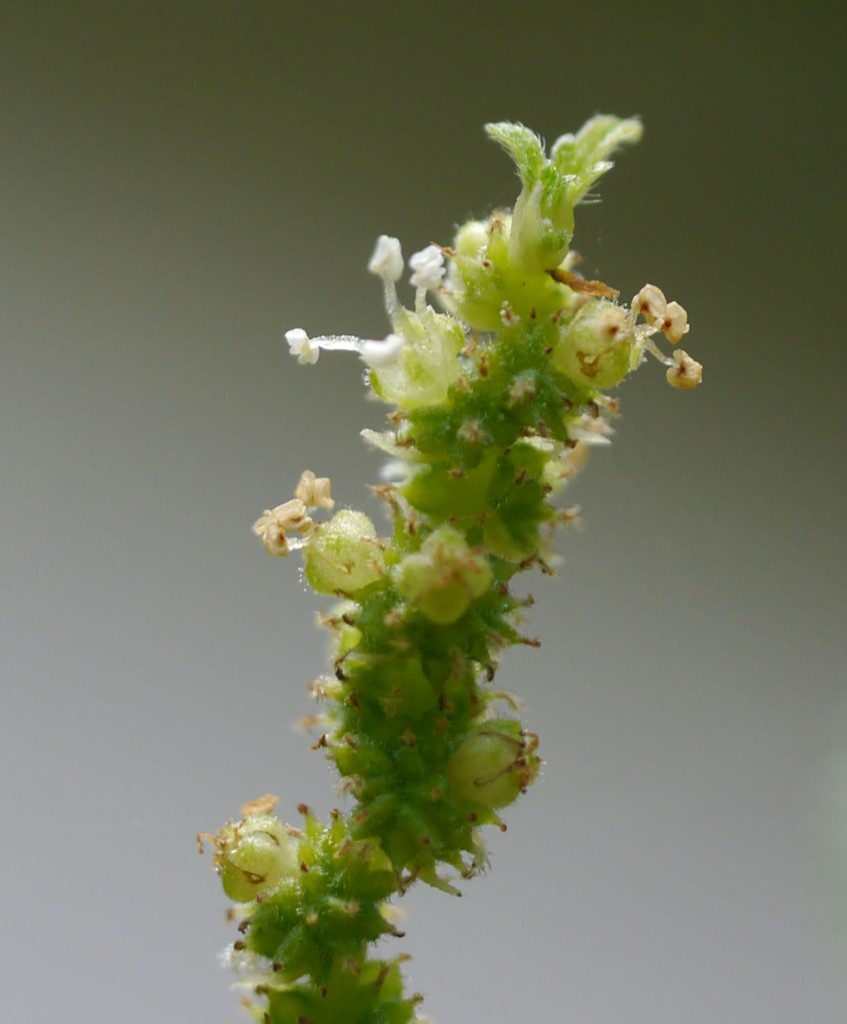
The head consists of numerous flowers so this is a “composite” flower. The individual disk flowers look quite soft with their rounded shape — prior to opening and revealing the pistil. However, the flower head begins to look more prickly as it drops the ray petals and the fertilized flowers become seeds.

The next photo shows the dying plant with its numerous seed heads.
 This plant is called Wingstem (Verbesina alternifolia). Its names give us clues to some observations about the plant. First, the leaves alternate along the stem. Secondly, the stem has “wings.”
 Now, let’s move forward in time to the following spring and look at Wingstem as it begins growing for the season.
 Notice the shape of the leaves and their alternate arrangement along the stem, as well as the stem structure.
 As Wingstem matures, it begins developing its flower heads.
 And, for me, this remains its most identifying characteristic: the winged stem.
 There is another tall plant growing in the same habitat which has beautiful yellow blossoms at the same time as Wingstem. It grows throughout North America.
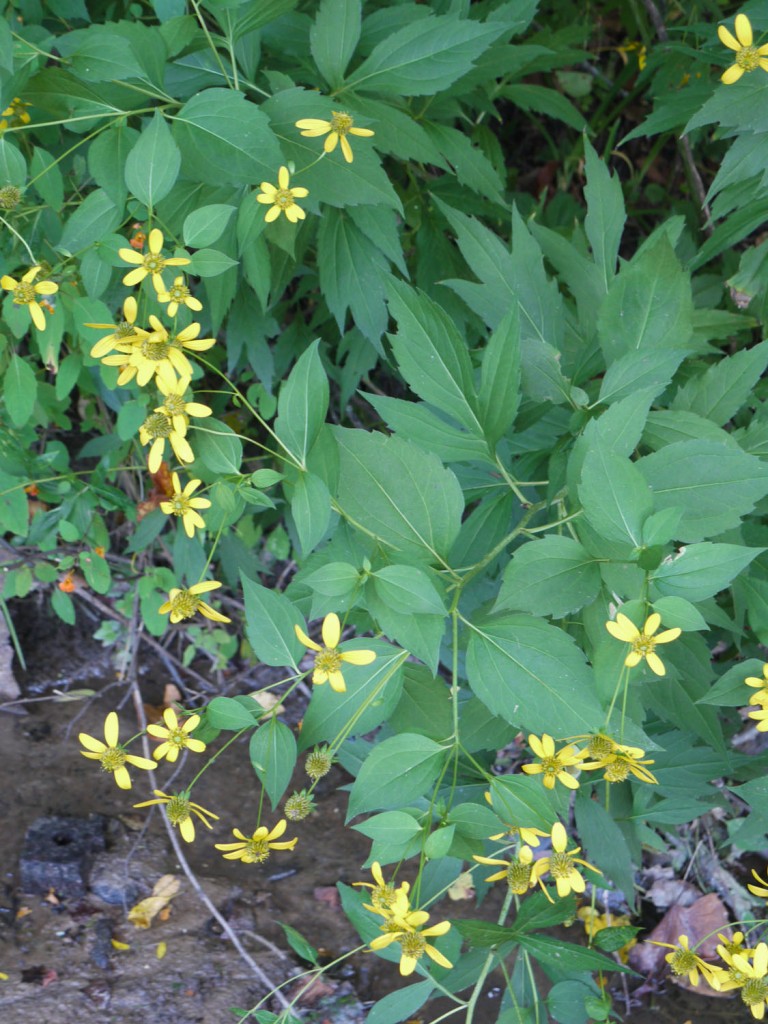 The leaves — at least at the top of the plant — are similar to Wingstem’s leaves. However, Wingstem’s leaves remain the same overall shape for the entire plant while this plant’s leaves vary in shape during the growing season.
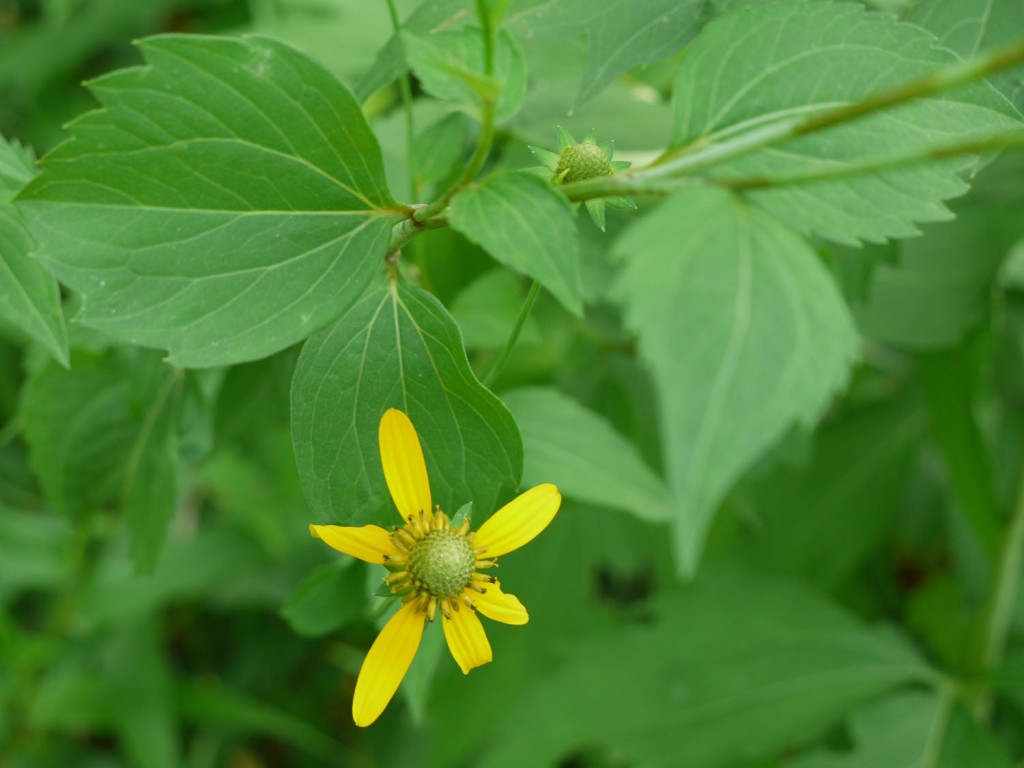 Look closely at its flower. It, too, is a composite.
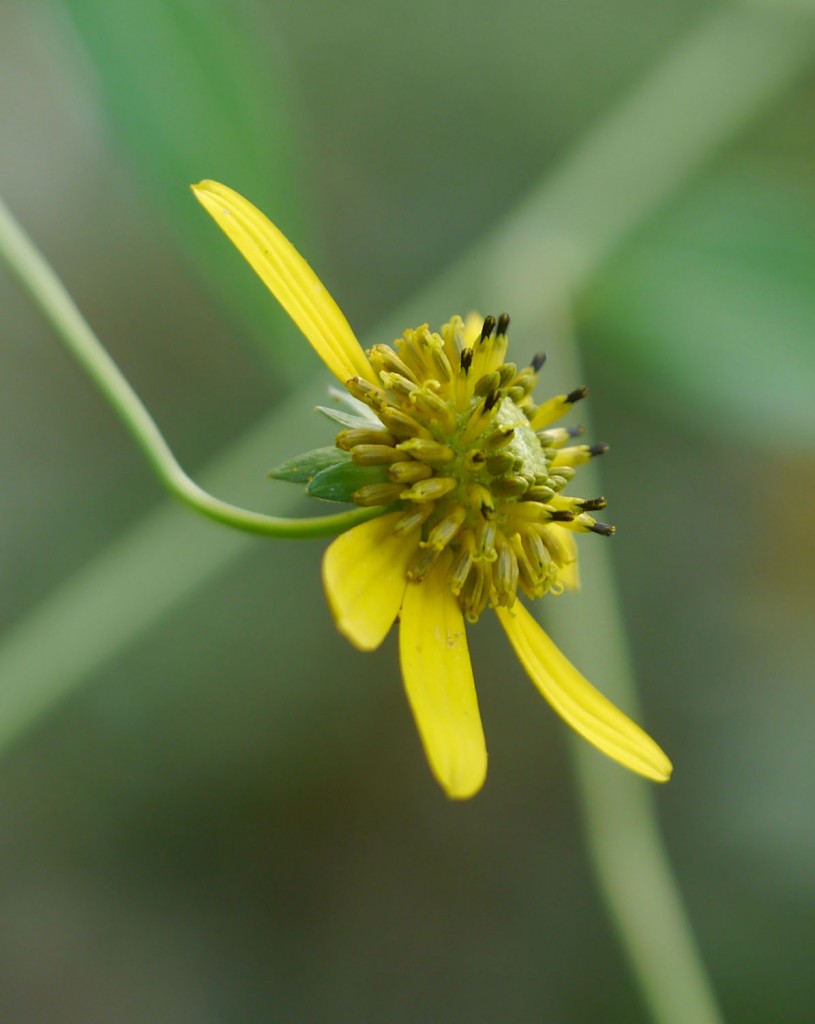 Here’s another flower from the same plant.
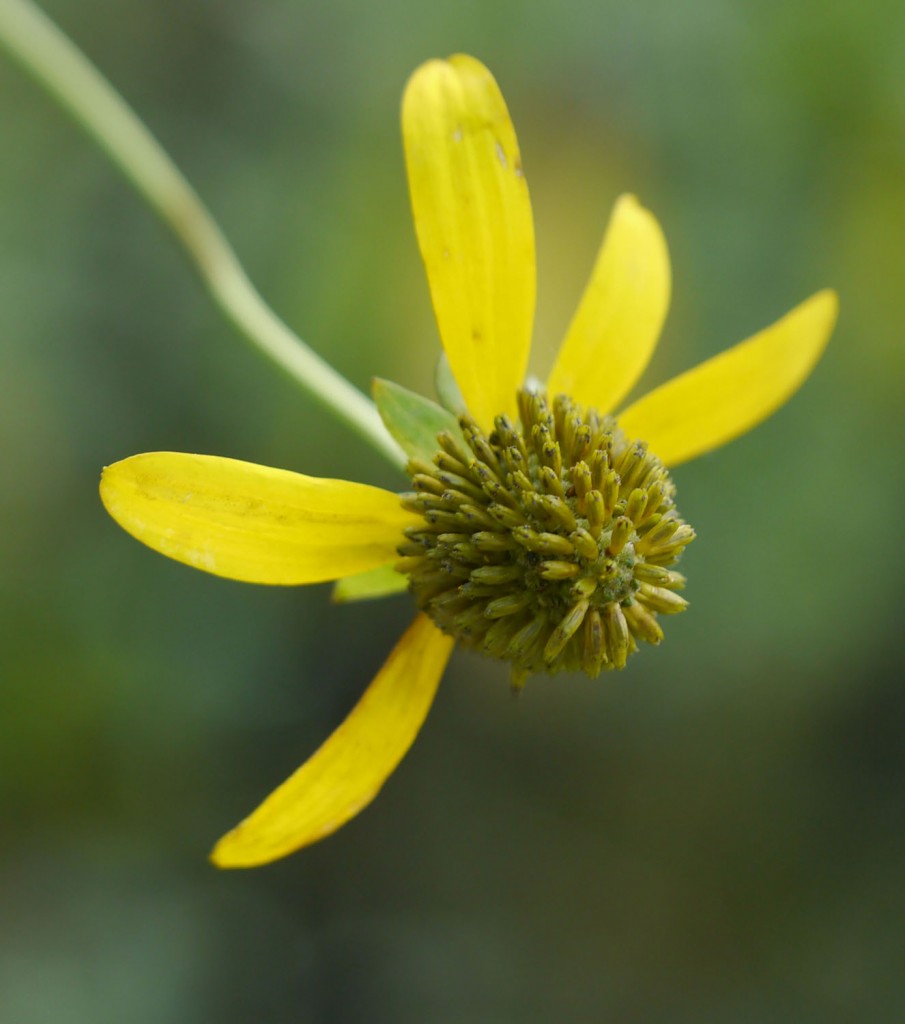 The center of this flower looks a bit rougher to the touch than the Wingstem flower. The next photo shows the ray petals withering and the seeds developing.
 Here are some dried seed heads.

This plant is called Tall coneflower (Rudbeckia laciniata). As with Wingstem, this plants’s names reflect some of its characteristics. First, it is a tall plant. Secondly, many of its leaves are “lacerated” or cut deeply.
 When Tall coneflower begins growing for the season, you can see more of these deeply cut leaves.
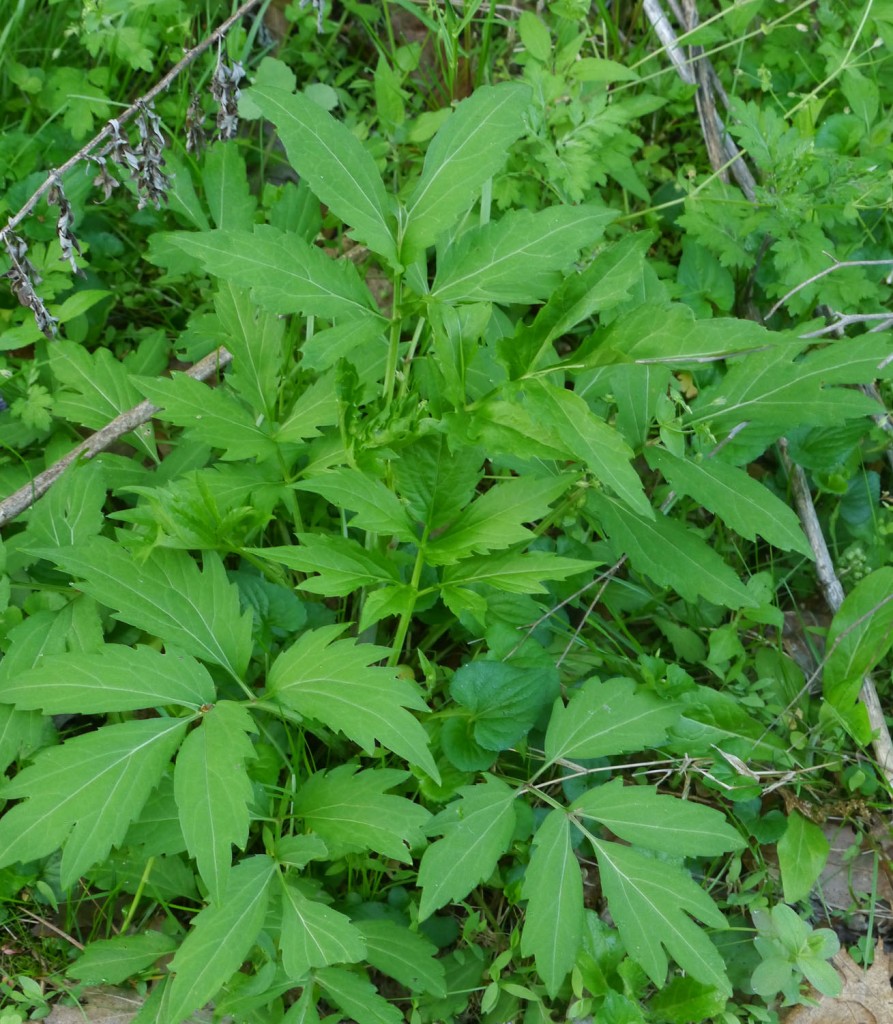 The next image shows Tall coneflower developing its flower heads.
 Lastly, as you may have noticed in some of the images above, Tall coneflower has a very smooth stem.