Mystery plant 040

This plant can be found in the eastern part of the United States.  It is most often noticed during the spring season.  When you can identify it, please share its common and scientific names in a comment — along with any personal story you may have about this plant.

040-a

Flower buds with newly developing leaves

040-b

Opening flower, flower buds and leaves

040-c

Flowers

040-d

Branches with inflorescences

040-e

Plant form during spring season

040-f

Fresh and dying flowers

040-g

Leaves — structure and arrangement


ANSWER (subsequently added to this post to facilitate the “search” function for these images):  Flaming azalea (Rhododendron calendulaceum)

Posted in Mystery plant | 3 Comments

Wild comfrey (Cynoglossum virginianum)

Wild comfrey

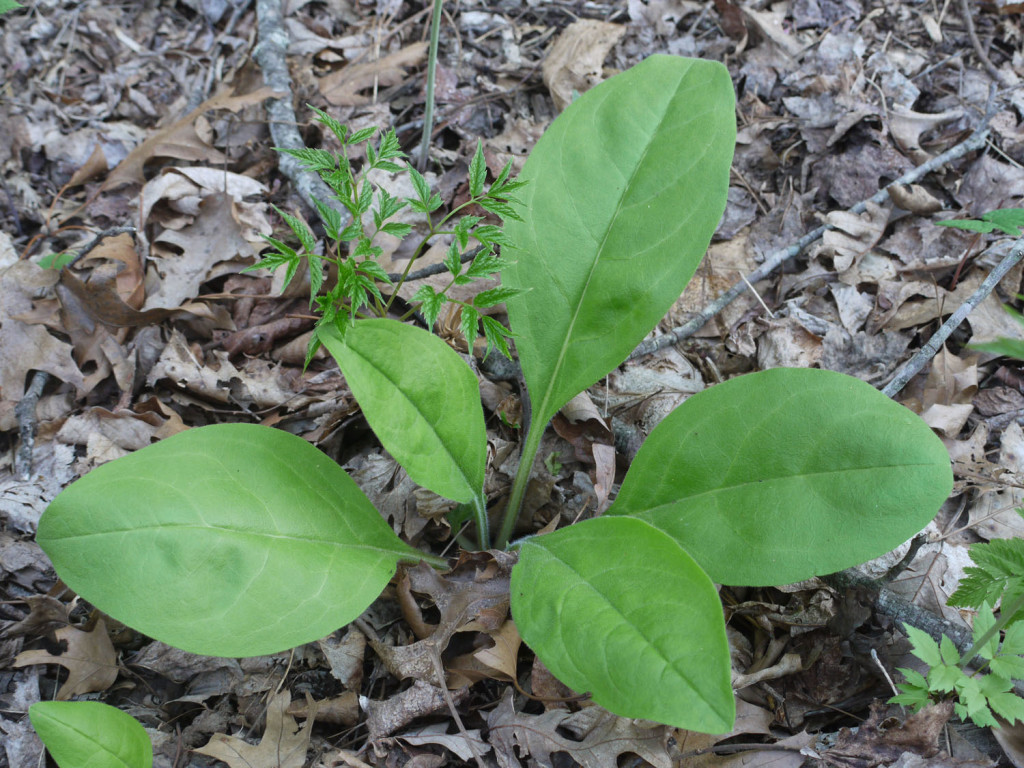
Wild comfrey (Cynoglossum virginianum) is a beautifully simple plant.  It begins growing its oval leaves in a basal rosette during spring.  After those leaves are established, it then grows the central flower stalk as can be seen in the next photo.  A spring hailstorm cut the various ragged holes and edges on the leaves for this particular plant.

Wild comfrey

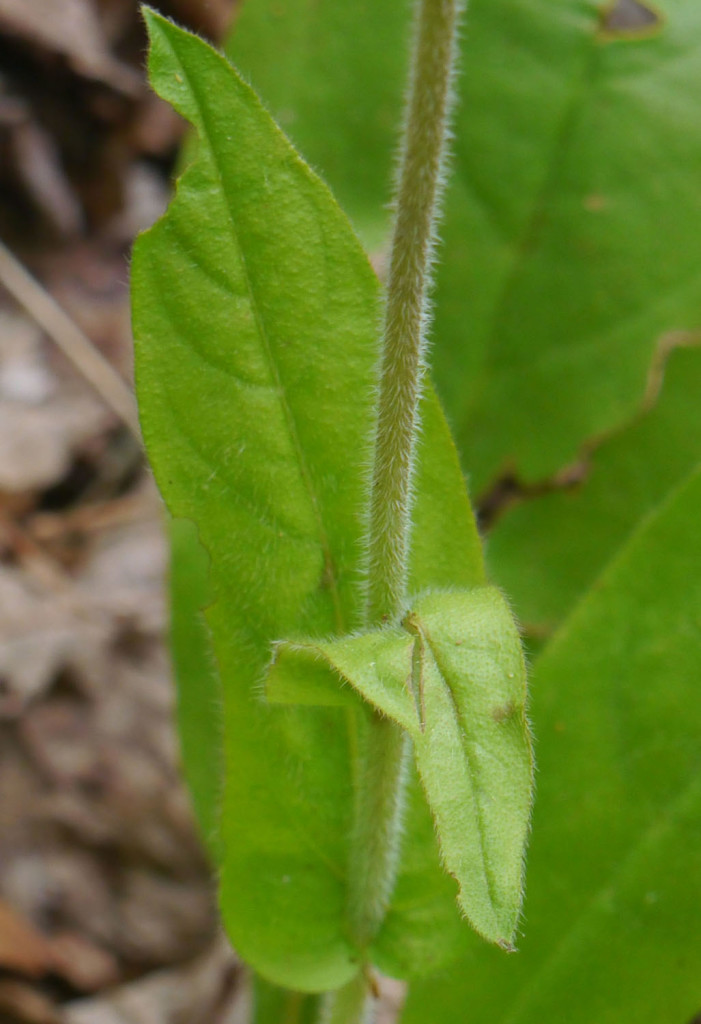
This is one “hairy” plant — with hairs on every surface — including its flower stalk.

Wild comfrey

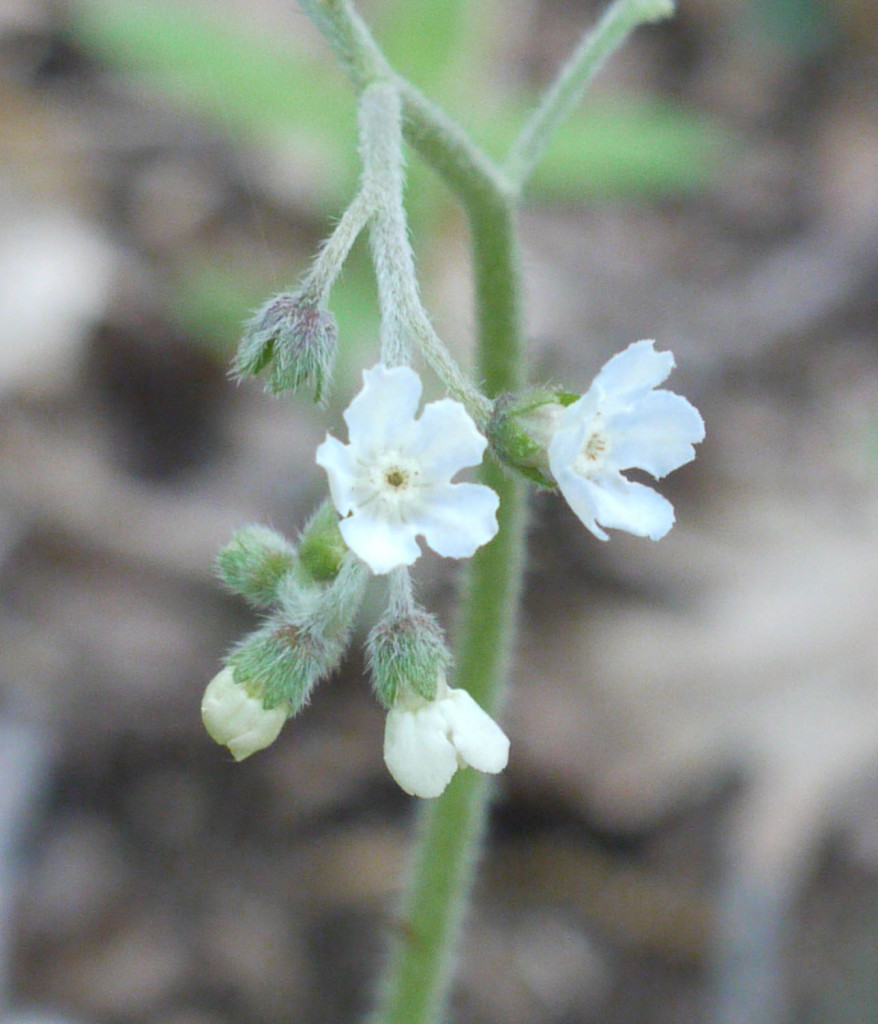
This next photo shows a typical Wild comfrey inflorescence.

Wild comfrey

Lastly, here’s a closer view of the Wild comfrey flowers.

Wild comfrey

NOTE:  Wild comfrey (Cynoglossum virginianum) is not related to Common comfrey (Symphytum officinale).  They are in different genuses, although they are both memers of the Borage family (Boraginaceae).  Read this excellent blog post by Elle D’Coda of Herbal Coaching Community for a well-researched and descriptive comparison of these two different comfrey plants.

Watch this video for more photos of Wild comfrey throughout one year of its life cycle.  The images can help you accurately identify this plant whenever you have an opportunity to see it.

Posted in Plant Identification videos, Plant portraits | Leave a comment

White trilliums — or are they?

Trillium
While walking through woods in spring-time, I see white trilliums everywhere.  I decided to identify this species of trillium.  My first identification was White trillium (Trillium grandiflorum).  It’s a “showy” and common white-flowering trillium.

White trillium

That was accurate except . . .  I realized there was another white trillium here, too.  Both flowers were peduncled — they grew with a stalk.

Trillium erectum and T. grandiflorum

However, each trillium seemed to have some subtle differences.  First, the leaves of Trillium grandiflorum were somewhat narrower than the mystery trillium.  Secondly, the leaves came together in the center a bit differently.

Trillium erectum and T. grandiflorum

Next, I compared the flower centers.  The mystery trillium had stamens with gray anthers and pollen while Trillium grandiflorum had yellow anthers and pollen.

Trillium erectum and T. grandiflorum

One of the identifying characteristics for T. grandiflorum is the fact that the flowers turn pink or purplish as they age and die.
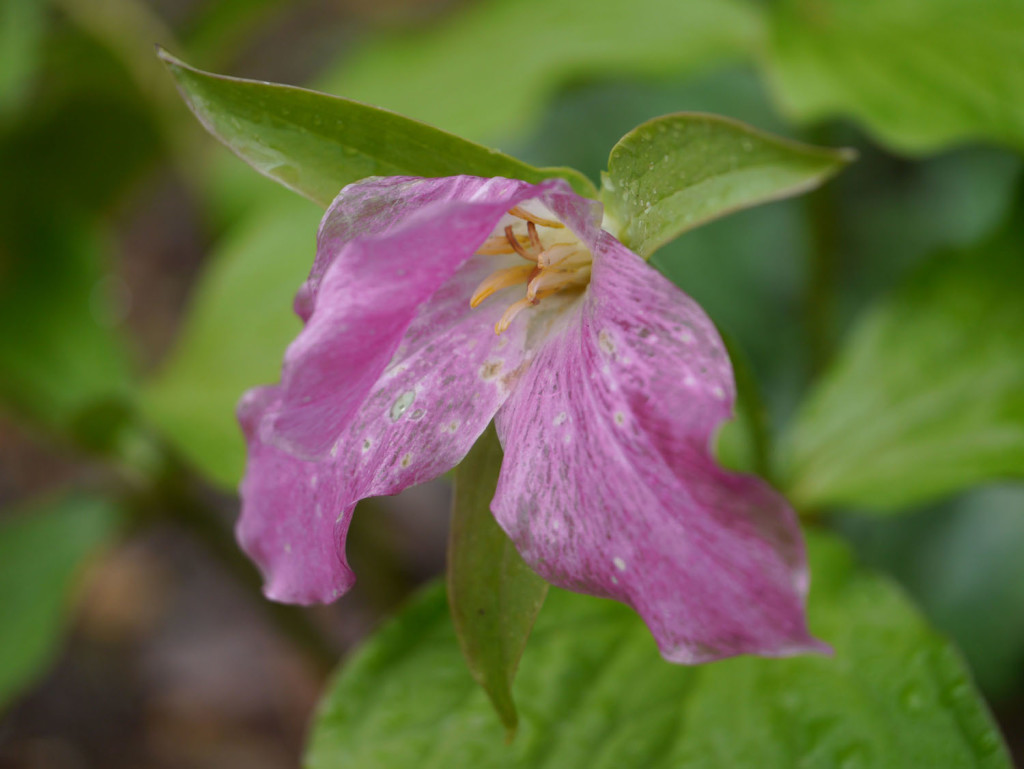
White trillium

While searching wildflower field guides, I repeatedly came across a trillium which had a center-of-the-flower look just like the mystery trillium.  This was Trillium erectum which has so many common names that it’s quite confusing.  I chose to use “Wake Robin trillium” when referring to it by a common name.
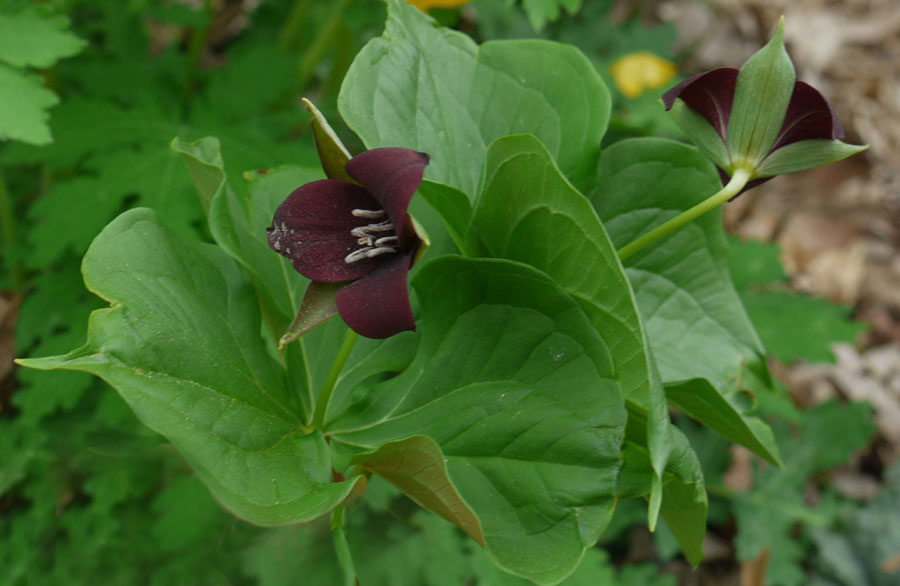
Wake Robin trillium

I read the description of T. erectum in quite a few field guides.  Two of them gave me the answer I was searching for.  Newcomb’s Wildflower Guide states:  “Flower normally maroon or dark purple, ill scented. . .  A white, scentless variety is found; also rarely yellowish or green.”  Peterson’s Wildflower Field Guide says:  “The maroon or purple flower (rarely yellowish or white) is on a slender stalk above the leaves.”

One final comparison of the two flowers:  Trillium erectum (Wake Robin trillium) has petal edges which are smooth and even.  Trillium grandiflorum (White trillium) has wavy petal edges.

Trillium erectum and T. grandiflorum

So there you have it . . .  two white trilliums . . .  two different species.  The first one below is White trillium (Trillium grandiflorum).

Trillium grandiflorum

And the second white-flowered trillium is Wake Robin trillium (Trillium erectum).
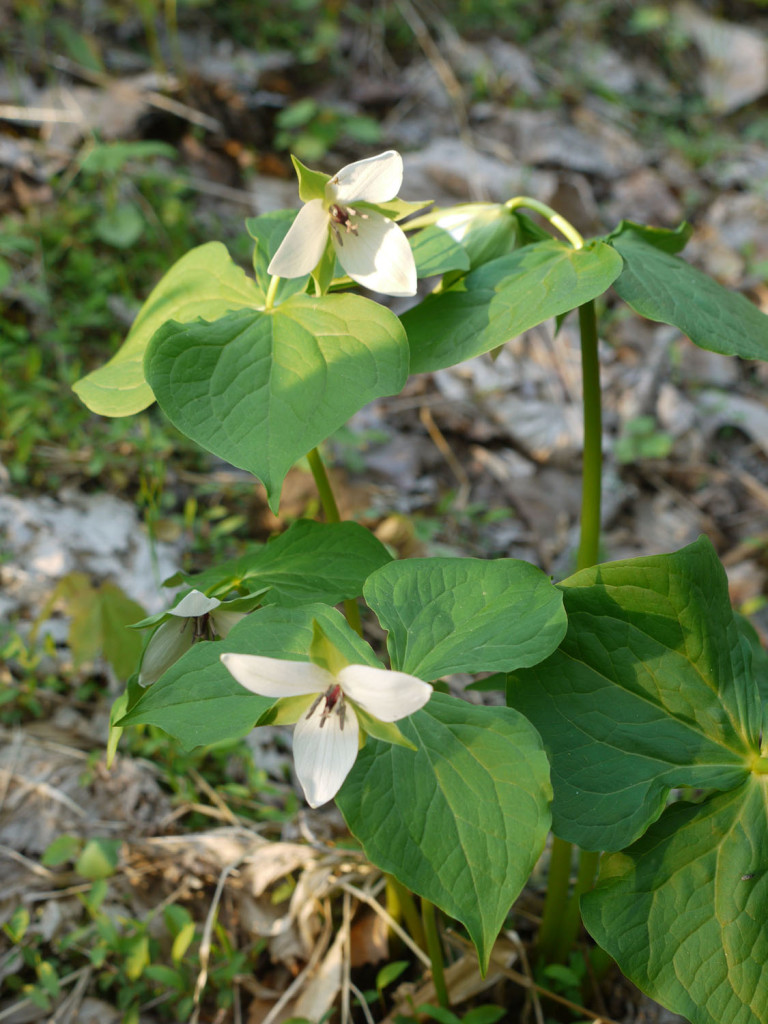
Trillium erectum

Posted in Plant comparisons | 1 Comment