This woodland plant can be found throughout eastern and portions of central North America. When you can identify it, please leave the common name and scientific name in a comment below. And share any personal story you may have about this plant.
New spring leaves surrounded by older leaves from previous year’s growth
Young plant with flower stalk rising along left side
Flower stalk with developing inflorescence
Upper portion of blooming inflorescence
Flowers
Basal leaves
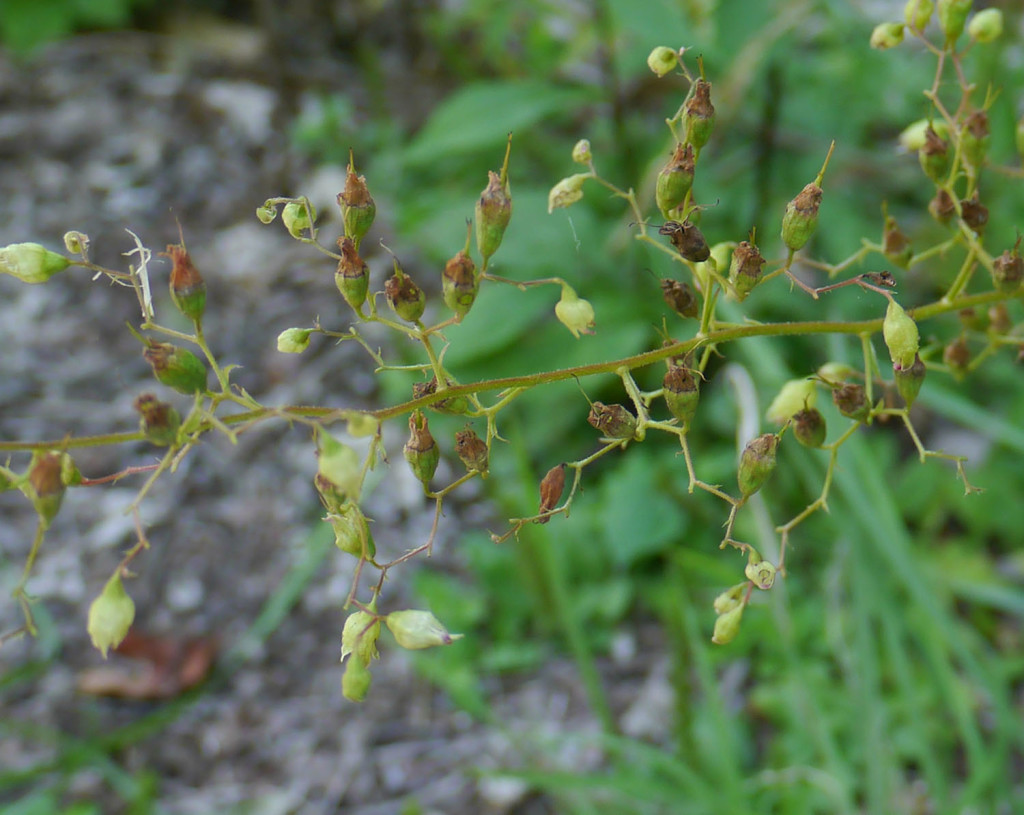
Inflorescence with developing seed capsules
ANSWER (subsequently added to this post to facilitate the “search” function for these images): Alumroot (Heuchera americana)
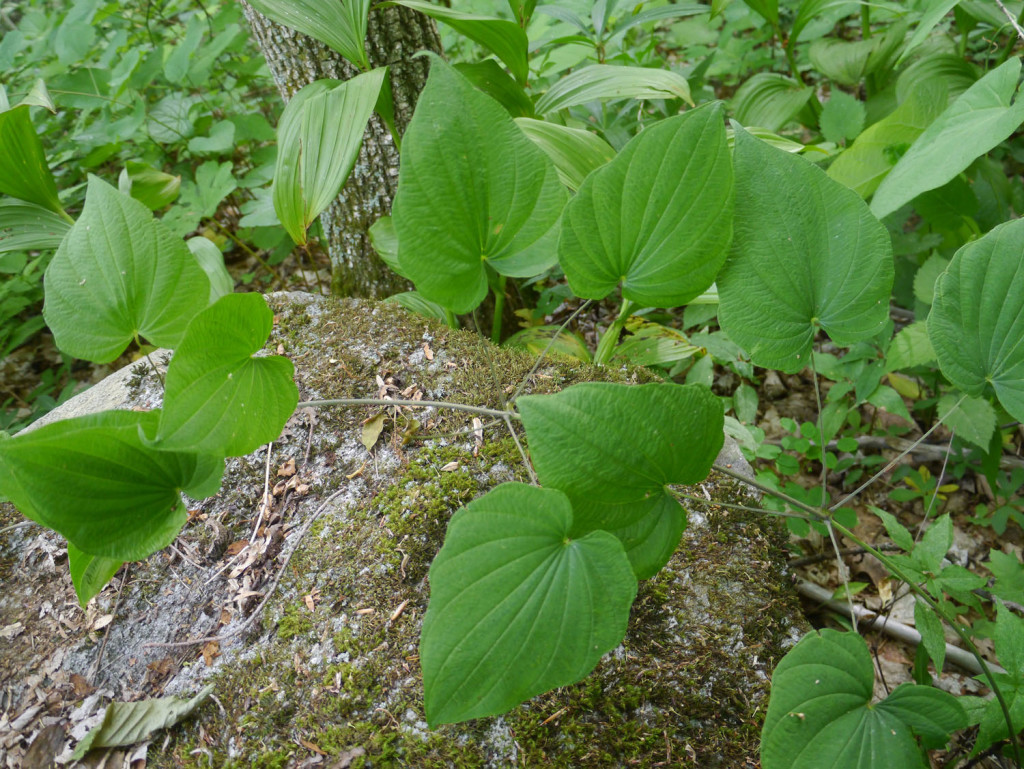
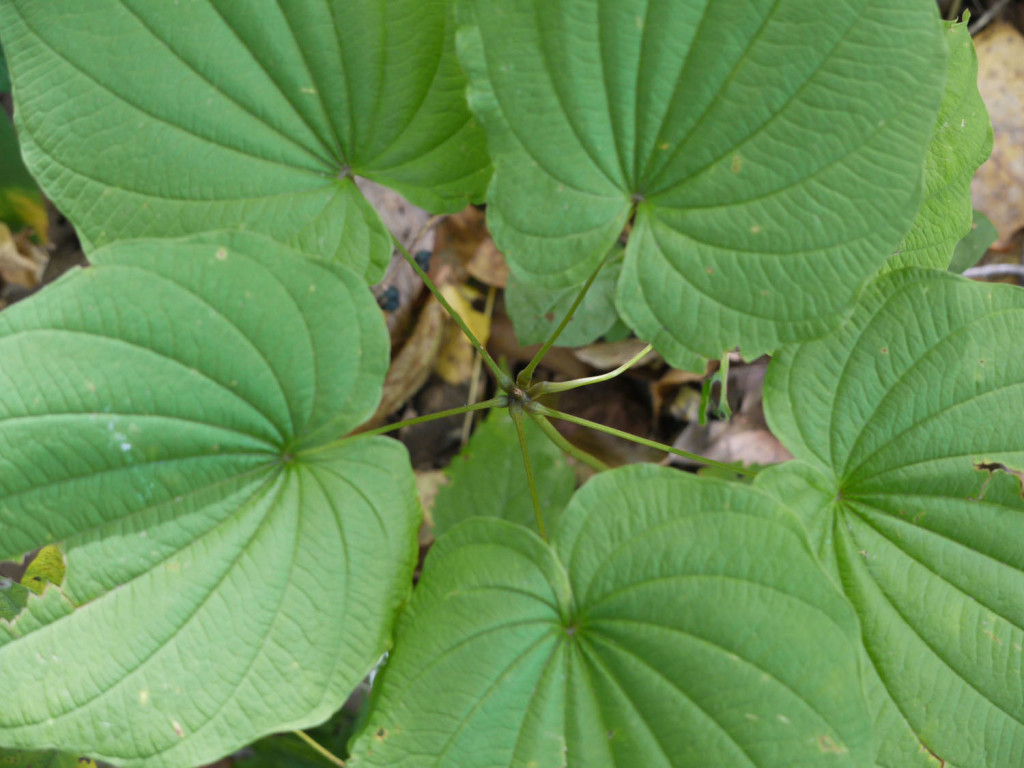
The Wild yam (Dioscorea villosa) vine can grow to be 15 feet long during a single season. This plant can be found throughout the middle and eastern portions of North America. The leaves are ovate or cordate in shape, with clear veins and entire margins.
The lower sets of leaves grow in whorls from the stem.
As the vine lengthens, the whorled leaves become fewer in number (per whorl) and eventually they are single leaves arranged alternately along the stem.
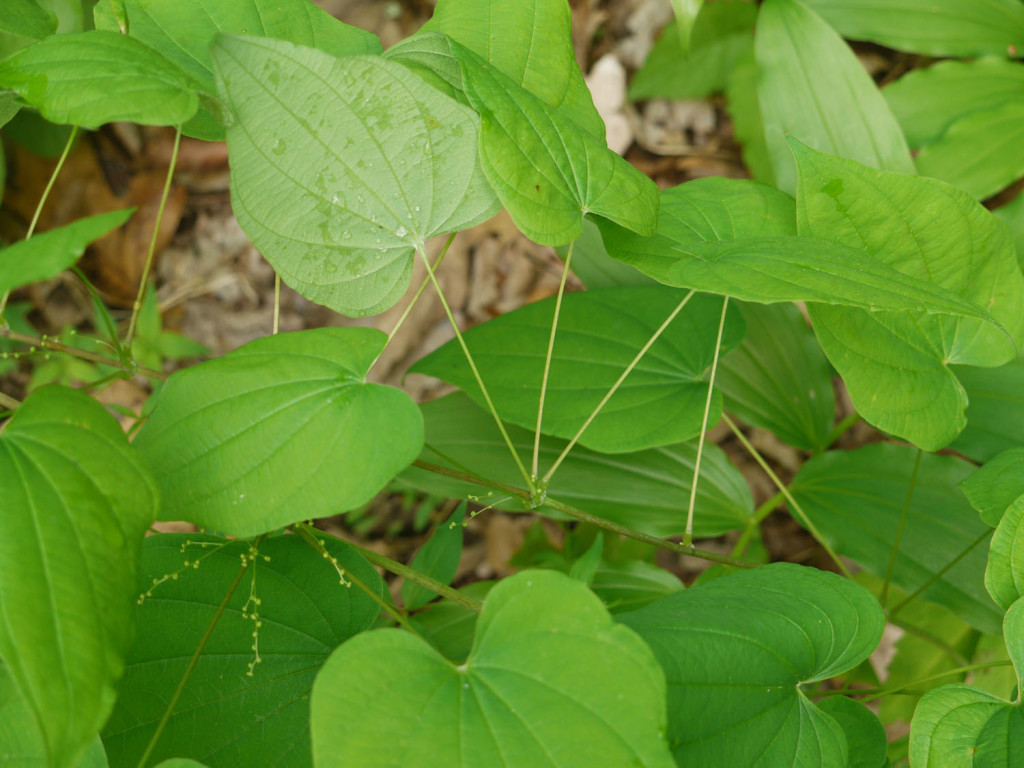
Wild yam plants can have either male or female flowers. The flowers are quite tiny as you can see in the following image of the vine with its developing flower buds (the little light green dots hanging below the leaves).
Here’s a close view of some staminate (male) Wild yam flowers.
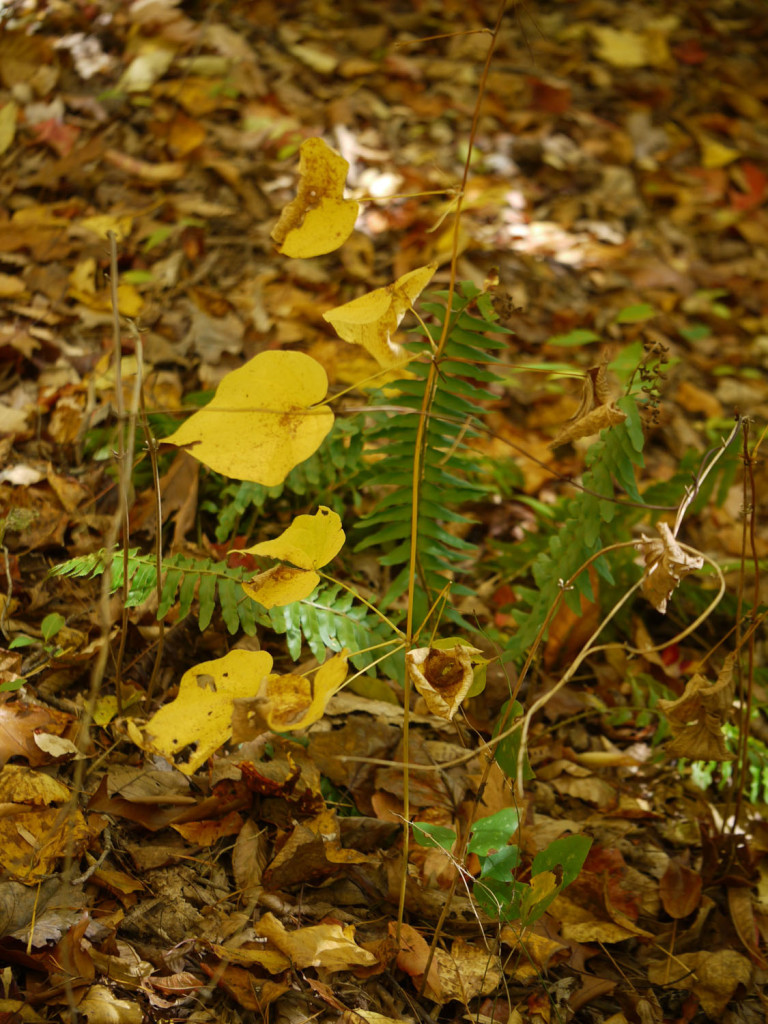
In the fall, the leaves turn bright yellow.
This is when the rhizomes are harvested for medicinal purposes.
Watch this video for more photos of Wild yam. You can see how it grows, look at more photos of the staminate flowers as well as the seed capsules, and observe how it dies during the fall months. The images can help you accurately identify this plant whenever you have an opportunity to see it.
You can see this tree throughout the eastern (and somewhat the midwestern) portions of North America. When you can identify it, please leave a comment with the common and scientific names for the tree. Also, share any personal stories you may have about it.
Twig during winter season
Young plant in late spring
Tree beginning to bloom
Branch with flowers
Flowers
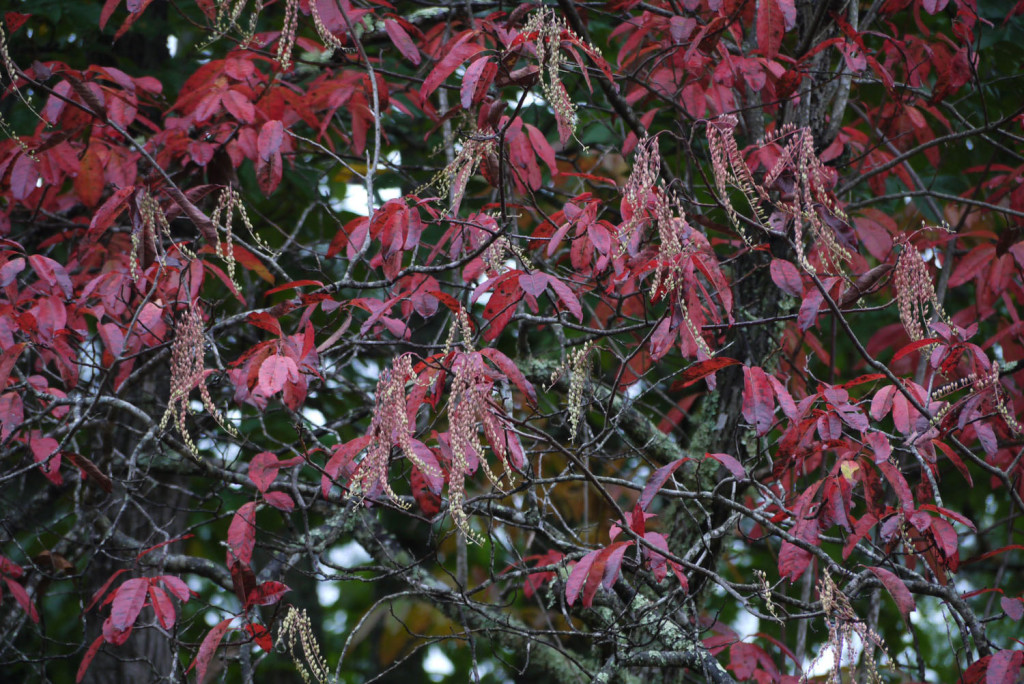
Leaves turning color during fall season
Fall foliage
Bark
Dried seed capsules
ANSWER (subsequently added to this post to facilitate the “search” function for these images): Sourwood (Oxydendrum arboreum)