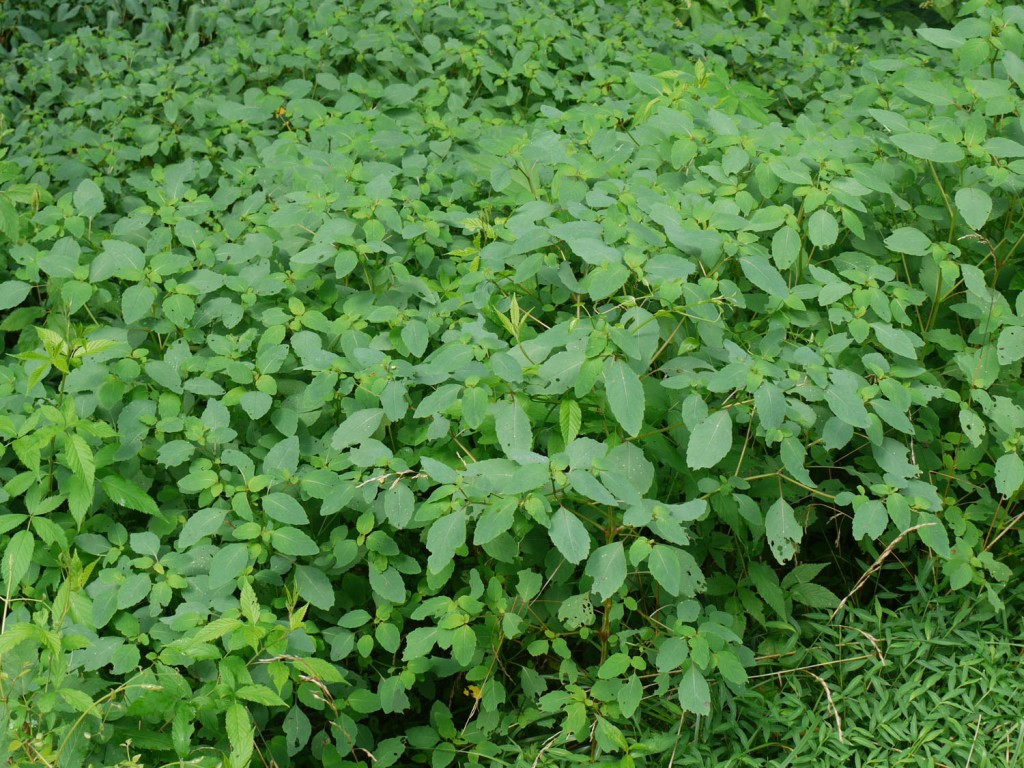
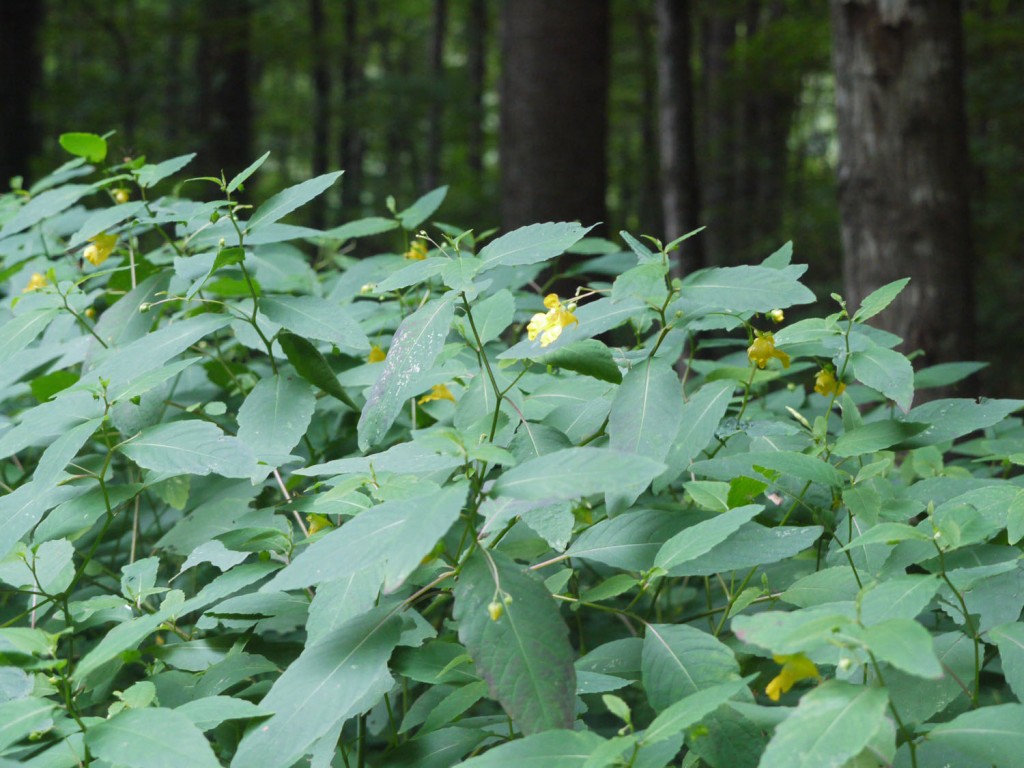
 The above photo shows a modest-sized stand of Jewelweed (Impatiens spp.) mid-way through its growing season. The question is . . . is it Impatiens pallida (Pale jewelweed) or Impatiens capensis (Spotted jewelweed)?
Let’s simply look at the Impatiens genus as a whole — starting when it first pops up in the spring.
 A short time later, it develops its first set of true leaves.
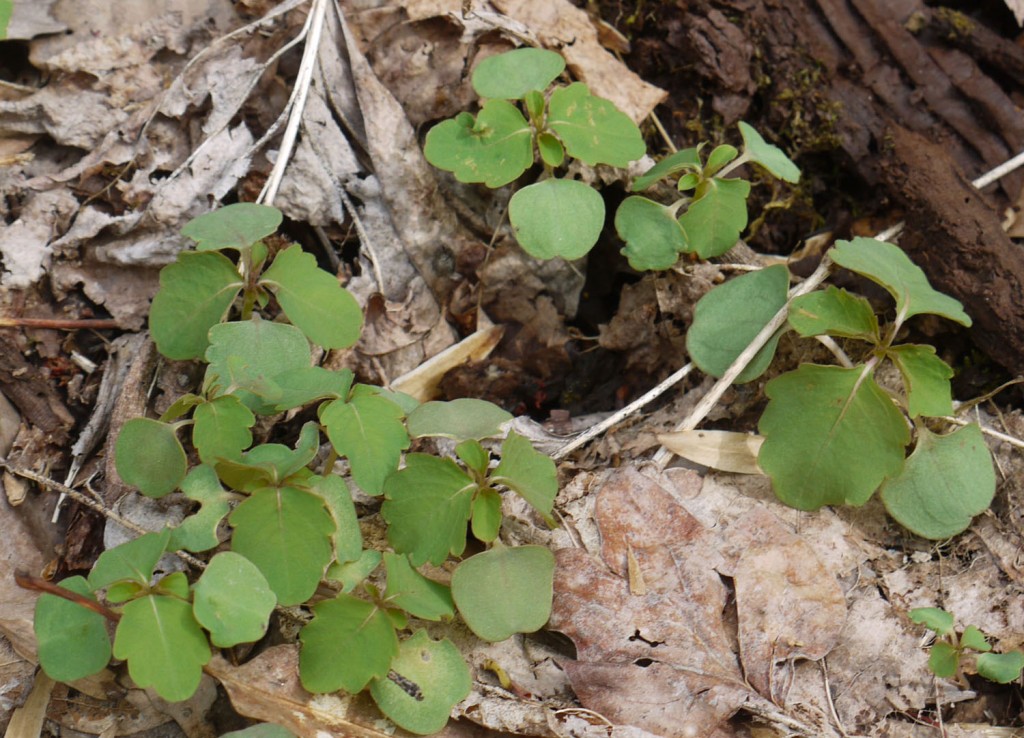 And here’s a healthy young plant. You can probably guess that the leaf arrangement is opposite — just as we saw with the newly sprouted Jewelweed.
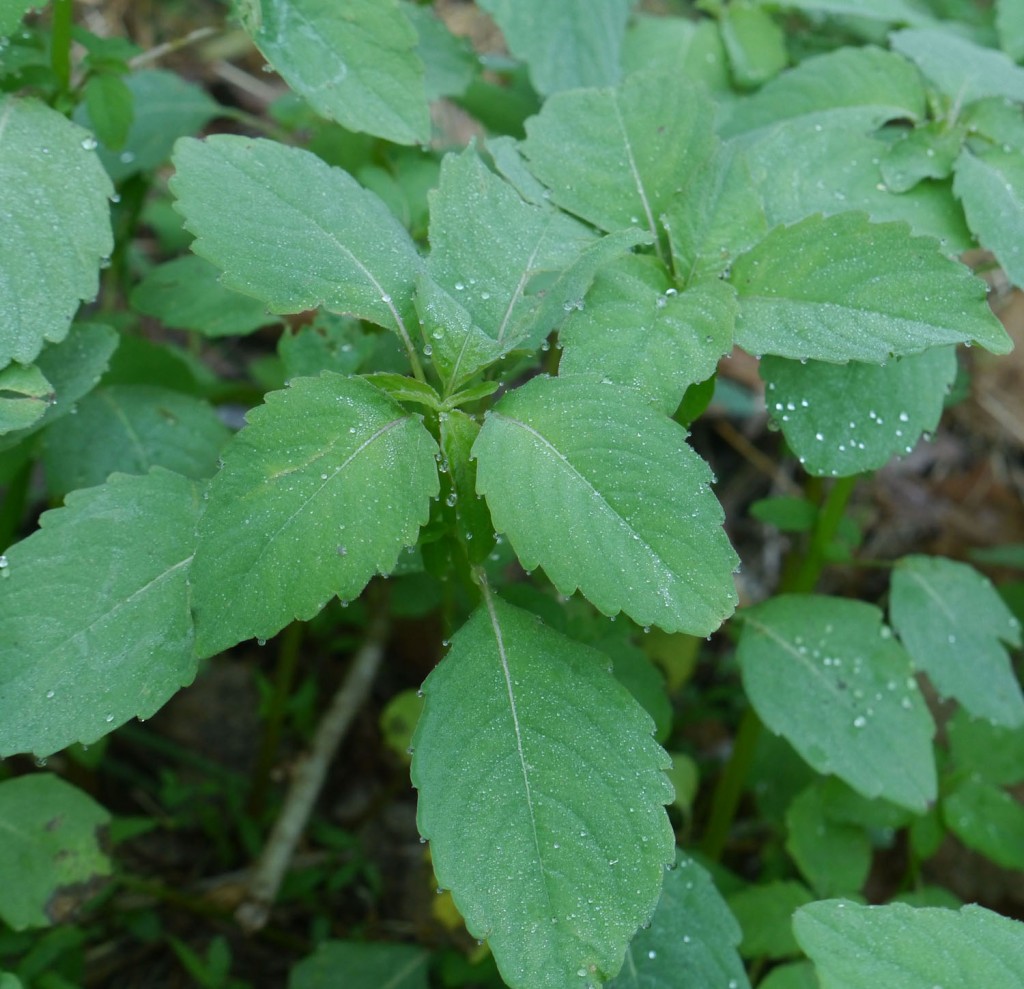 Now we’re going to look more closely at specific parts of a Jewelweed plant. The underside of the leaf (on the left below) is lighter in color. It is very easy to see the pinnate venation both on the upper and lower surfaces of the leaf. You can also see the coarsely toothed leaf margin.
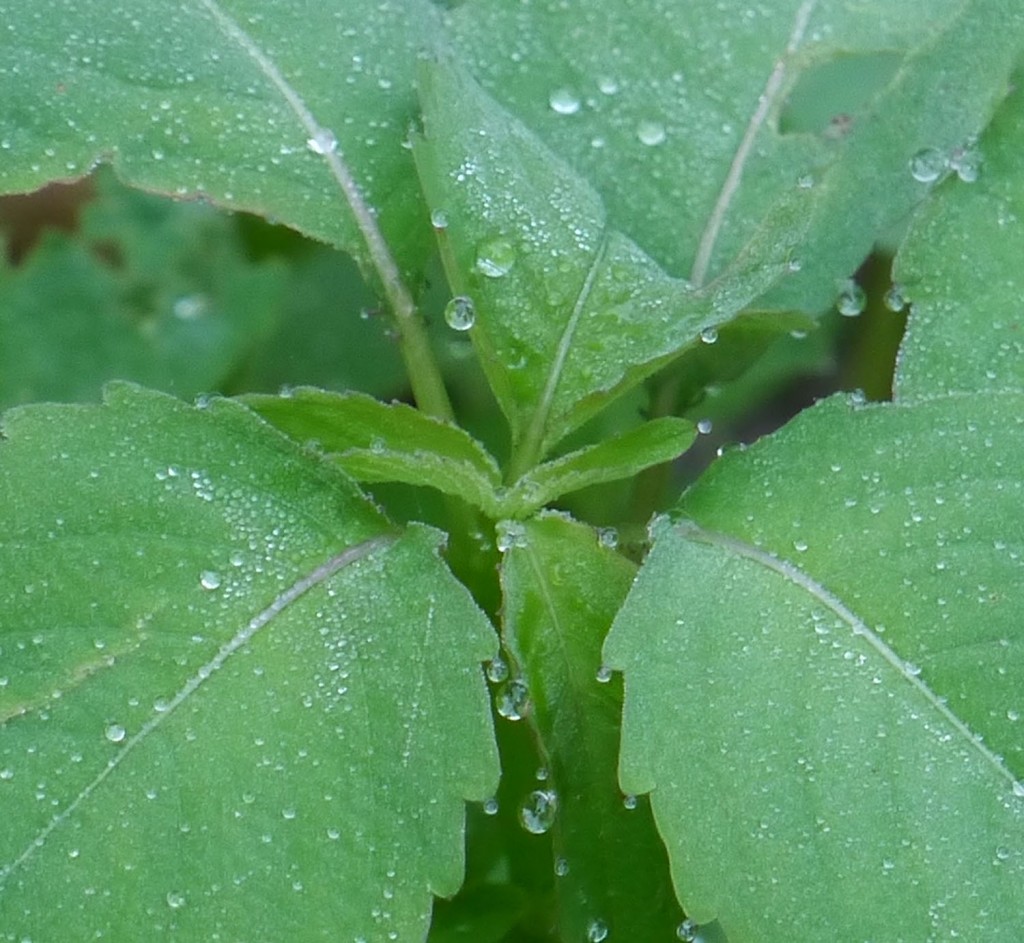
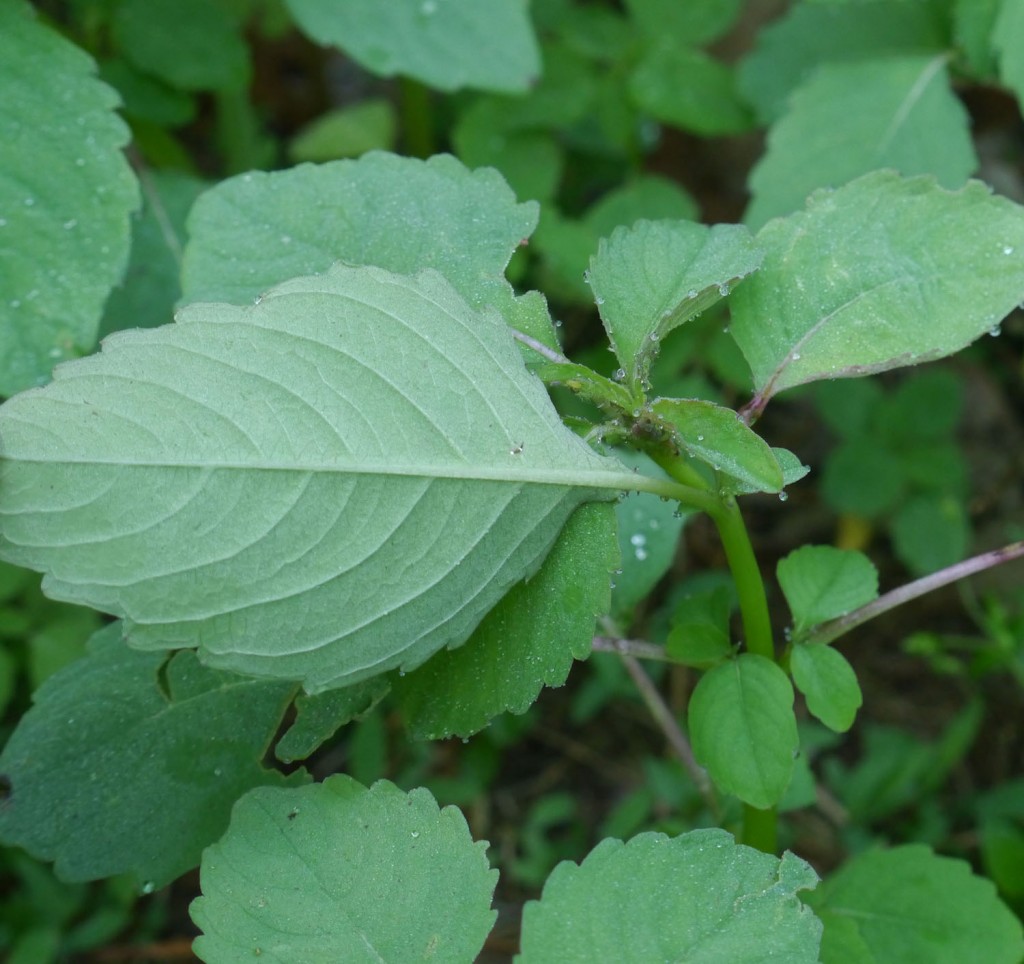 In this closer view of the growing tip of the plant, notice the beaded moisture on the leaves. This is one of the suggested reasons for the plant’s common name. Water on the plant looks like “jewels.”
 The lower leaves are clearly arranged oppositely along the stem.
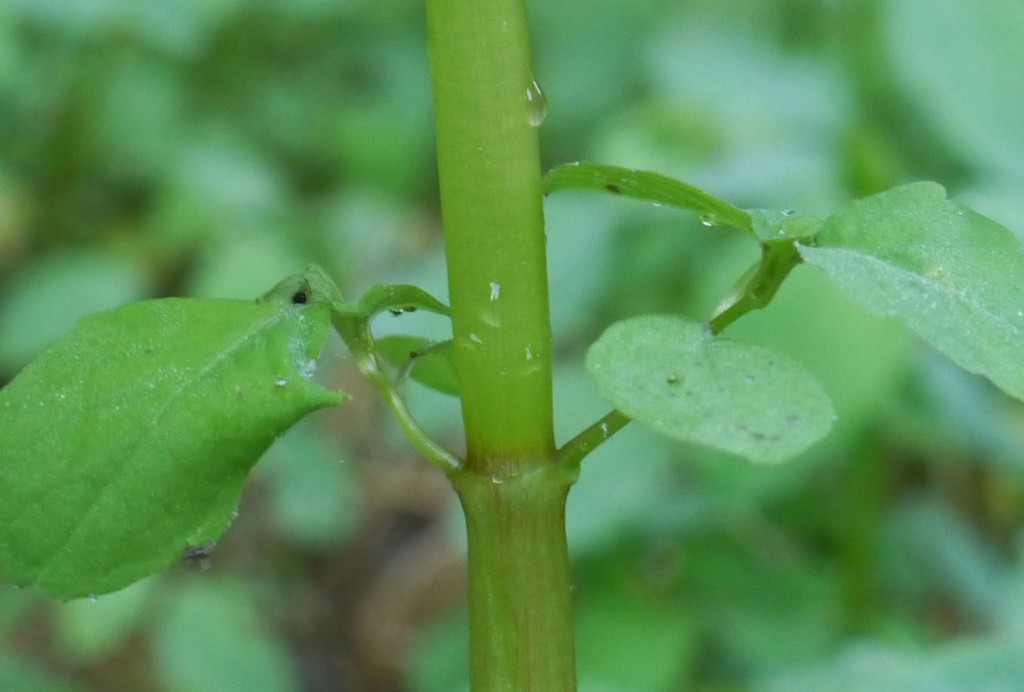 Jewelweed’s stem has a translucent quality to it.
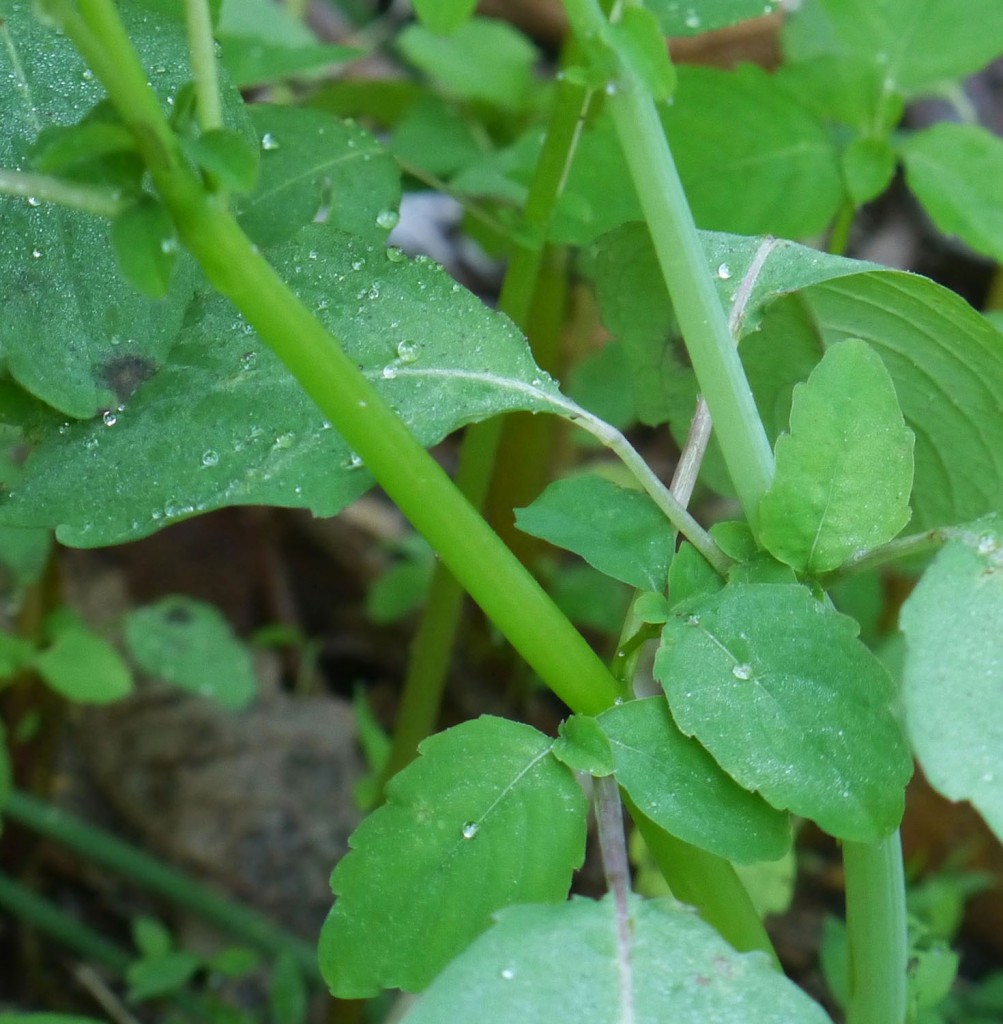 The stem feels quite “juicy” although, when it is broken, it turns out to be hollow.
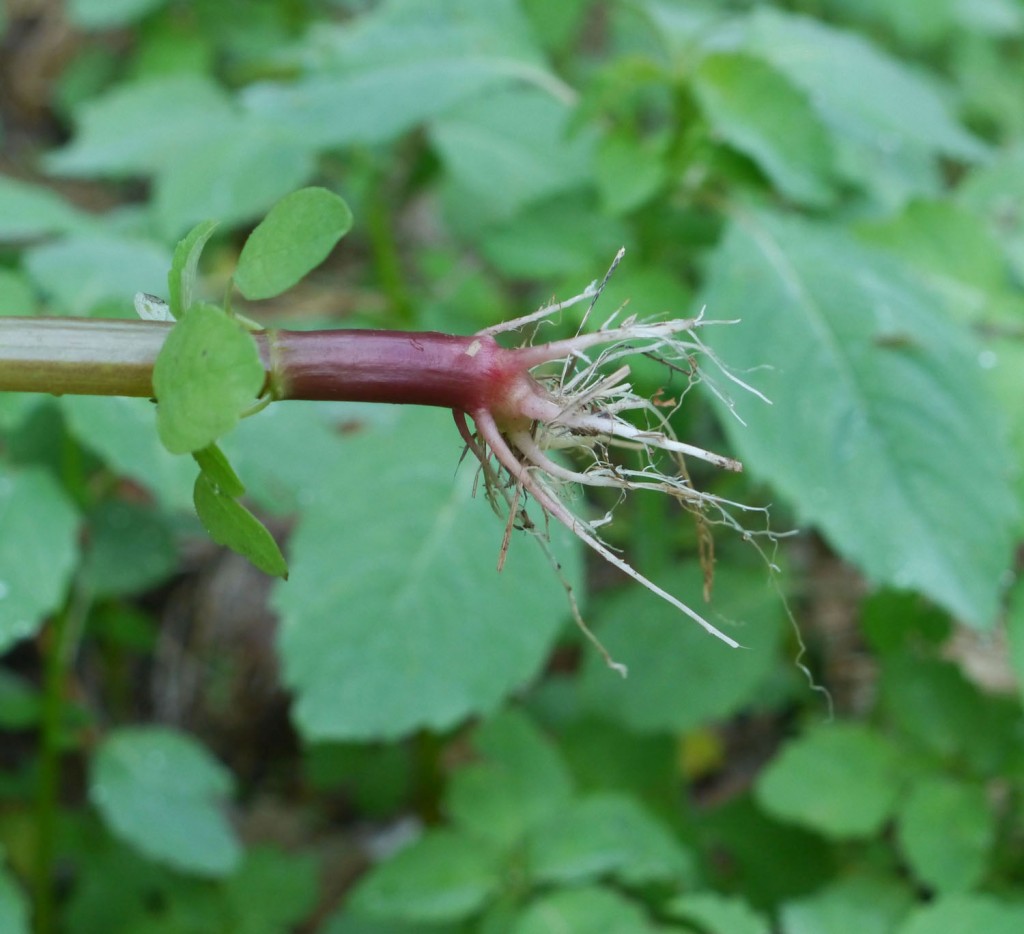
 Jewelweed’s skimpy and shallow roots (considering the overall height of the plant) are easily pulled from the damp soil — Jewelweed’s preferred growing environment.
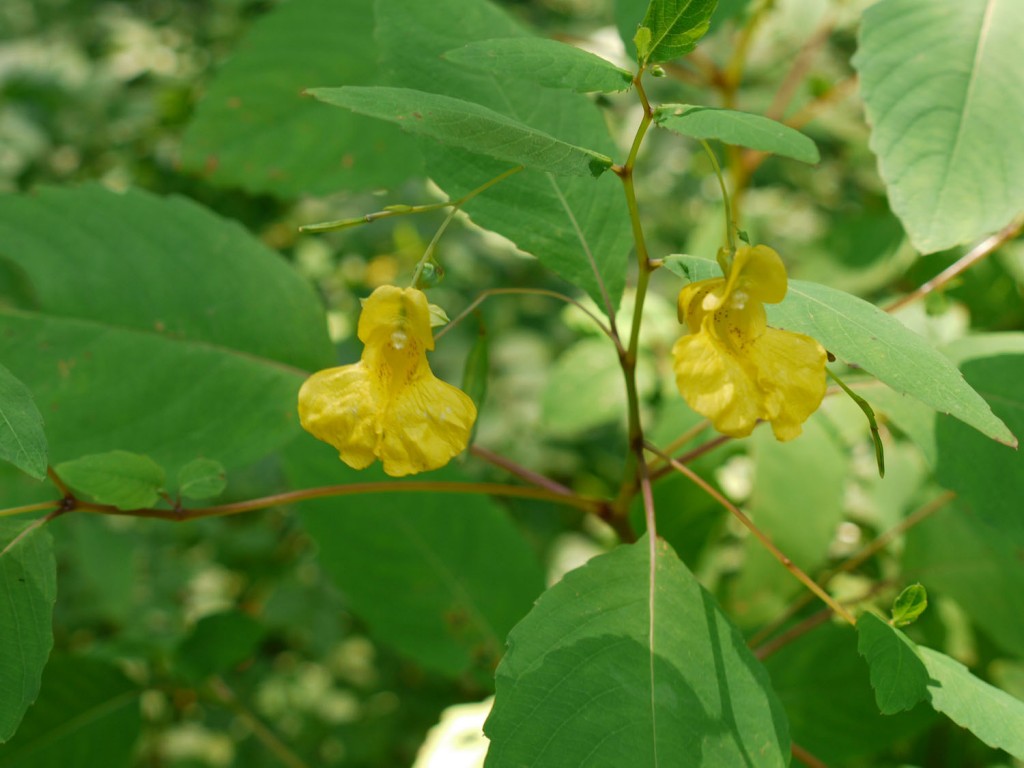
 Here’s another patch of Jewelweed — in bloom. And now we can conclusively identify this particular group of plants as Impatiens pallida.
 Pale jewelweed (Impatiens pallida) blooms with yellow flowers.
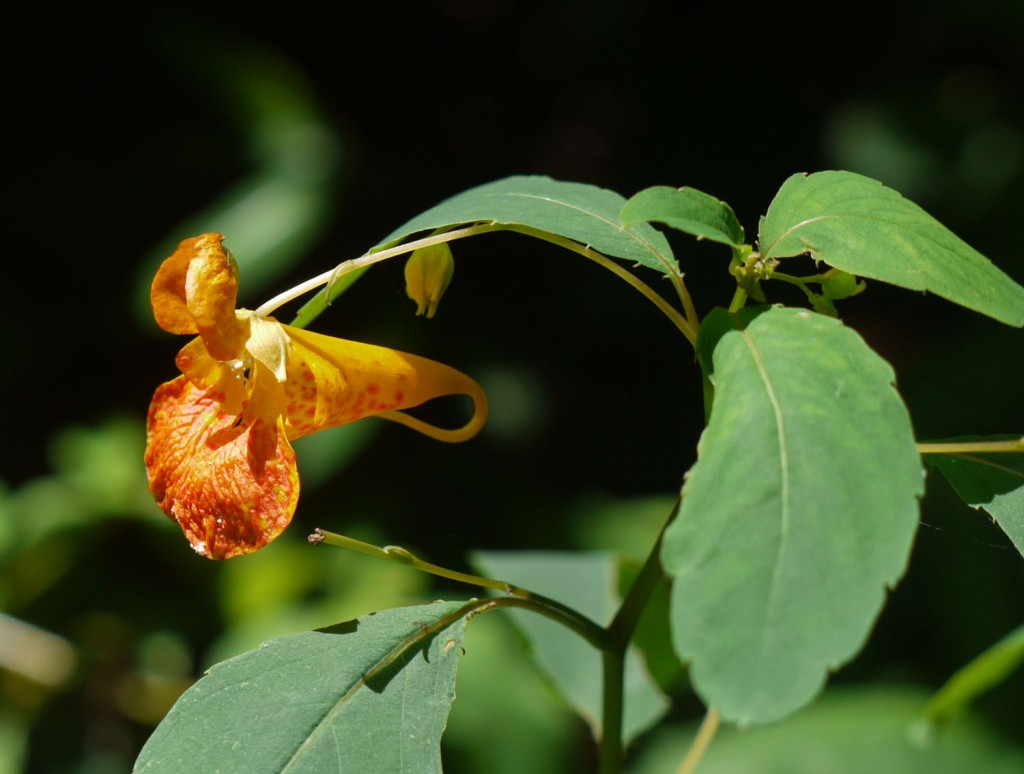
 Spotted jewelweed (Impatiens capensis) has orange flowers.
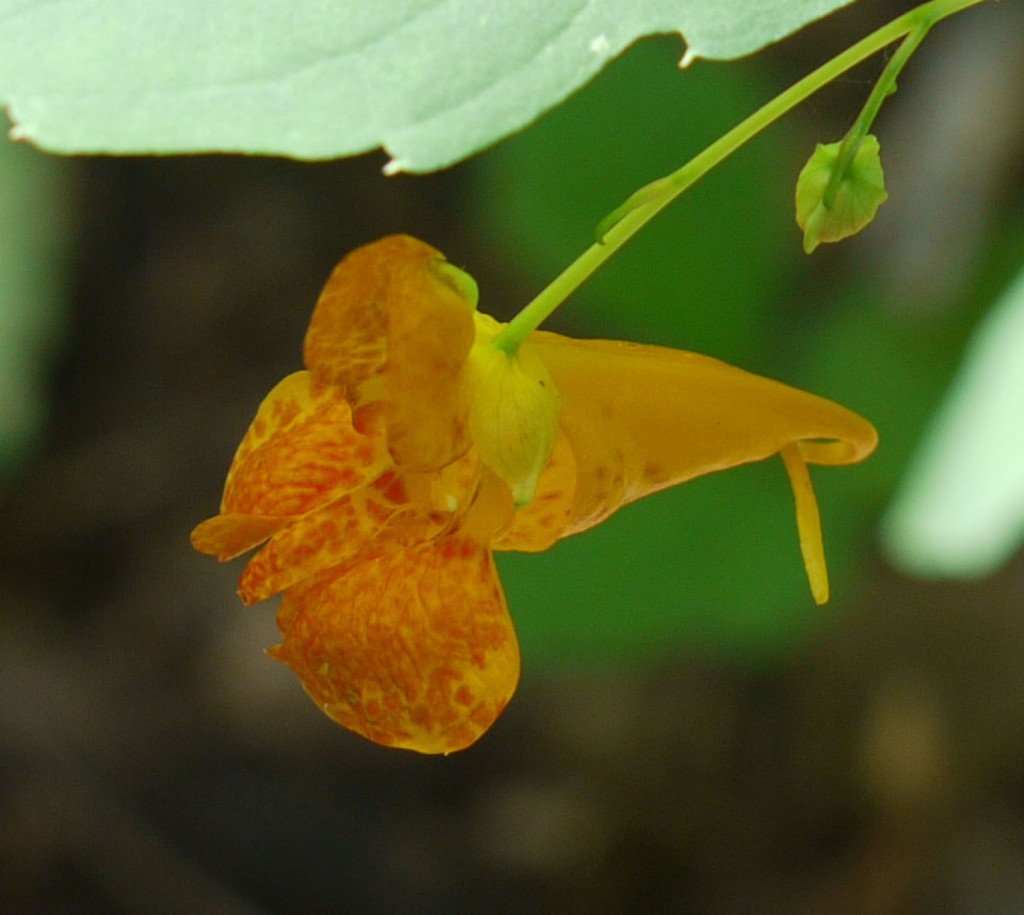
 Jewelweed flowers are “irregular” — or “bilateral” — in shape. Check out the flower’s spur as well as its two sepals.
 Aahh. . . Jewelweed’s seed pod . . .
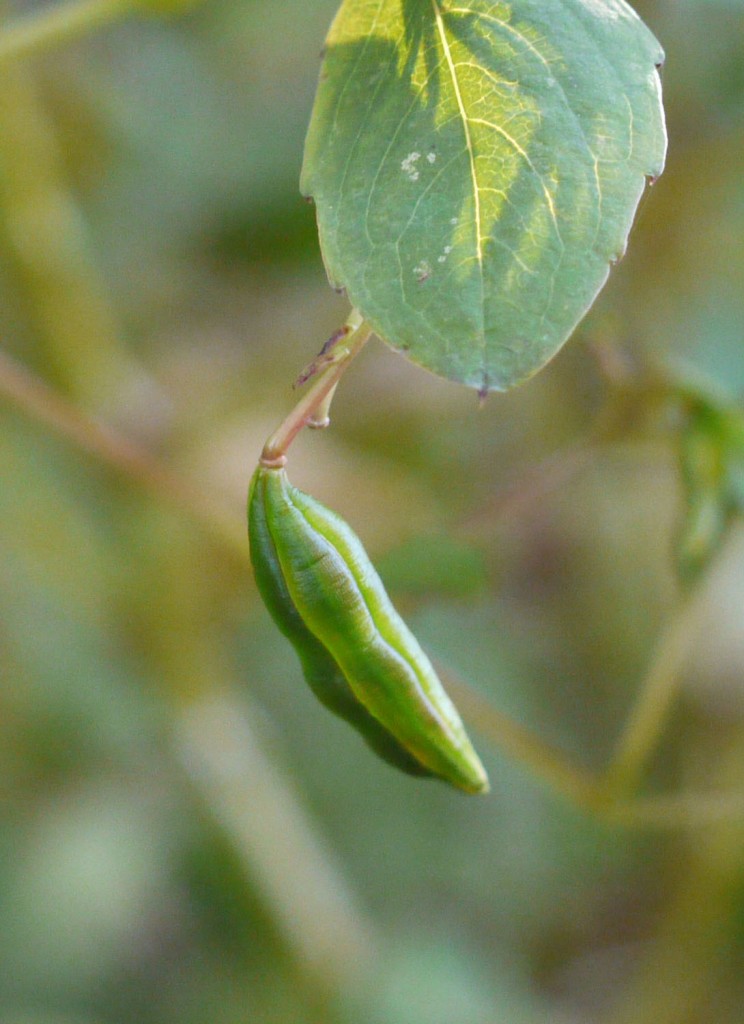 Another common name for Jewelweed is Touch-me-not. Gently grasp one of the mature seed pods between fingers and thumb. You can feel the pod spring apart and coil up between your fingers.
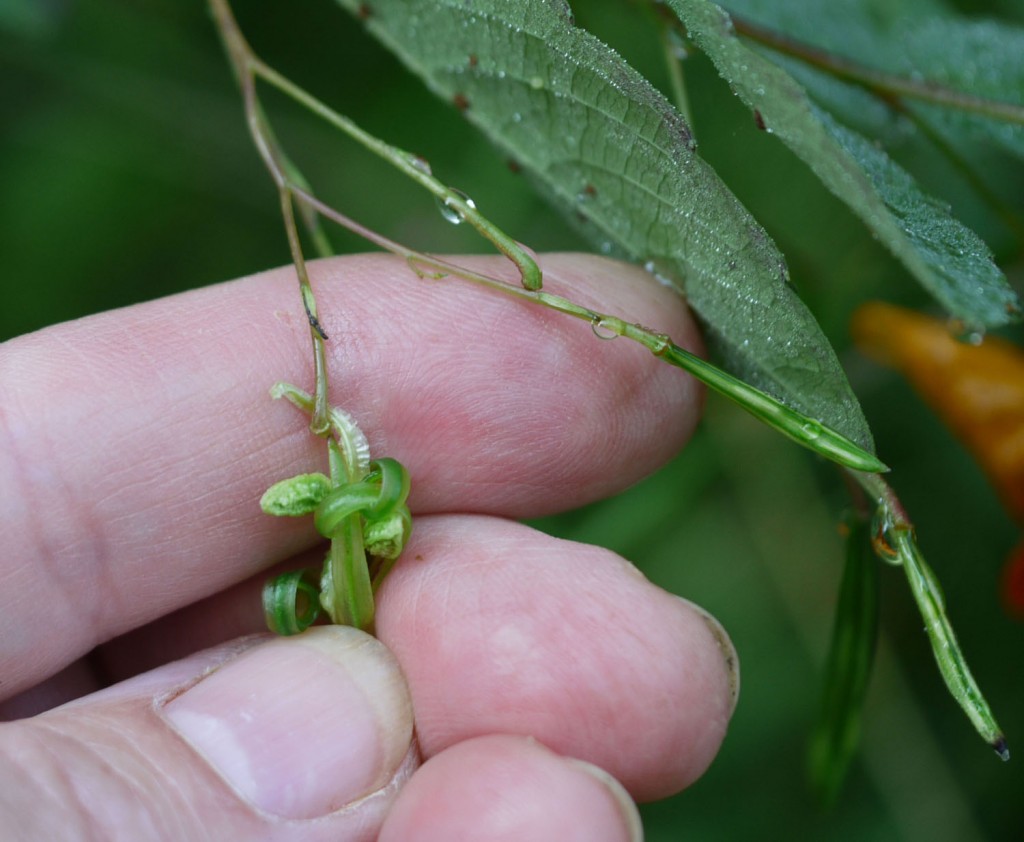 If you weren’t holding onto the seed pod, the seeds would jump through the air for dispersal quite some distance from the plant. Touching those ripe seed pods — and watching the plant’s swift reaction with its throwing of the seeds — is fun to do.
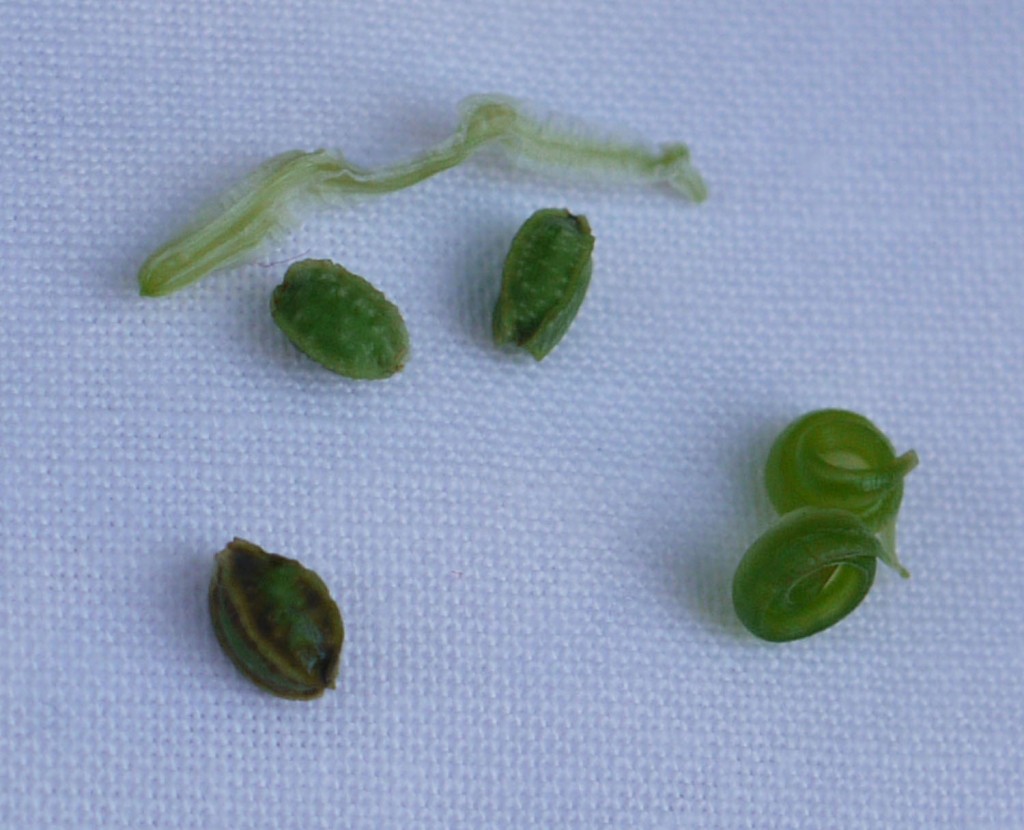
Here is a close view of Jewelweed’s seeds and the remnants of the seed pod.
 Back to our original question . . . how can you tell the difference between the two Jewelweeds? You’ll have to wait for the plant to bloom and then you’ll know for sure whether it is Pale jewelweed (Impatiens pallida) or Spotted jewelweed (Impatiens capensis).