Mystery plant 016

Imported from Asia, this plant has spread (usually in an unwelcome fashion–considered invasive in Illinois) through most eastern, some midwestern and a few western states in the U.S.  When you know the name of this plant, post a comment with its common name, scientific name and any personal story you’d like to share about this plant.

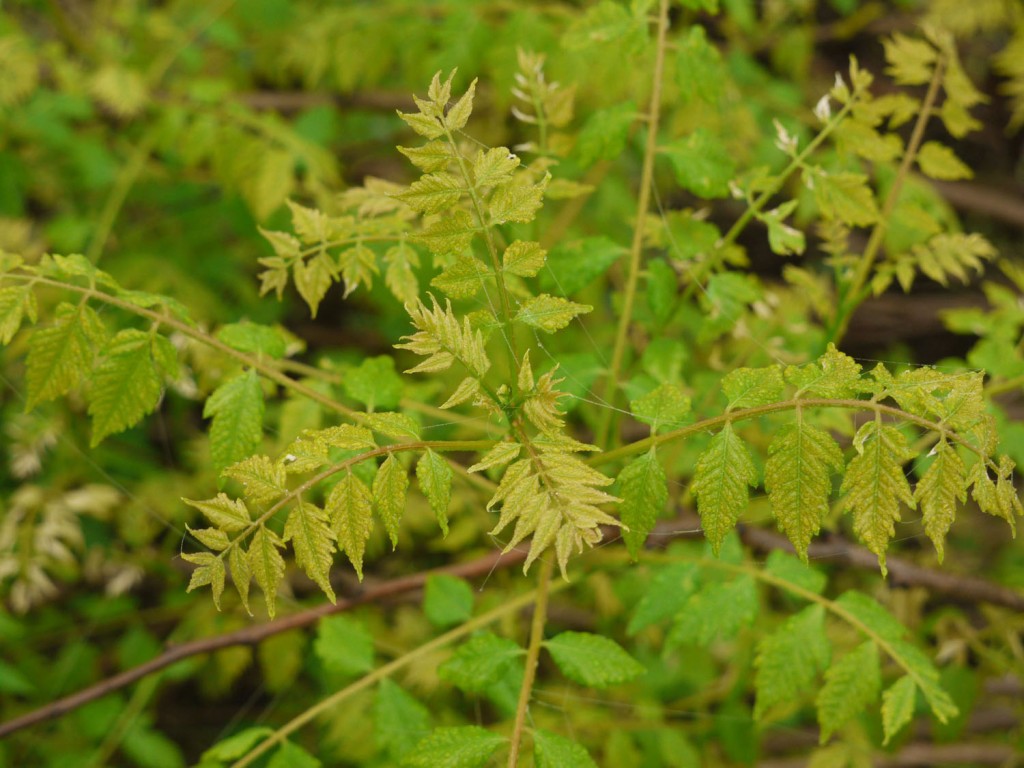
016-a

New growth in spring

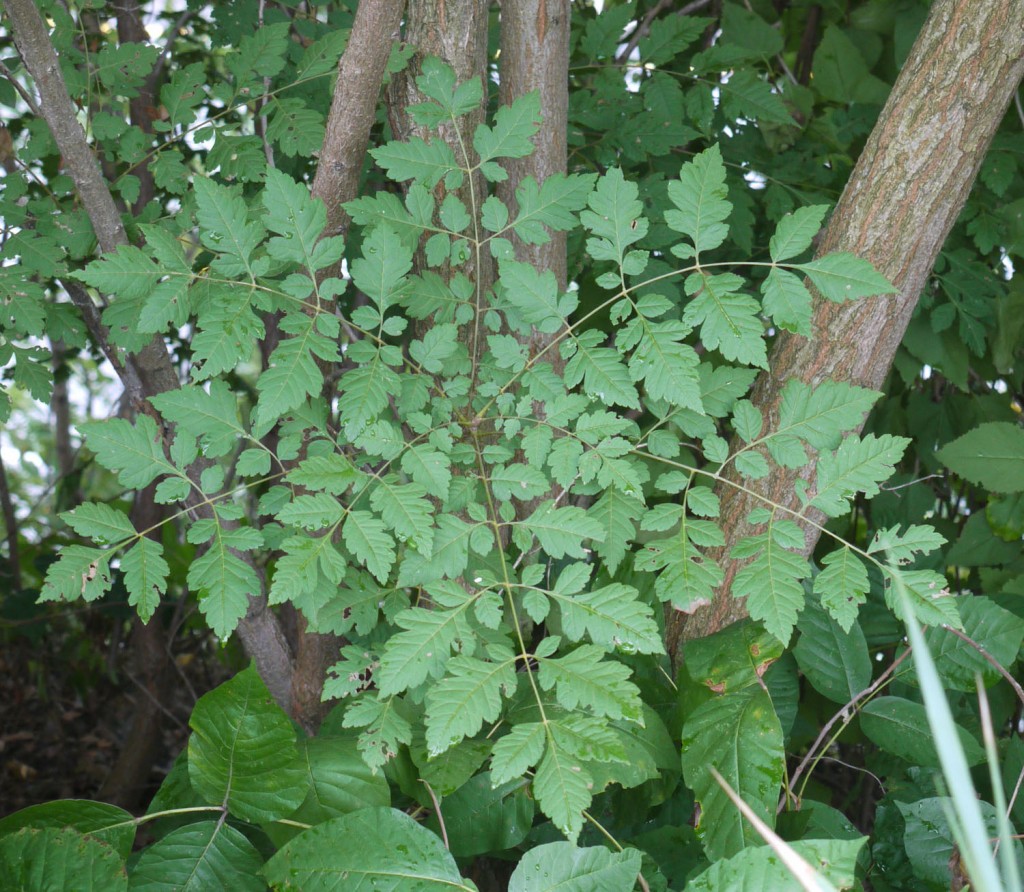
016-b

Young shoot — bark of older plant in background

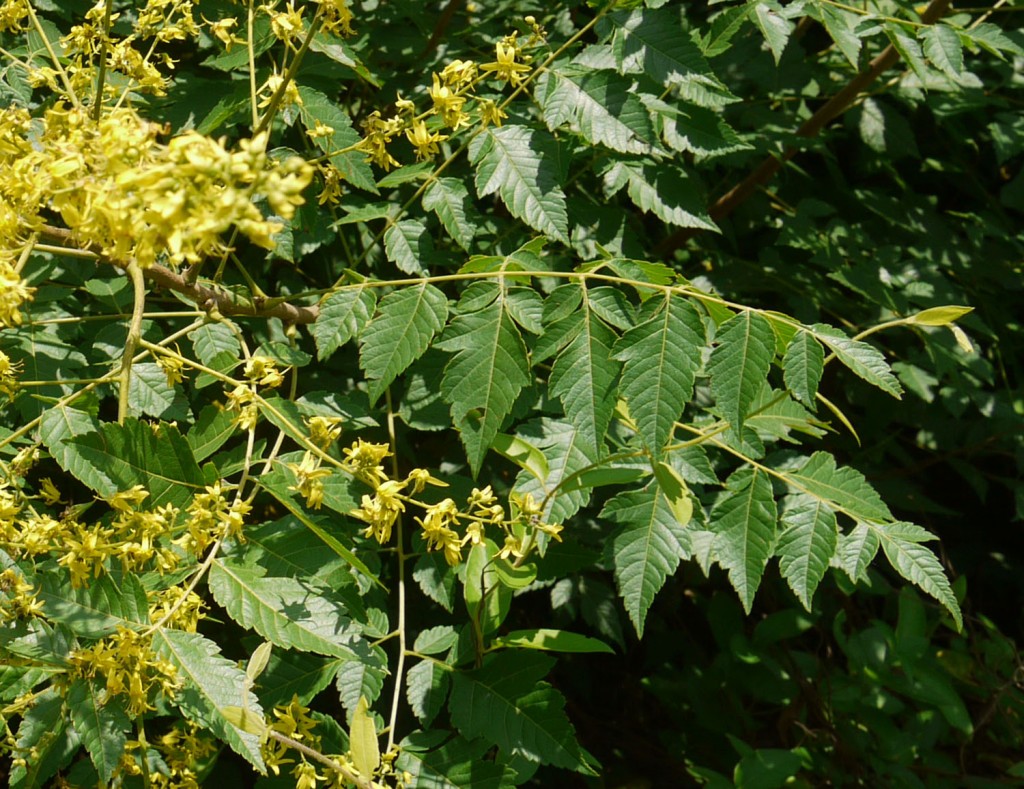
016-c

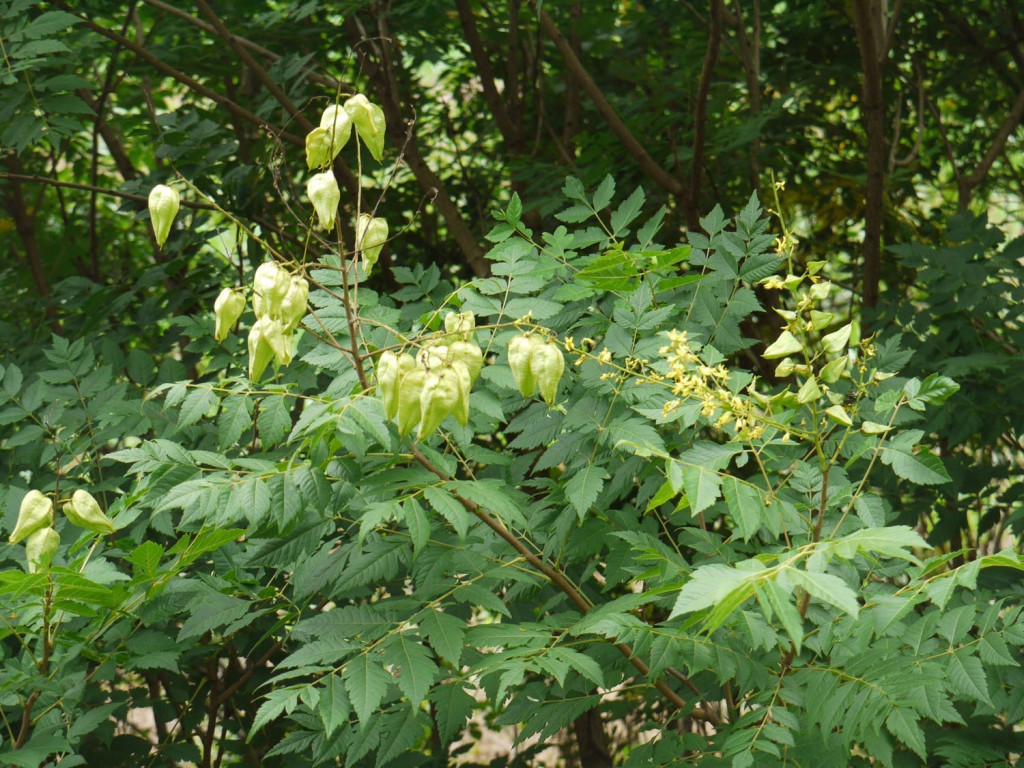
Flowering branches on left; leaf branches on right

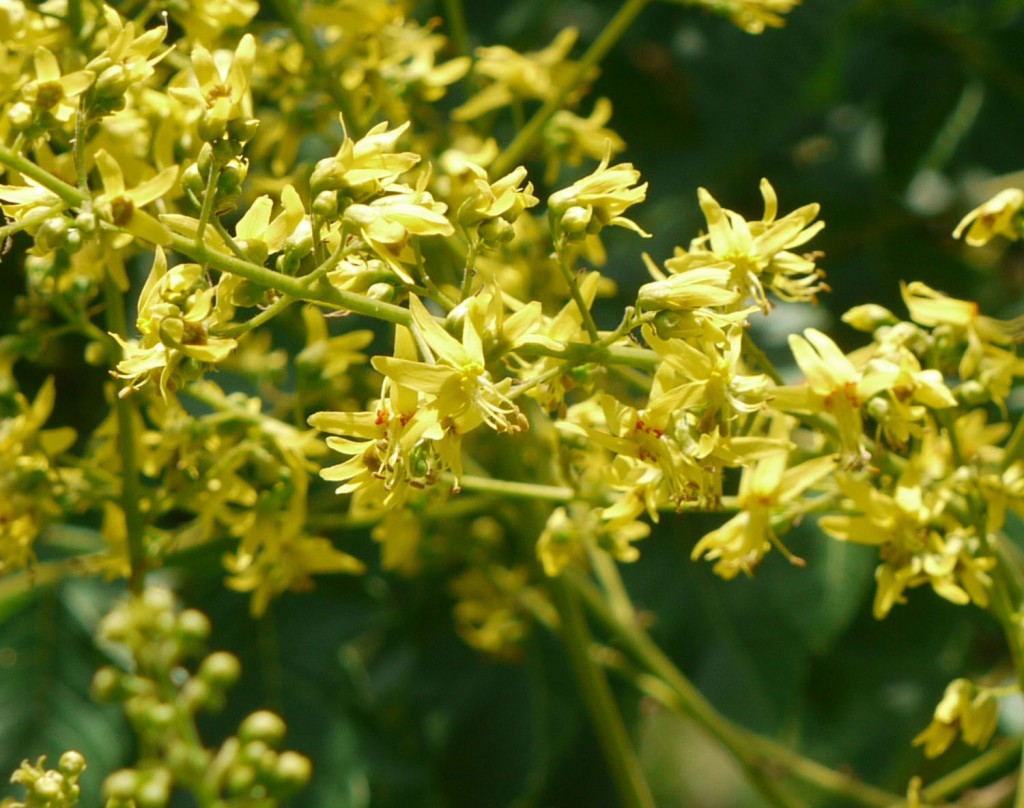
016-d

Flowers

016-e

Plant with flowers and developing fruits

016-f

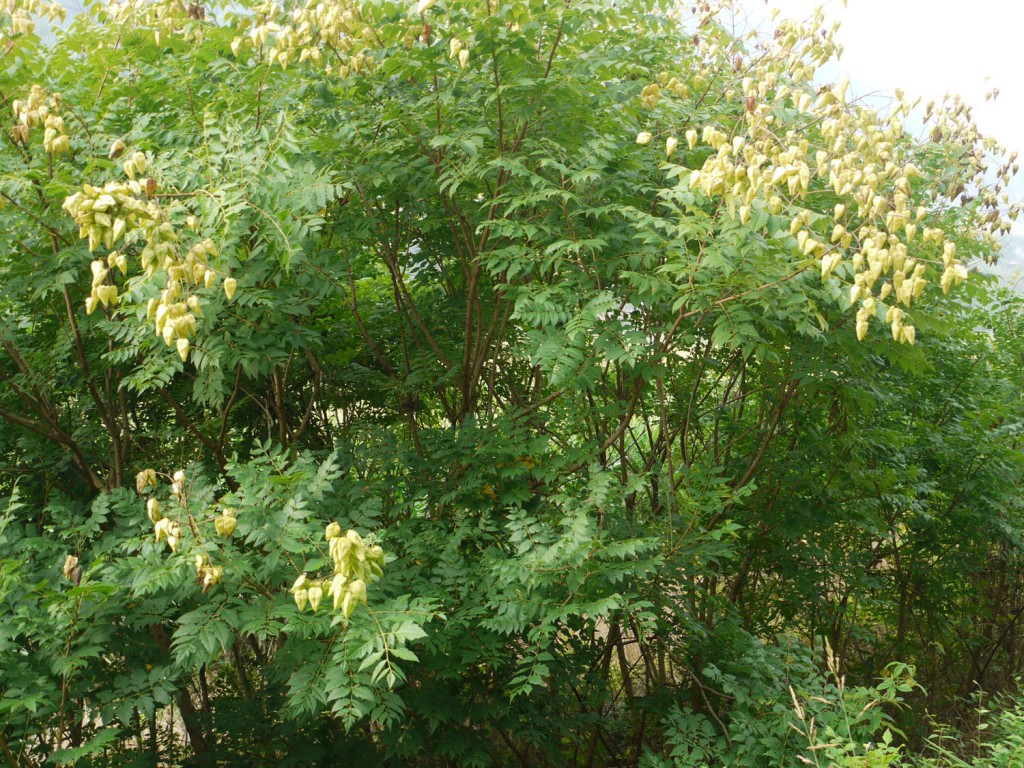
Growth habit

016-g

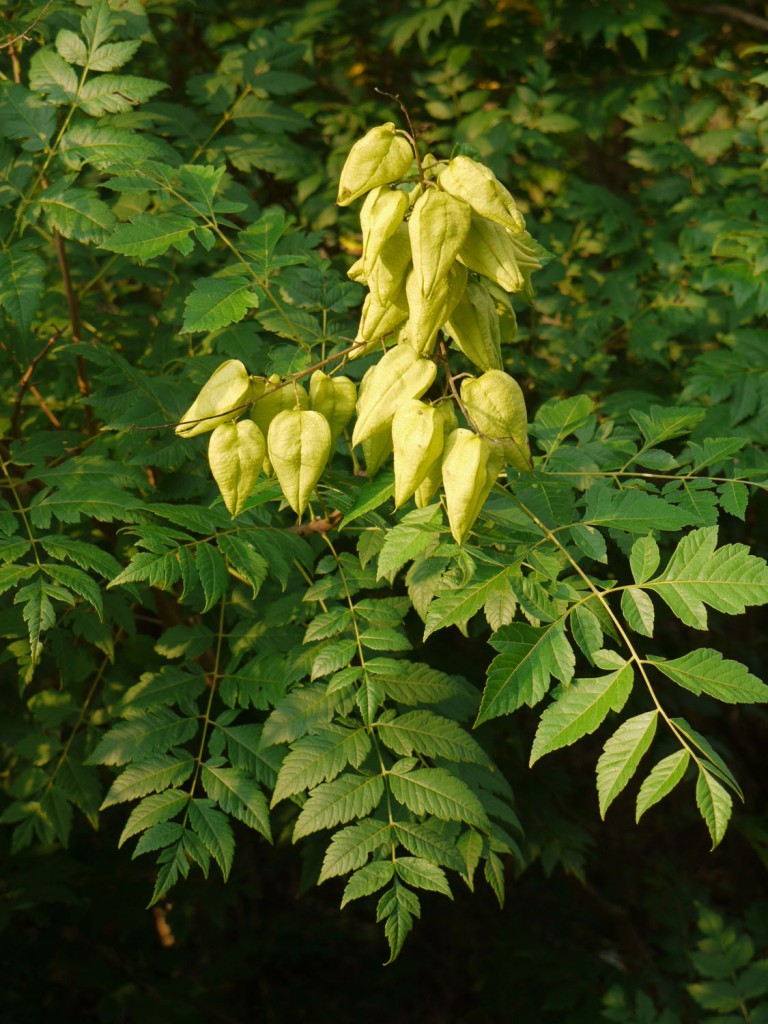
Fruits and leaves

016-h

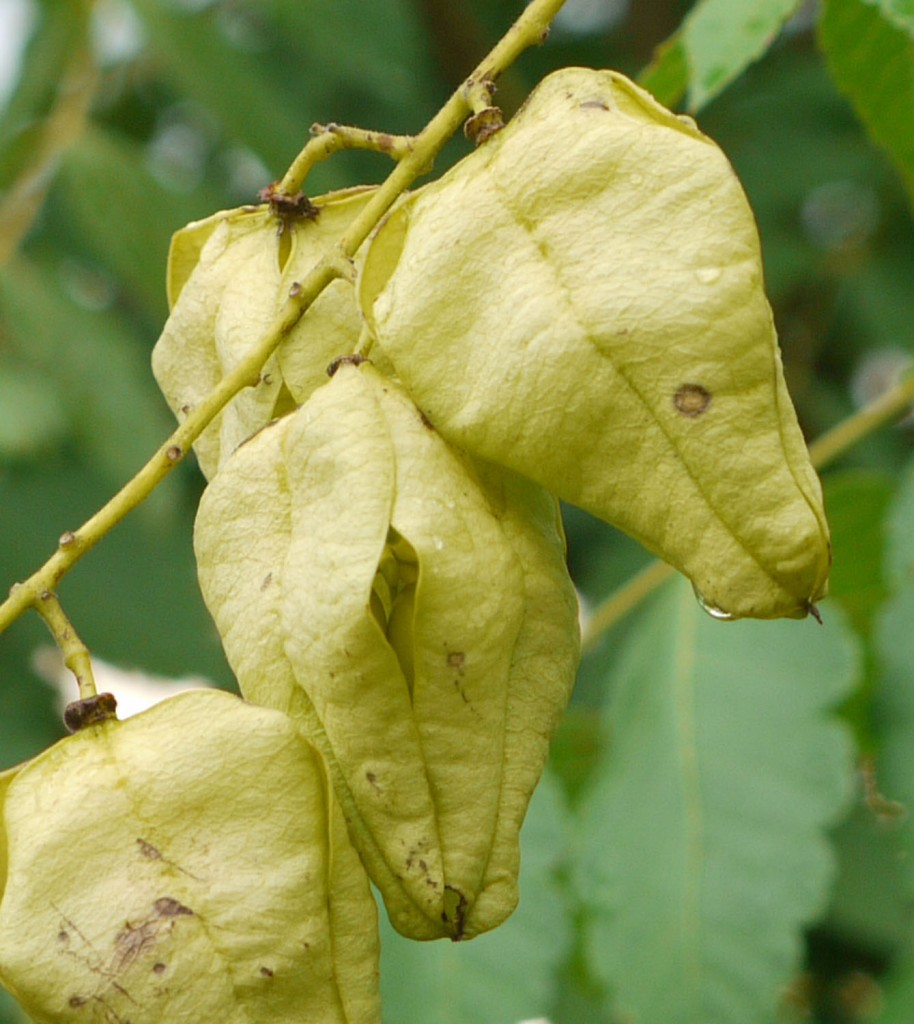
Fruit (seed pods)


ANSWER (subsequently added to this post to facilitate the “search” function for these images):  Goldenrain tree (Koelreuteria paniculata)

Posted in Mystery plant | 9 Comments

Rudbeckia — hirta and laciniata

Black-eyed susan

Rudbeckia hirta

Black-eyed susan (Rudbeckia hirta) is such a popular wildflower it has been added to many cultivated flower gardens.  This post compares the Black-eyed susan with another coneflower commonly called Tall coneflower, Green-headed coneflower, or Cutleaf coneflower (Rudbeckia laciniata).

Have you ever looked closely at Black-eyed susan’s leaves?  The lower leaves are broadly ovate with palmate veins running the length of the leaf.  The leaf margins are roundly toothed.

Black-eyed susan

Rudbeckia hirta

As the plant grows taller, its leaves become more lanceolate with more sharply toothed margins . . .

Black-eyed susan

Rudbeckia hirta

The photo above shows these lance-shaped leaves as well as some unopened flower heads.  Watch how the Black-eyed susan’s inflorescence opens . . .

Black-eyed susan

Rudbeckia hirta

The outer ray flowers of this composite flower open first.  Then, the inner disk flowers begin opening until we see the full inflorescence blooming.

Black-eyed susan

Rudbeckia hirta

Black-eyed susan is one of many flowers with the common name of “coneflower.”  You can see the center disk looks like a dark brown cone.  After the seeds mature, the head of the flower (the cone) remains to stand through most of the winter season.

Black-eyed susan

Rudbeckia hirta

Let’s look at another coneflower.  As mentioned above, it has several common names alluding to the shape and color of its flower head and its leaves.

Tall coneflower

Rudbeckia laciniata

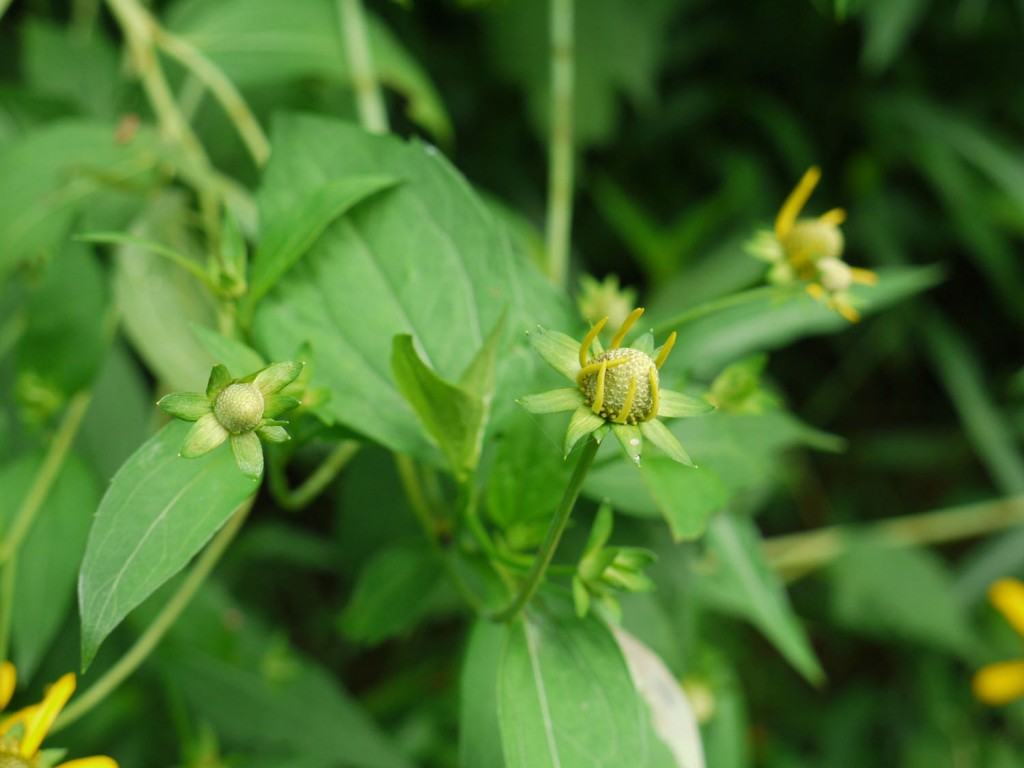
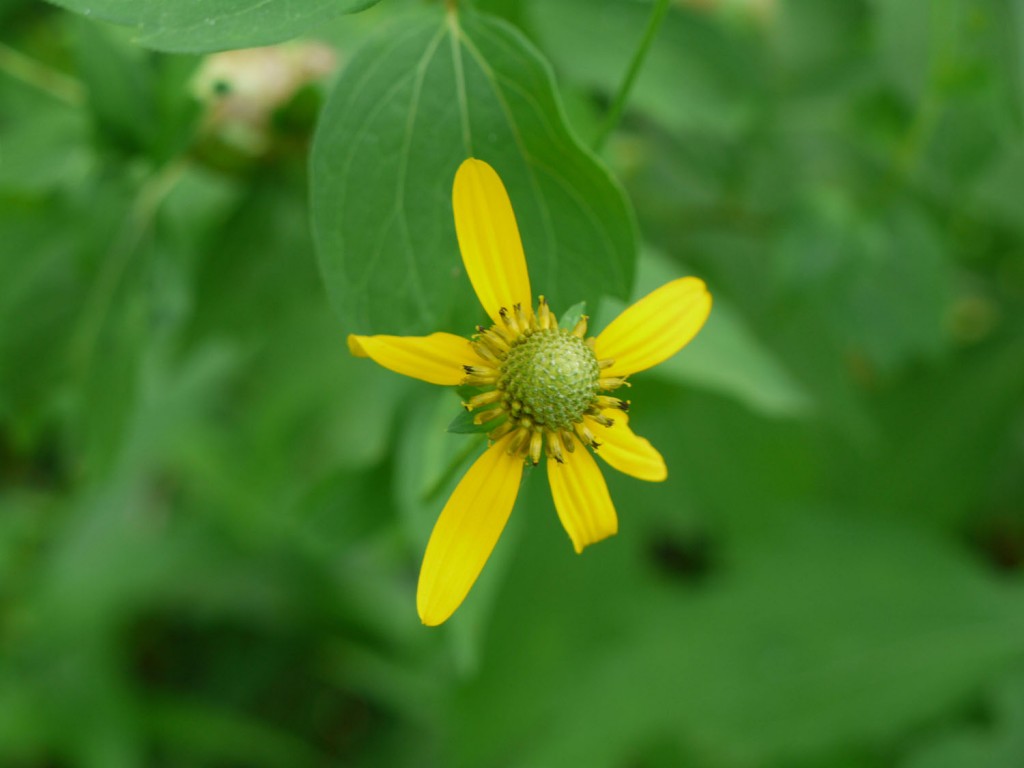
This is Tall coneflower (Rudbeckia laciniata).  Its lower leaves are also broadly ovate, with palmate venation and rounded toothy margins.  As this plant grows taller, its leaves change in shape, just as the Black-eyed susan’s leaves change.  In fact, sometimes the Tall coneflower leaf looks divided into three or five (possibly seven?) leaflets.  These compound leaves give the impression of being “cut” — which explains the “Cutleaf coneflower” common name along with the “laciniata” scientific name.  The petiole of these larger leaves is somewhat grooved.

Tall coneflower

Rudbeckia laciniata

Tall coneflower can grow very . . . well . . .  TALL (up to ten feet).  This next photo illustrates some Tall coneflower plants which have fallen over with the weight of their leaves and blossoms.  Note the varying leaf shapes.

Tall coneflower

Rudbeckia laciniata

The leaves near the top of the plant are more lanceolate — just like the Black-eyed susan’s upper leaves.

Tall coneflower

Rudbeckia laciniata

The leaf margins are also more sharply toothed than the lower leaves.

Tall coneflower

Rudbeckia laciniata

The above photo shows the composite flower’s ray flowers just beginning to unfold — in a manner quite similar to the Black-eyed susan.

Tall coneflower

Rudbeckia laciniata

Now we can see why this plant is also called Green-headed coneflower.  Its center disk remains green — even as its seeds begin to mature.

Tall coneflower

Rudbeckia laciniata

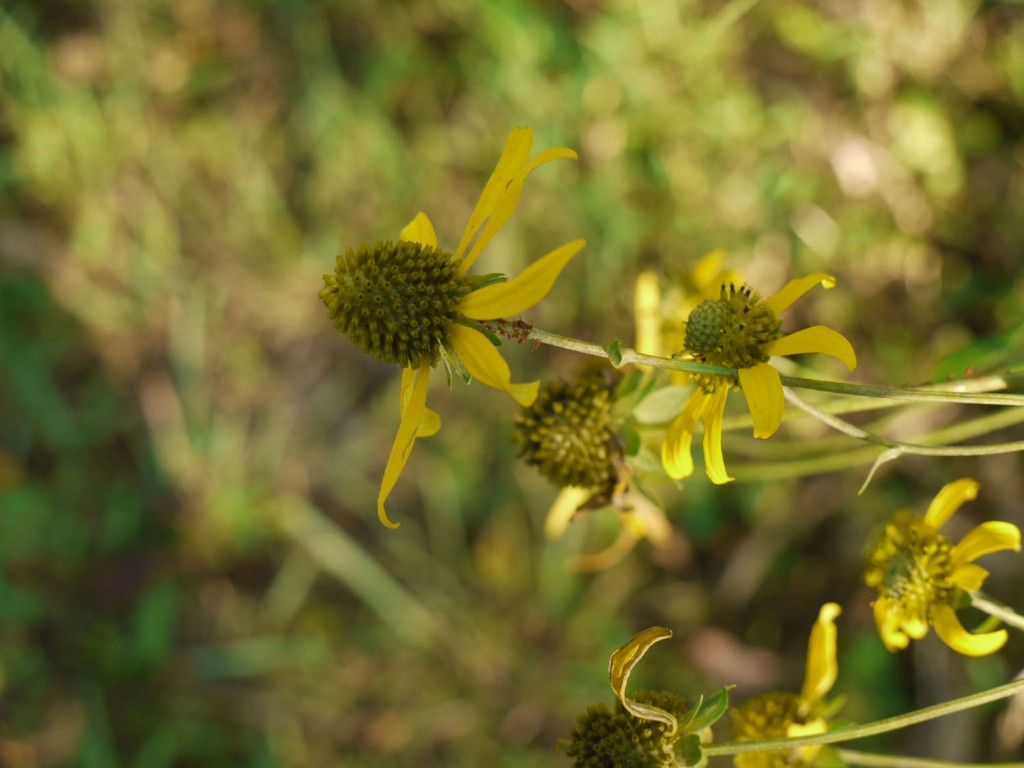
This last photo shows the Tall coneflower’s dried seed heads.  You can see the lengthy cone as well as how the seeds have fallen away from a large part of the receptacle of one of the heads.

Tall coneflower

Rudbeckia laciniata

Posted in Plant comparisons | 4 Comments

Is this mugwort? Or something else?

Mugwort

Mugwort

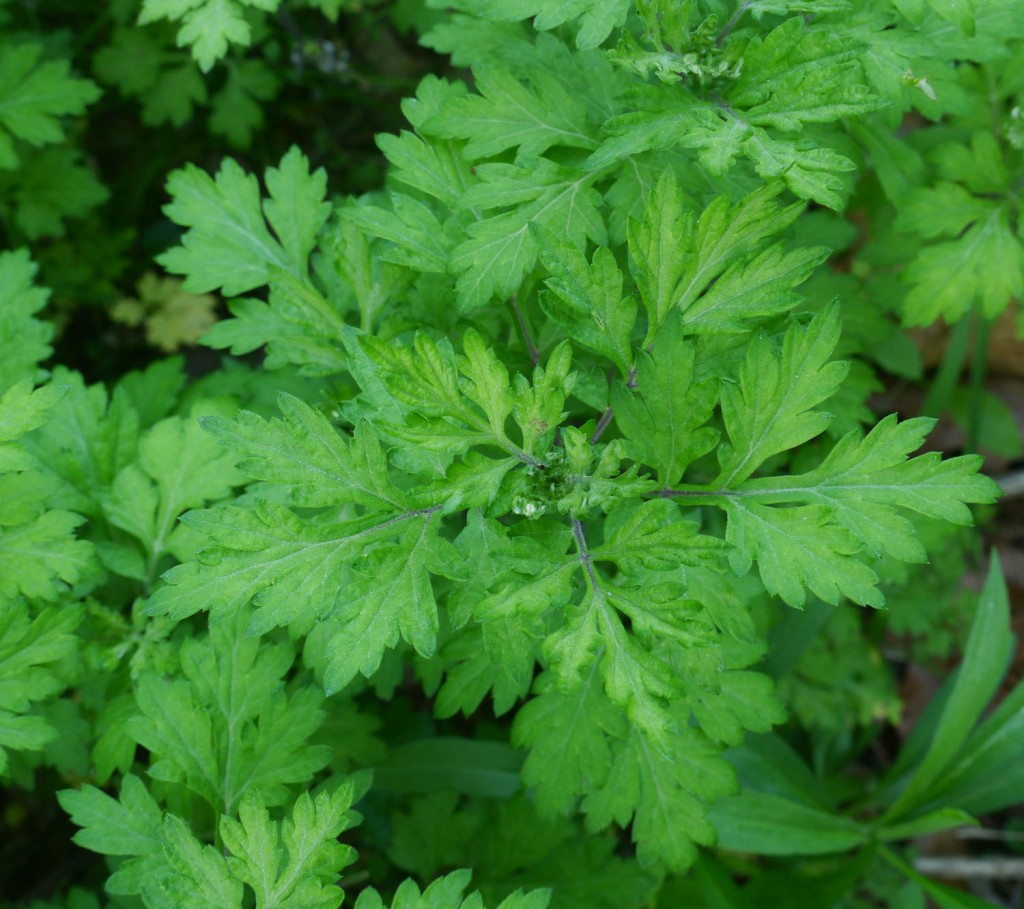
After I was introduced to mugwort (Artemisia vulgaris), I went looking for more mugwort plants.  I found lots of them.  And then I became confused because I also saw this plant and was not so sure that it was also mugwort, despite its similar leaf . . .

Common ragweed

Common ragweed

As it turns out, I was able to identify it as common ragweed (Ambrosia artemisiifolia).  Just look at those two scientific names — Artemisia vulgaris and Ambrosia artemisiifolia.  That, in itself, tells me how similar the plants are for the average person — as well as for the botanist!

Now, how can I (or you) tell these two plants apart?  Let’s start with a close look at mugwort.  This photo shows mugwort when it is just beginning to come up in the spring:

Mugwort

Mugwort

And a bit later in the spring . . .

Mugwort

Mugwort

You can see the leaf shape and some of the stems are a bit purple in color.  Now, here is a lovely stand of mugwort during mid-spring:

Mugwort

Mugwort

Mugwort spreads easily and persists in colonies from year to year — just like common ragweed.  Let’s take a closer look at the mugwort leaf . . .

Mugwort

Mugwort

. . .  and the underside of the leaf:

Mugwort

Mugwort

We can see the leaf is deeply cut with what looks like tiny points or prickles at the end of each lobe.  The underside of the leaf is silvery.

As the growing season progresses, mugwort extends upward — with a more narrow overall look to the plant . . .

Mugwort

Mugwort

The growing tip begins developing the inflorescence . . .

Mugwort

Mugwort

The next series of photos shows how the inflorescence develops at the tip of the mugwort plant as well as from various leaf axils.
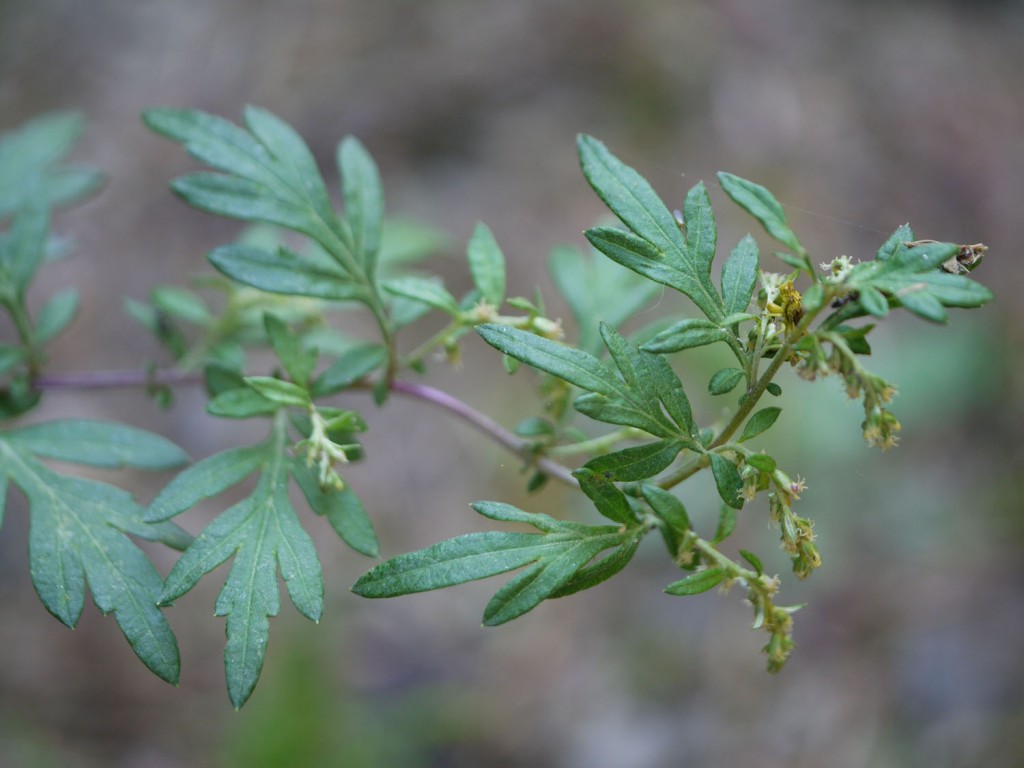
Mugwort
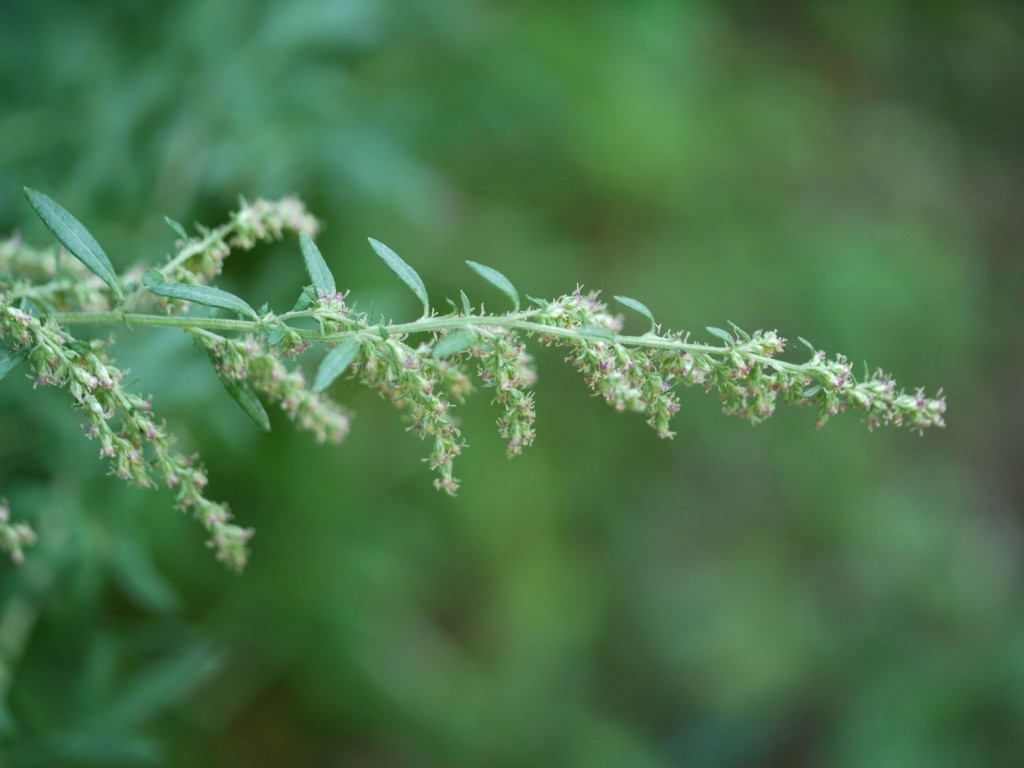
Mugwort

Mugwort

Mugwort

Mugwort

Mugwort

Here’s a closer view of mugwort’s flowering spike (complete with an ant for purposes of visualizing the scale). . .

Mugwort

Mugwort

. . . and an even closer view of the mugwort flowers . . .

Mugwort

Mugwort

Let’s switch our attention back to common ragweed (Ambrosia artemisiifolia).  Here it is as it begins its growth for the season . . .
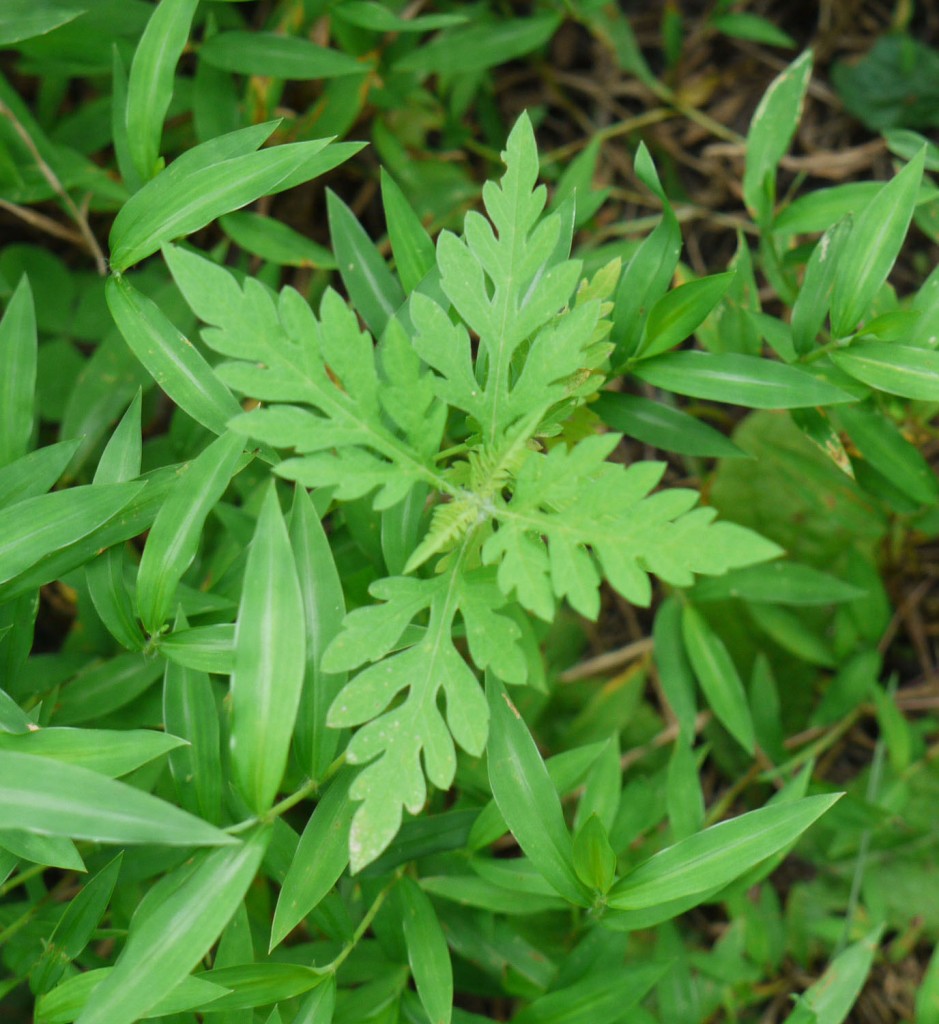
Common ragweed

Common ragweed

Later in the early growing season . . .

Common ragweed

Common ragweed

In the above photo you can see some darker coloration along the top of each leaf’s petiole — similar to the more purple looking coloration of mugwort’s stems.  The common ragweed has hairy stems — as does mugwort!

Let’s look more closely at the common ragweed leaf . . .

Common ragweed

Common ragweed

Those leaves still look just like mugwort’s leaves.  Deeply cut or lobed.  Tiny points on the end of the lobes.  Same basic leaf shape.

As the growing season continues, common ragweed grows upward.  Here it is with its developing inflorescences . . .

Common ragweed

Common ragweed

A closer view of the developing inflorescences . . .

Common ragweed

Common ragweed

Well, those look a bit different from mugwort’s developing inflorescences.  Aahhh, now here is a distinguishing characteristic.  Common ragweed’s flower spike looks much different from mugwort’s . . .

Common ragweed

Common ragweed

This close-up view of common ragweed shows both its staminate (male) flowers — at the upper right — and its pistillate (female) flowers — at the lower center:

Common ragweed

Common ragweed

[For more images of common ragweed — as compared to greater ragweed — check out this previous post.]

After studying all these images, how do I tell the plants apart?  Especially early in the growing season before the flowers develop?  Well . . .  the key is to use my nose and not my eyes!  Mugwort has a distinctive, strong “herbal” odor when I crush and smell its leaves.  Common ragweed has very little odor to its bruised leaves.  I invite you to visit these two plants and use the smell test on them.

Posted in Plant comparisons | 63 Comments